
The Supreme Court has dismissed a claim regarding gold worth Rs 170 crore made by a woman against her estranged husband and his family. On Monday, the court annulled a domestic violence case she filed, stating that such cases lacking specific allegations should be swiftly dismissed.
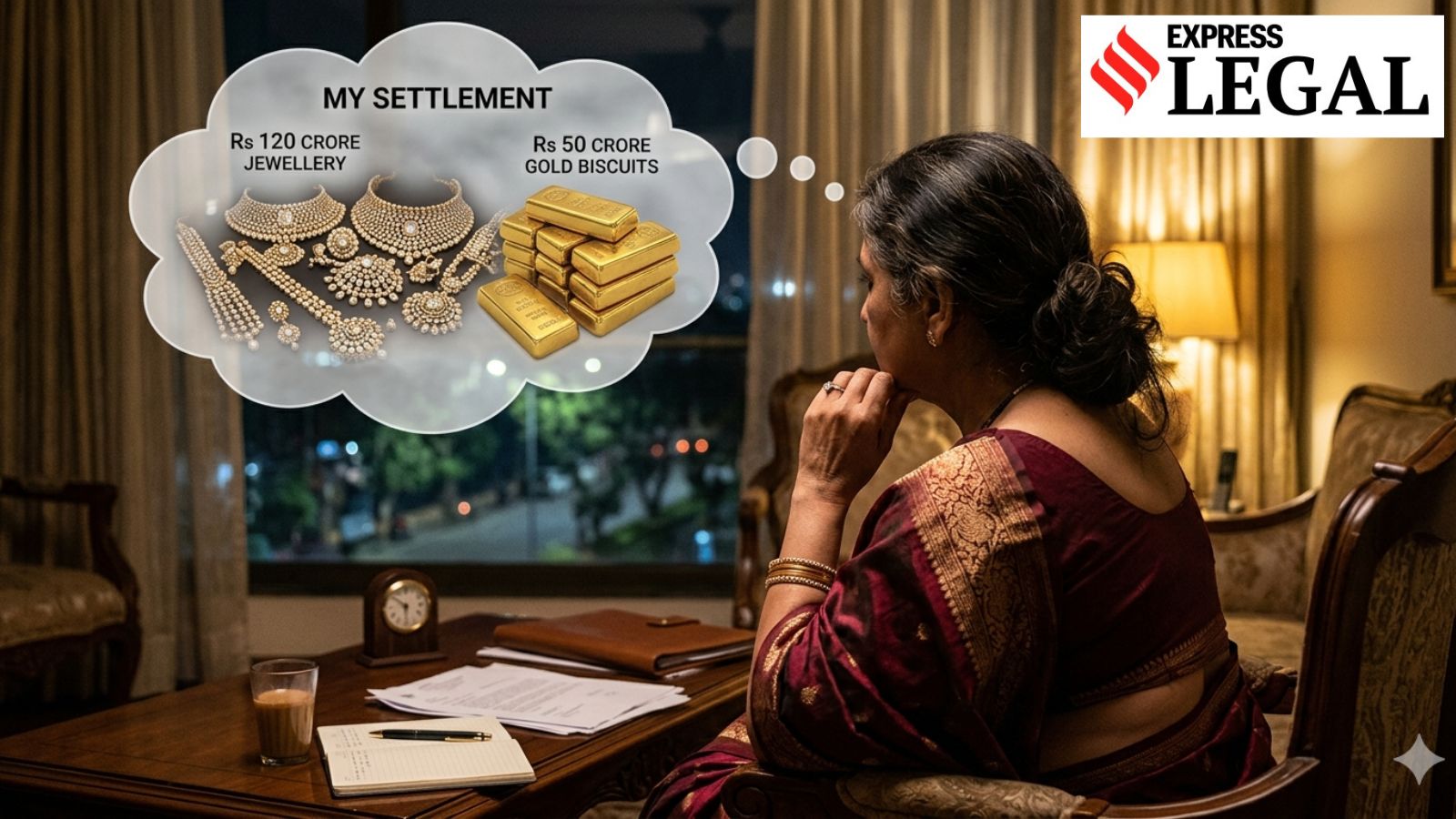
During the proceedings, Justices Rajesh Bindal and Vijay Bishnoi examined an appeal from the husband, who contested a Delhi High Court ruling that permitted the domestic violence case to continue despite an earlier settlement between the parties. The woman had alleged that her husband promised her gold jewelry valued at Rs 120 crore and gold biscuits worth Rs 50 crore as part of their settlement, but the court found this claim to be unsubstantiated.
The court emphasized that a domestic violence complaint must contain detailed allegations against the accused, rather than simply listing names of family members or the husband without evidence of their involvement in any act of violence. The justices remarked that allowing such complaints to proceed without merit could lead to legal abuse and harassment.
The court identified the claim regarding the gold as an “afterthought,” highlighting that while emotions can run high in long-standing marital disputes, they cannot serve as a basis for criminal prosecution. The justices pointed out that the woman’s assertion about the gold was not mentioned in the formal settlement agreement and was absent from any contemporaneous communications, including lists provided by her.
Furthermore, the court criticized the explanation that the gold’s exclusion from the written agreement was to evade tax scrutiny, labeling it as a serious disregard for legal standards. The Supreme Court noted that parties with legal representation cannot later invoke unwritten assurances to evade formal agreements.
Upon reviewing the domestic violence complaint, the court found it to be vague and lacking specific details regarding alleged violent acts. It noted that no accusations of domestic violence had been made during the couple’s lengthy marriage and that the complaint was filed only after the settlement process had begun, suggesting a premeditated intention to prolong litigation after the woman’s withdrawal from the agreement.
The couple had been married since February 19, 2000, but began living apart around 2022-23 due to marital discord. The husband sought a divorce in January 2023, citing cruelty and adultery. Following mediation, a comprehensive settlement agreement was reached in May 2024, which included financial arrangements and mutual consent to dissolve the marriage. The family court approved the first motion for divorce in August 2024, and part of the settlement was executed, including payments and the return of jewelry.
However, the situation escalated when the wife decided not to proceed with the second motion for divorce, effectively retracting her consent. Shortly thereafter, she filed domestic violence claims against her husband and his mother on October 16, 2025.
In its ruling, the Supreme Court reinforced that emotional disputes in marriages cannot turn into criminal proceedings without a factual basis. It warned that allowing such cases to proceed could lead to harassment and misuse of legal protections intended for genuine cases of abuse.
The judgment underscored the importance of adhering to mediated settlements, stating that once parties agree to and act upon a settlement, they cannot unilaterally deviate from its terms unless there are valid grounds like fraud or coercion. In this instance, the court found no evidence supporting the wife’s claims of such circumstances, deeming her withdrawal from the settlement unjustified.
Considering the prolonged separation, ongoing litigation, and the irreparable breakdown of the marriage, the Supreme Court exercised its authority under Article 142 of the Constitution to officially dissolve the marriage. The court concluded that the relationship had become “emotionally dead” with no potential for reconciliation, indicating that the foundational bond of marriage had effectively disintegrated.