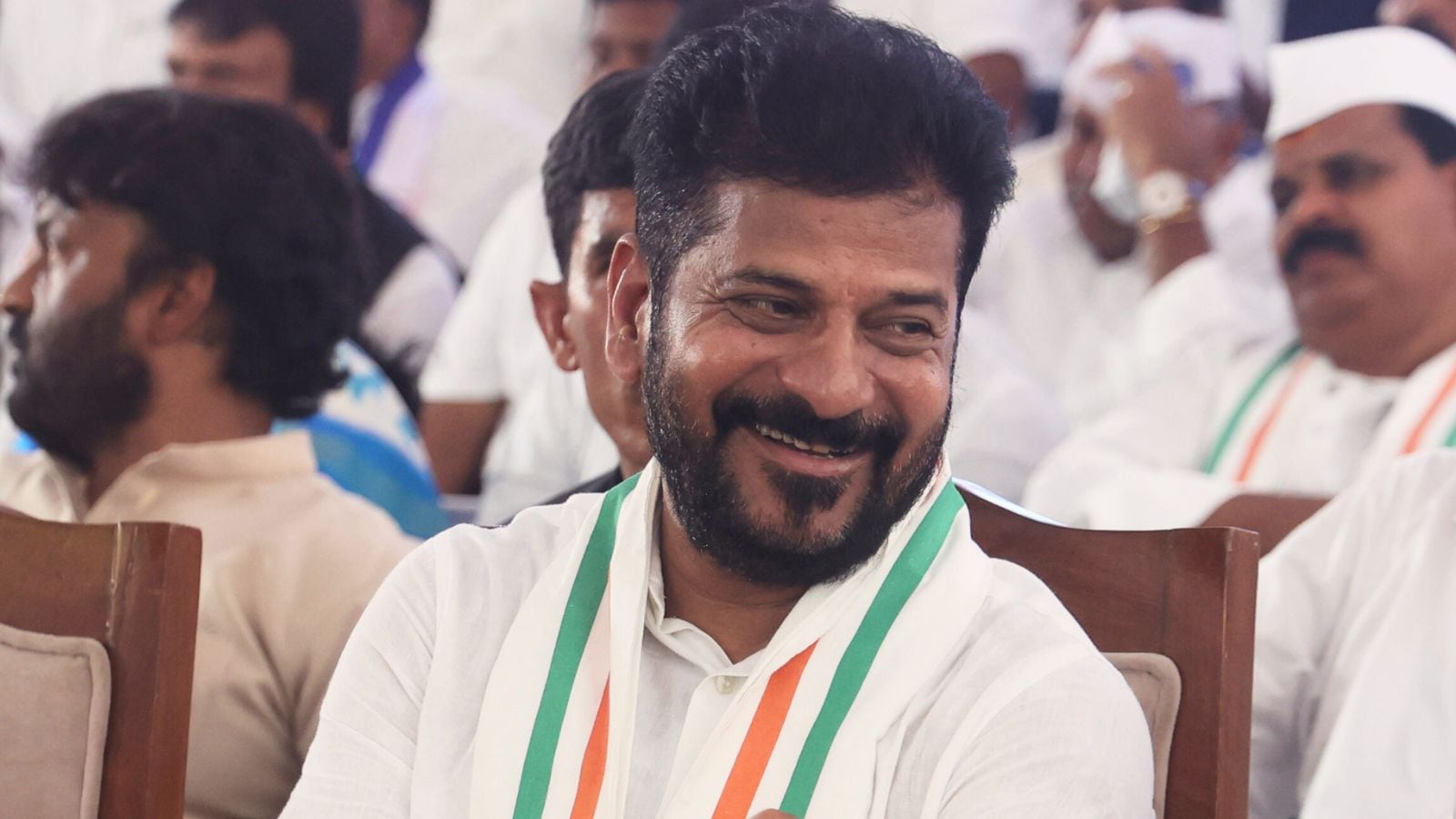

Telangana’s Chief Minister A Revanth Reddy has advocated for a sustained movement aimed at increasing the number of parliamentary seats in southern states according to the pro-rata principle. Speaking at the event commemorating the 135th anniversary of Dr. B R Ambedkar, Reddy expressed concern that the proposed formula to increase seats by 50 percent would result in significant disadvantages for southern India. He cautioned that this approach could diminish the representation of women and marginalized communities, including Scheduled Castes (SC) and Scheduled Tribes (ST), in legislative assemblies.
Reddy emphasized the need for a concerted effort against the Union Government to advocate for a proportional increase in seats during the delimitation process. He accused the Bharatiya Janata Party (BJP) of scheming to decrease the representation of southern states under the guise of enhancing overall representation through a 50 percent increase. “It is crucial that we come together to demand a fair increase in seats based on the pro-rata principle,” Reddy stated.
The CM criticized the BJP for what he termed conspiratorial actions regarding constituency delimitation, arguing that the central government’s approach could lead to severe injustices for women and SC/ST communities in the south. He questioned whether Union Ministers are aware of the detrimental effects of the proposed seat reductions.
Opposing the current delimitation criteria, Reddy proposed a hybrid model for the allocation of Lok Sabha seats. He suggested that half of the increased seats be distributed based on the pro-rata principle, while the other half should reflect each state’s Gross State Domestic Product (GSDP).
“Relying solely on population for the allocation of Lok Sabha seats will create disparities between southern and northern states, which could have long-lasting negative repercussions for the South,” he warned. The central government aims to raise the number of Lok Sabha seats by 272, bringing the total to 815 from the current 543. According to Reddy, this would mean an increase of southern seats from 130 to 195, while northern states would see their numbers rise from 411 to 621, resulting in an unfair advantage of 280 seats.
Reddy further urged the Centre to prioritize economic indicators over a decade or so when determining seat allocation, advocating for a 50 percent increase in seats based on GSDP contributions. He pointed out that the Supreme Court has capped reservations at 50 percent, leaving the rest to merit. “Why shouldn’t Lok Sabha seats be allocated based on a state’s economic input to the nation? States are weary of contributing taxes,” he remarked, noting that the allocation of Lok Sabha seats in northeastern states and Union Territories is not based purely on population.
He also highlighted that the BJP-led National Democratic Alliance (NDA) appears to be trying to conflate women’s reservation with the delimitation process, pushing for changes without fostering consensus. In contrast, Reddy reiterated the Congress party’s commitment to 33 percent reservation for women in legislative bodies, along with separate quotas for women from Backward Classes (BC) within that framework.