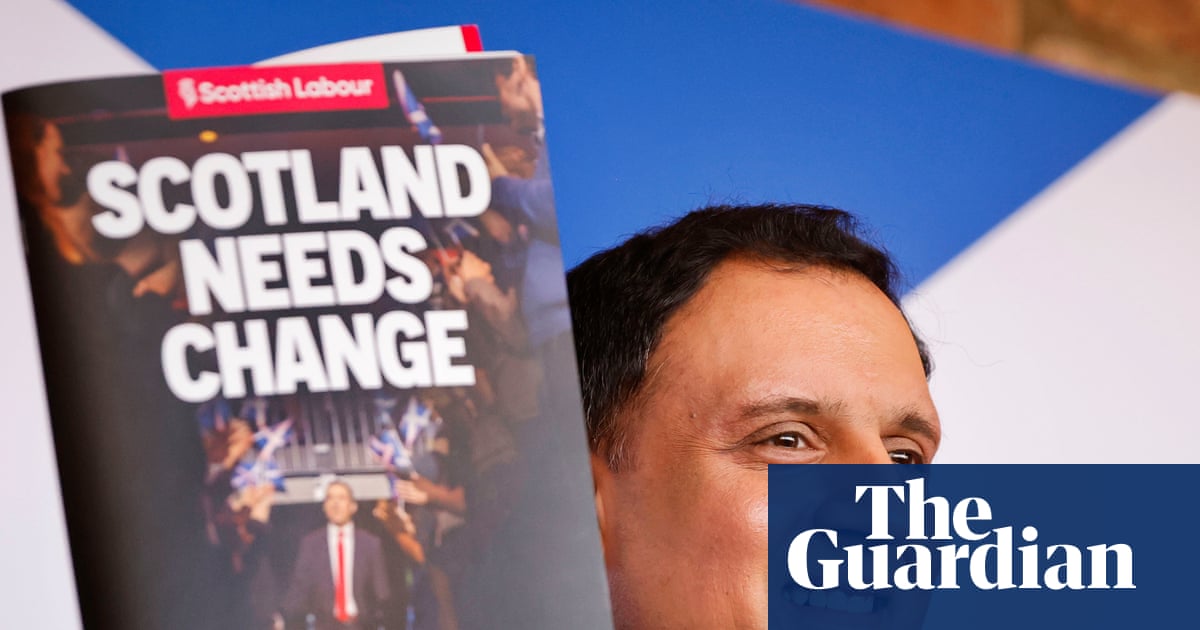

Anas Sarwar has called upon voters to grant Labour a five-year mandate to rectify the issues left by the Scottish National Party (SNP). He has committed to initiatives that include increasing housing availability, implementing tax reductions, and reducing the size of the public sector.
The leader of Scottish Labour is currently engaged in a critical effort to recover from a significant decline in public support. Latest opinion surveys indicate that Sarwar’s party is positioned third or even fourth, trailing behind the SNP, Reform UK, and the Scottish Greens, a situation exacerbated by the UK government’s lack of popularity.
Despite these challenges, Sarwar expressed optimism that Labour could regain its footing before the Holyrood elections scheduled for May 7. He suggested that voters increasingly perceive the SNP administration under John Swinney as “exhausted, full of excuses, and lacking innovative ideas.”
During the first televised leaders’ debate held in Edinburgh on Sunday, Sarwar unveiled Labour’s manifesto, asserting that the electorate would recognize the need for change by the time of the election.
“I believe that as people engage with this election campaign, they will opt for change on May 7,” he stated.
Sarwar refrained from mentioning Keir Starmer or broader UK policies while outlining Labour’s campaign promises, which include a £3,000 childcare tax relief, exemptions from property taxes for first-time buyers, the construction of 52,300 affordable homes, and the recruitment of 2,000 additional teachers to enhance literacy and numeracy skills.
With fewer than 25 days remaining until the election, Labour hopes to leverage voter dissatisfaction with public services under SNP governance, aiming to position itself as the representative of that discontent.
As Scottish Labour contends with significant competition for left-leaning votes and observes the Conservatives shifting rightward amid competition with Reform UK, the party has repositioned its economic policies toward a centrist approach.
Previously advocating for a more progressive income tax structure in Scotland, Sarwar indicated a change in direction toward tax reductions, particularly for middle-income earners who face higher marginal tax rates, contingent on the state of Scotland’s finances. The party also aims to lower business taxes.
Labour’s plan includes reducing the number of quangos by one-third, significantly streamlining NHS administration, establishing a unit within a new Scottish Treasury to eliminate public sector waste, and forming a board of trade to encourage private investment.
Additionally, the party intends to construct new nuclear power facilities, lifting the SNP’s longstanding prohibition on such technology, and to simplify the planning process to accelerate development, earning praise from the business organization CBI Scotland.
Labour asserts that its proposed public sector reductions, enhanced investment agencies, and increased funding in new technologies—such as Scotland’s inaugural NHS appointments app and AI-driven diagnostic tools—will release hundreds of millions for investment in improved educational institutions, healthcare facilities, and community services.
The manifesto received measured approval from the Institute for Fiscal Studies, which characterized its proposals as “relatively restrained” and appreciated the absence of costly, unfunded commitments, viewing them as prudent compared to rival parties.
David Phillips, head of devolved and local government finances at the think tank, remarked, “In light of the fiscal circumstances, the absence of substantial new unfunded promises is a positive development.”
However, Labour will likely need to reduce certain services, as unavoidable spending increases in essential areas are anticipated.
Despite Sarwar’s optimism, the anti-independence group Scotland in Union has released a tactical voting guide, encouraging Labour, Conservative, and Liberal Democrat supporters to back whichever candidate stands the best chance of preventing an SNP victory in local constituencies.
Angus Robertson, the SNP’s campaign director, criticized Labour’s promises, stating, “We’ve heard it all before from Labour — what we consistently witness are broken commitments. Energy costs have risen, Grangemouth has closed, and the winter fuel payment issue remains unresolved. We have already experienced one ineffective Labour government, and we do not require another.”