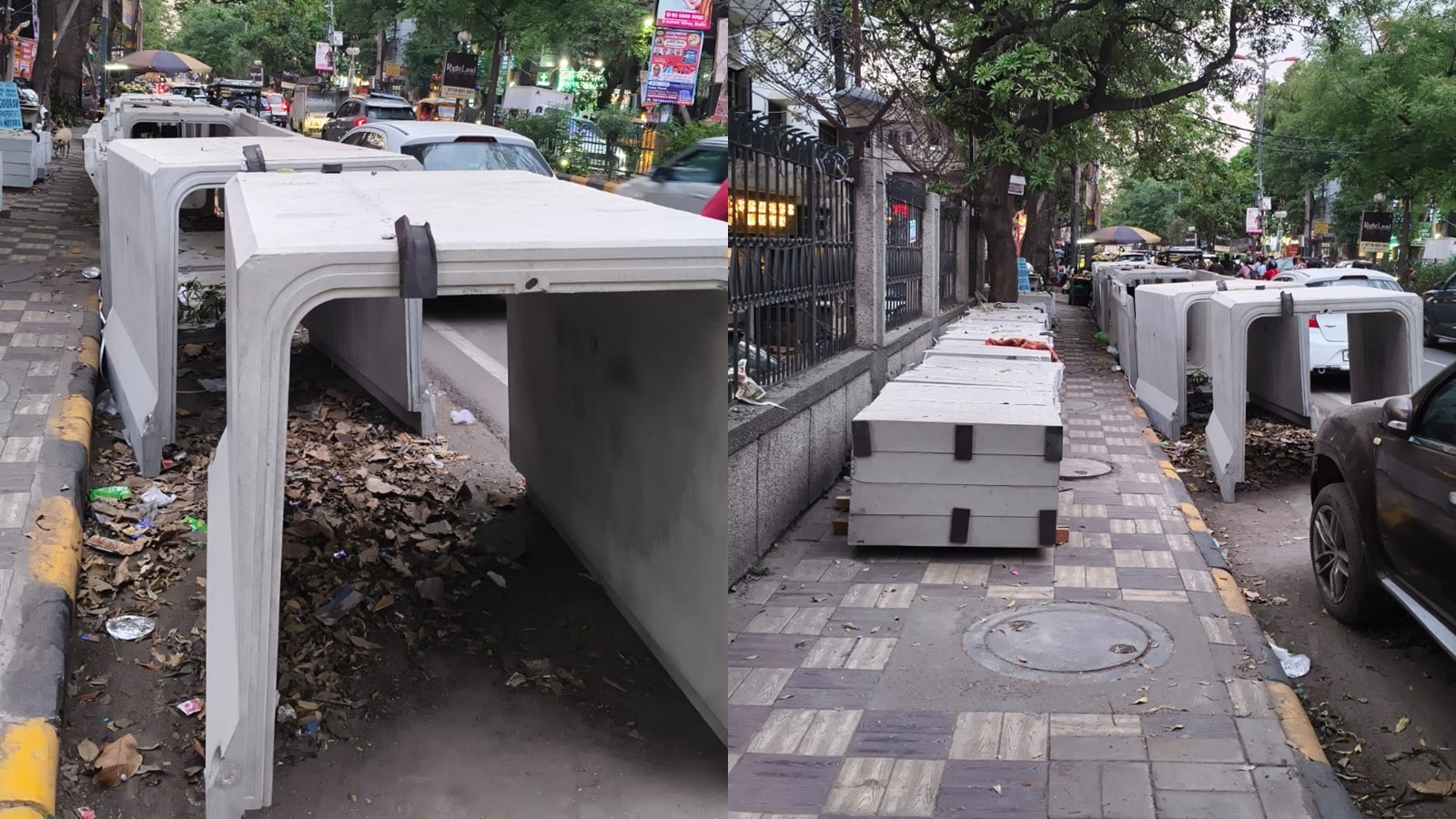

In a bid to establish a sustainable solution for the persistent issues of waterlogging and flooding in the Capital, the Public Works Department (PWD) is transitioning from the traditional “cast in-situ” drainage systems in various city locations. Officials announced that the department will now focus on redesigning and constructing stormwater drains with “precast” technology along straight roads. This shift aims to alleviate pollution, as the cast in-situ approach requires extensive road excavation, which often leads to traffic disruptions and increased environmental contamination.
“The cast in-situ method is not only time-consuming but also has a limited lifespan, typically lasting only three to four years. In contrast, precast drains, which are produced in factories, can be installed much more quickly and come with a guarantee of 50 years,” explained PWD Minister Parvesh Sahib Singh.
Minister Singh noted that the government has initiated drainage remodeling using precast technology, beginning with the Shalimar Bagh area, which is the constituency of Chief Minister Rekha Gupta. “Our objective is to implement this technology throughout the city’s drainage network, significantly improving both durability and efficiency,” he stated.
Under the precast method, drain components manufactured in factories are transported to the installation site and fitted into the pre-excavated drainage lines. This process enhances the longevity of the drains compared to those made using the cast in-situ method, as the precast blocks are created from Reinforced Cement Concrete (RCC) in controlled factory conditions.
Discussing the advantages of precast drains, Singh remarked, “Employing precast RCC technology facilitates quicker construction timelines, boosts durability, and enhances the capacity for stormwater management. Tenders for several projects have already been issued, and more drainage remodeling initiatives are on the horizon.”
The Minister further emphasized that this new approach would significantly reduce waterlogging issues in densely populated regions. “We have mandated that all drainage remodeling projects utilize precast drains,” he added.
Singh also specified that precast drains will be installed exclusively on straight road sections, while cast in-situ methods will be employed at curves, where precast products are not feasible. “This strategy will allow us to accelerate work completion ahead of the monsoon season, alongside providing a long-term guarantee,” he noted.
He reiterated that all drainage lines in the city are being upgraded in accordance with the Drainage Master Plan 2025. Earlier this year, the government introduced this plan, which outlines the city’s drainage needs for the next three decades and assigns specific responsibilities to various departments, including the PWD that manages approximately 2,152 kilometers of drainage infrastructure.
According to officials, there are around 77 identified hotspots for waterlogging in the Capital where PWD will carry out drainage improvements. Current projects are underway in areas such as Gyan Shakti Mandir Marg, Chhoturam Marg, the Azadpur-Camp Chowk corridor, Sultanpuri, Rohini, Nangloi Road, and Maharaja Agrasen Marg, among others.
In preparation for the upcoming monsoon season, the government has already removed 1.4 million metric tonnes of silt from drains across the city by the end of March, with a goal of clearing a total of 2.8 million metric tonnes before the rains arrive.
For ongoing updates, follow us on Instagram.