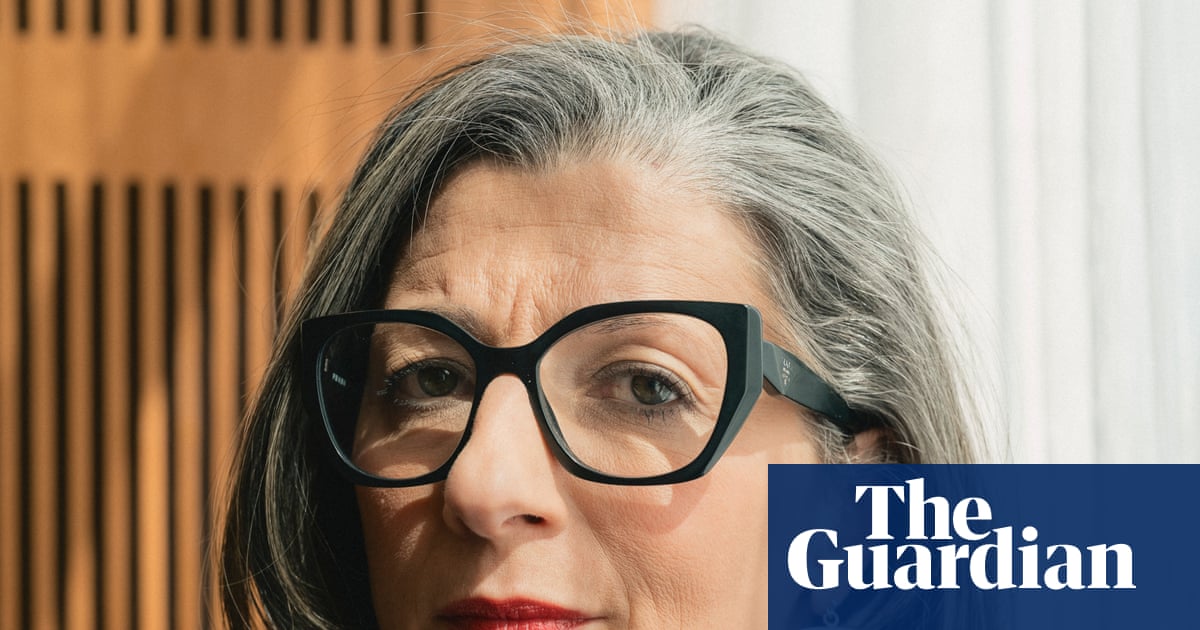

In hindsight, choosing a café as the location for an interview with Francesca Albanese was perhaps not the most prudent decision. Just as the conversation was set to begin, the waitress requested a photograph with the Italian human rights lawyer. This was soon followed by similar requests from the cashier and even the chef, who emerged from the kitchen clad in his uniform for a group picture. Other patrons also expressed their desire to meet her. Albanese, who is fluent in three languages, graciously engaged with everyone, which extended the time it took to initiate our discussion.
Albanese, 49, has recently been receiving a level of attention typically reserved for celebrities, a remarkable shift for someone in her position as an unpaid UN legal expert. Traditionally, her role as the UN Special Rapporteur on the human rights situation in the Palestinian territories, occupied since 1967, might have led to a life of relative obscurity. She is one of over 40 special rapporteurs who undertake pro bono investigations and produce reports on various human rights issues.
However, these are extraordinary times. The ongoing conflict between Israel and Palestine continuously reveals its capacity to provoke global unrest. The Hamas attack on October 7, 2023, which resulted in approximately 1,200 fatalities, incited a severe response from Israel, leading to the deaths of over 75,000 Palestinians in Gaza, displacing over 90% of the population, and leaving much of the area in devastation.
While Albanese was not the first to label the Israeli military actions as genocide, she was the first to do so while holding a UN title. For the past two years, she has consistently utilized her platform to denounce not only the Israeli government and its military actions but also the various Western nations and corporations that support them. Her message, conveyed through personal appearances and a series of UN reports, emphasizes that we are part of a systemic issue capable of mass violence.
As a result of her outspoken views, Albanese has faced threats to her safety and her family’s well-being. She has also confronted the possibility of arrest in Germany due to her statements. Under the Trump administration, she was designated a “specially designated national,” a label typically associated with terrorists and drug traffickers, making her the first UN official to receive such a designation.
“It was a difficult situation, placing me alongside mass murderers and drug traffickers,” Albanese explains. “It represents a paradox of enduring one of the harshest penalties without due process, as I have not been given the chance to defend myself. I have been sanctioned without any trial.”
Trump’s executive order against her barred any American individual or organization from providing her with “funds, goods or services,” a broadly defined restriction that has been likened to a form of “civil death.” Her Washington apartment, purchased while her family resided in the U.S. capital, has been confiscated, and she is unable to use credit cards globally, as most transactions are processed through U.S.-based systems. “I now rely on cash or have to borrow from friends and family,” she says.
Albanese alleges that pro-Israel activists in Geneva have targeted her husband, Massimiliano Calì, a senior economist at the World Bank, leading to his removal from a prominent role overseeing the organization’s Syria operations. “The World Bank displayed a complete lack of courage,” Albanese states. “He has an impeccable record in all his roles.”
Calì, along with their 13-year-old daughter, a U.S. citizen, is suing Trump and high-ranking officials in federal district court in Washington for violating their constitutional rights under the First, Fourth, and Fifth Amendments, as well as for the unlawful seizure of property. Due to UN policy, Albanese is unable to pursue the case personally; however, a group of U.S. law professors has submitted an amicus brief on behalf of the family, warning of the “chilling effect” the targeted sanctions have on free speech.
Paradoxically, the Trump administration’s efforts to vilify Albanese have elevated her status as a hero to many. She is part of a small yet notable resurgence on the left, fueled by outrage over the situation in Gaza, which includes Zohran Mamdani’s victory in the New York mayoral race and the rise of Zack Polanski within the Green Party in the UK.
“The genocides in Rwanda and Bosnia did not elicit this kind of widespread reaction,” Albanese remarks. “This indicates a deeper understanding of human rights today. It is a test of the universality of rights and our shared humanity.” The difference in public response can be attributed in part to Western complicity. The atrocities in Rwanda were committed with machetes, and in Srebrenica, mass killings occurred with machine guns and assault rifles. Conversely, many Palestinians in Gaza have been killed by precision bombs supplied by the U.S., guided by AI-assisted targeting systems. It represents a genocide of the 21st century.
In addition to her human rights advocacy, Albanese is set to release a book titled “When the World Sleeps: Stories, Words and Wounds of Palestine,” which serves as both a memoir and a tribute to the Palestinians, highlighting their dignity amid oppression and their “rage without hate.” The book features the narratives of ten individuals, starting with Hind Rajab, a five-year-old girl who lost her life in January 2024 in Gaza, found curled up in the back seat of her family car alongside four cousins after hours of pleading for help to the Palestinian Red Crescent.
Another character in the book is Alon Confino, an Italian-Israeli academic who passed away in 2024. He came to Albanese’s defense when she faced accusations of antisemitism. He was among the many Jewish progressives with whom she collaborated to challenge definitions of antisemitism that conflate criticism of the Israeli government, a blurring of lines that they argue poses risks for both Jews and Palestinians alike.
“When the World Sleeps” explores the foundations of Albanese’s commitment to justice and human rights, capturing the complex realities faced by those in the Palestinian territories.