
George Robertson, who served as Tony Blair’s initial defence secretary and held the position of NATO secretary general, criticized Keir Starmer on Tuesday for exhibiting a “corrosive complacency towards defence.” He expressed concerns that the Prime Minister is unwilling to commit to essential investments in national security.
Lord Robertson could have aimed his criticism at other targets. It is evident that no government department has been as indifferent to years of documented inefficiency, extravagant contracts, and policy choices that fail to address emerging security challenges facing the UK and its allies.
Officials within the Ministry of Defence and successive defence secretaries have not effectively challenged the senior military leadership, who often prioritize maintaining existing systems over adapting to new geopolitical dynamics and technological advancements.
Critics highlight that many military leaders have transitioned to lucrative positions in major arms companies, thus fostering a defence lobby that shields them from adequate oversight in both Whitehall and Westminster.
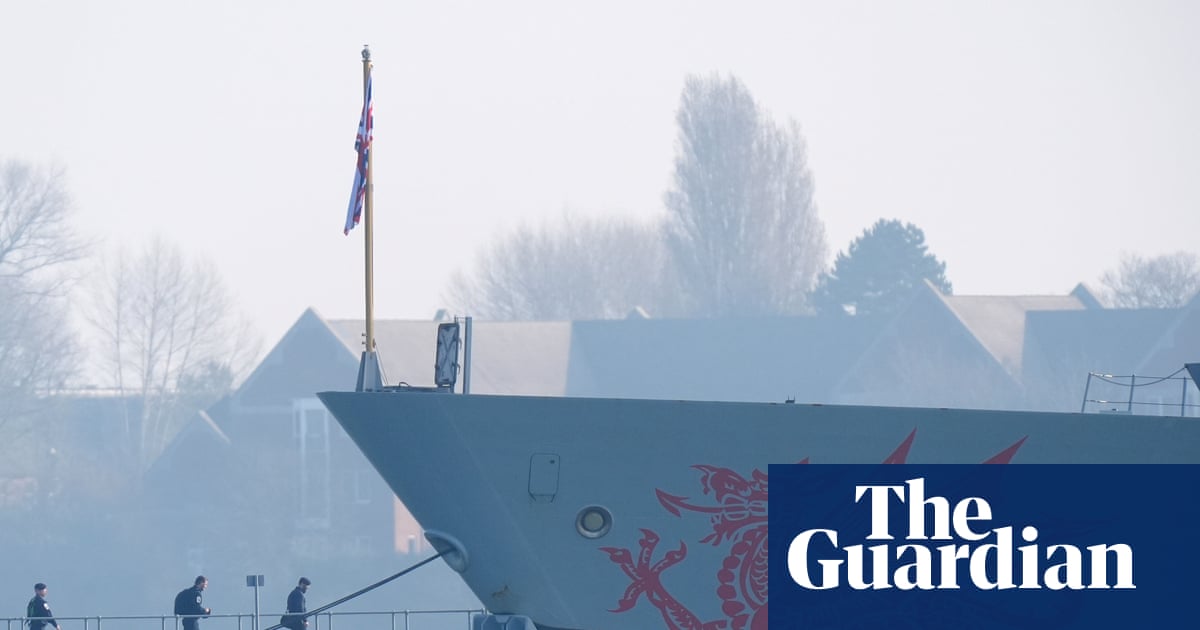
The precarious situation of the UK’s armed forces was recently showcased by images of HMS Dragon at Portsmouth docks, the navy’s only destroyer currently able to safeguard British interests that may be threatened amidst ongoing conflicts in the Middle East, including the RAF base in Akrotiri, Cyprus.
The crew worked swiftly to prepare the destroyer for deployment alongside NATO allies in the eastern Mediterranean, only to discover it required further repairs shortly after its arrival. Neither of the Royal Navy’s aircraft carriers, the Queen Elizabeth and Prince of Wales, which collectively cost over £6 billion, were operational despite initial budget estimates being below £4 billion.
Maintaining and repairing these vessels, which have faced significant mechanical issues in their brief operational lifespan, has already incurred costs exceeding £1 billion. While they may serve to enhance naval presence globally, they do little to bolster the UK’s air defence capabilities closer to home.
In the meantime, the government is contemplating the cancellation of the Ajax project, a new armoured vehicle for the army, despite over £6 billion already being spent. Ajax is running eight years late and is plagued by severe issues, including excessive vibration and noise that have reportedly made soldiers unwell, with some even experiencing hearing loss.
The Ministry of Defence (MoD) continues to invest heavily in outdated military hardware, such as heavy tanks. Last year, Starmer yielded to pressure from the United States to purchase 12 Lockheed Martin F-35 fighter jets, estimated to cost around £1 billion, and to equip them with tactical nuclear capabilities—something not recommended in Robertson’s defence review.
The MoD has been criticized for its sluggish response to the escalating threat of cyber warfare and other cost-effective military tools, including drones.
Robertson accused “non-military experts in the Treasury” of engaging in “vandalism,” arguing that the nation cannot ensure its defence while prioritizing an “ever-expanding welfare budget.” Given this, it is not surprising that the Treasury is hesitant to meet the MoD’s requests, including approval for a repeatedly postponed defence investment plan.
There is little indication that the MoD is learning from its past mistakes or acknowledging its failures. The fleet of Astute nuclear-powered attack submarines has consistently suffered from mechanical issues, and the new Dreadnought submarines intended for Trident nuclear missiles are already facing potential costly delays.
The MoD has frequently dismissed critical assessments of its financial practices and procurement processes from both the National Audit Office and the House of Commons public accounts committee.
The defence budget for 2024-25 stands at approximately £60.2 billion, with aspirations to increase it to £73.5 billion by 2028-29, reflecting a projected real-term growth rate of 3.8% annually. The MoD claims it will require an additional £28 billion over the next four years to address funding gaps and achieve “war-fighting readiness.”
All indications suggest that the MoD requires enhanced scrutiny from “non-military experts,” whether within the Treasury or from those more attuned to the potential benefits and savings associated with modern, flexible weapon systems, as well as from intelligence agencies tasked with anticipating and mitigating military conflict.
Richard Norton-Taylor is a defence and security writer for the Guardian, having joined the publication in 1973 as a European correspondent before later becoming its security editor.