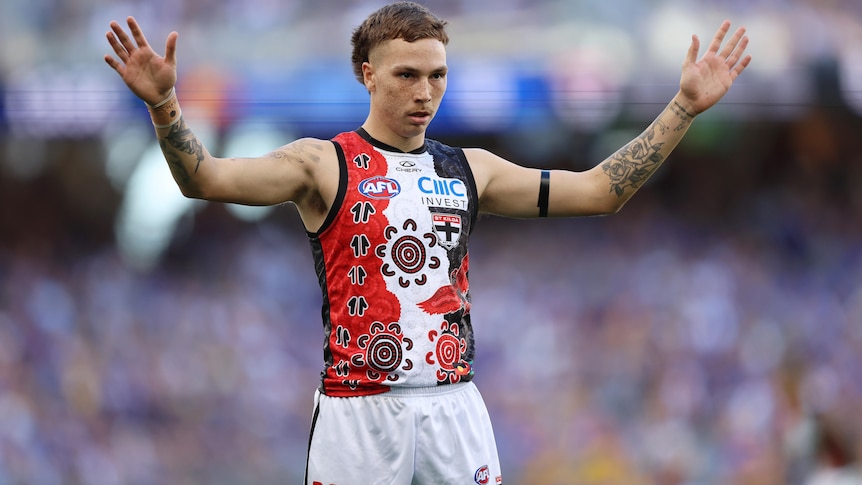

Lance Collard has received a suspension of nine weeks, with two weeks deferred, as part of the AFL’s intensified efforts to combat the use of homophobic language within the sport. This marks the eighth instance in the past three years where players or coaches affiliated with the AFL have been found guilty of employing such language during matches.
After a lengthy disciplinary hearing, the league determined that Collard, a 21-year-old player for St Kilda, used a homophobic slur during a VFL game. The AFL reiterated its firm stance against any form of homophobic language, stating that it has been unequivocally communicated to all players through various educational programs available to AFL and VFL participants.
However, the outcome of this case, which includes the league’s first disciplinary tribunal, has not resulted in a clear sense of victory for anyone involved. Former West Coast player Mitch Brown, notable for being the first openly bisexual man in AFL history, took to social media to voice his concerns about the backlash surrounding the Collard ruling. He pointed out that discussions surrounding homophobic language often lead to an uptick in its usage within certain circles of the football community.
“These situations are often dismissed as isolated incidents, but they reflect a deeper, unchanging culture,” Brown expressed in an interview with ABC Sport. He further lamented the distressing levels of online homophobia he witnessed over the weekend, emphasizing the negative impact it has on the LGBTQIA+ community. He challenged the notion that queer individuals should simply toughen up and tolerate such language, stating that silence is not a viable option.
St Kilda released a statement expressing disappointment with the imposed sanction and indicated that it would explore potential avenues for appeal. The club acknowledged the emotional toll the proceedings had taken, particularly on the LGBTQIA+ community. “This process has profoundly affected Lance, and we will continue to provide our support,” the statement read, noting that the legal representation during the hearing suggested the suspension could have devastating consequences for Collard’s life.
The statement also recognized the broader implications of this case for both the LGBTQIA+ and First Nations communities, as Collard identifies as a Noongar and Yamatji man. The previous notable sanction involved Adelaide Crows player Izak Rankine, who is of Kokatha and Ngarrindjeri descent, who received a four-week suspension for similar reasons.
Since his suspension, Rankine has engaged with the Rainbow Crows, a prominent pride initiative in Adelaide. The AFL Players Association (AFLPA) expressed its concerns regarding the disciplinary process and called for a more cohesive strategy that accounts for the diverse backgrounds of players. AFLPA CEO James Gallagher highlighted that addressing sensitive issues like racism and homophobia requires more than punitive measures, advocating for a comprehensive approach that includes community engagement and educational efforts.
The Eddie Betts Foundation has also emphasized the necessity of educational initiatives for youth in remote and rural areas, maintaining an active dialogue with the AFLPA on best practices and guidelines. There are worries that the tribunal hearing may discourage players from speaking out against or reporting instances of overheard homophobic language.
During the proceedings, two players from the Frankston Dolphins VFL team who provided testimony against Collard faced over an hour of cross-examination, which some reports described as intense. This scrutiny led to them being targeted with negative and sometimes abusive comments on social media.
When tribunal chair Jeff Gleeson QC announced Collard’s suspension, he referenced the testimony of Pride Cup CEO Hayley Conway, who had previously highlighted the detrimental effects of homophobic language on the queer community in sports. St Kilda called Conway as a witness due to her role in delivering Collard’s Pride in Sport training, a requirement from the AFL following his use of a homophobic slur in 2024.
Conway noted that education sessions for the Pride Cup focused on fostering understanding of LGBTQIA+ individuals through real-life stories and case studies illustrating the harmful impacts of homophobic and transphobic language. She further pointed out that discrimination against LGBTQIA+ individuals is a pervasive issue across all sports in Australia, stressing the need for collective investment in preventative measures rather than relying solely on high-profile sanctions. “Consequences should not only target individuals but address the broader cultural and societal challenges at play,” she stated.