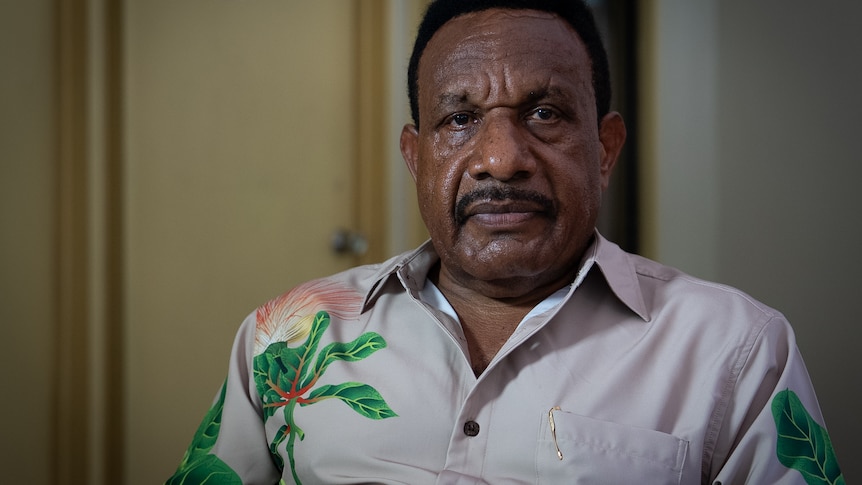

In Papua New Guinea, a hotel owner is pursuing legal action against the Australian government over unpaid accommodation fees for refugees. Mose Kopyoto claims that an agreement made in 2017 to house refugees at his establishment ceased payments after a few years.
Should the National Court of Papua New Guinea accept his request to include the Commonwealth of Australia and the Department of Home Affairs as defendants in a civil lawsuit, further legal proceedings could ensue. Kopyoto is seeking $11 million for unpaid lodging costs related to refugees who were previously held on Manus Island.
The case was presented in court today, following Kopyoto’s unsuccessful attempts to recover the funds from the Papua New Guinea government, which asserts that the responsibility lies with Australia. Ralph Saulep, the lawyer representing the hotel, stated that the Australian public deserves clarity on the situation, emphasizing that a significant sum of money was transferred from Australia to Papua New Guinea.
“I would encourage Australian taxpayers to question what Papua New Guinea has done with those funds,” Saulep remarked in an exclusive interview with the ABC.
The legal action comes amid concerns regarding potential mismanagement of Australian funds intended for refugees, prompting the Papua New Guinea government to announce a forensic investigation into the matter in 2023. The investigation’s results have not been disclosed, even as the Australian government continues to provide undisclosed amounts for refugee management in Papua New Guinea.
Greens senator David Shoebridge expressed hope that the court proceedings would shed light on the situation, calling for transparency regarding Australia’s obligations. “I trust that the PNG courts will compel Australia to acknowledge its responsibilities,” he stated.
The dispute traces back to a 2017 agreement between Lodge 10, the hotel in question, and officials from the Australian Border Force. Kopyoto indicated that his hotel was chosen to accommodate refugees and initially received direct payments from the Australian government. “Everything was running smoothly, and everyone was satisfied,” he noted.
However, in 2021, Australia announced it would terminate its offshore processing arrangements, transferring the responsibility for the remaining refugees to Papua New Guinea, after which the payments to Kopyoto ceased, despite the continued presence of refugees in his hotel. He now claims he is owed over $11 million and expressed his frustrations, stating, “It’s extremely painful and unjust. We cannot operate under these circumstances.”
Last year, Kopyoto initiated a civil lawsuit against the PNG immigration department to recover the outstanding payments, yet the department contended that Australia was accountable for the financial obligations. On Wednesday, Justice Pauline Bre postponed the decision on whether to add the Commonwealth of Australia and the Department of Home Affairs as defendants in the case. If permitted, this would allow Kopyoto to pursue legal action against the Australian government for the overdue fees.
The Australian high commissioner was presented with the application on March 17, but representatives from the Australian government were absent during Wednesday’s court session. Justice Bre remarked that it would be fitting for the Australian government to secure legal representation in this matter.
Saulep stressed that the issue cannot be ignored. “One cannot simply avoid responsibility; burying one’s head in the sand will not resolve this,” he asserted.
The case has sparked broader discussions regarding the accountability of Australian taxpayer money allocated to foreign nations. “There is a pressing need for Papua New Guinea to clarify how significant funds from Australia have been utilized,” Saulep stated. “Why is it that the primary entity responsible for managing the refugees has yet to receive payment?”
While the precise amount allocated by the Australian government to Papua New Guinea for refugee support remains undisclosed, Senator Shoebridge anticipates it to be considerable. “Historically, programs related to Manus Island, Christmas Island, and Nauru have cost hundreds of millions, if not billions of dollars,” he noted.
The PNG government initiated a forensic investigation in 2023 following allegations linking the refugee program to businesses associated with a woman charged with attempting to smuggle $15 million worth of methamphetamine into Australia. This came after claims by a whistleblower within the PNG immigration department regarding the misuse of refugee funds. The investigation’s findings have not yet been released, and the PNG government has not responded to inquiries from the ABC.
Although the Australian Department of Home Affairs did not address specific questions about the unpaid hotel fees or the alleged funding misuse, a spokesperson stated that as of January 2022, the PNG government has taken full and independent management of the individuals remaining in the country. “The Australian government no longer plays any role in the management or service delivery for individuals in Papua New Guinea,” they added.
Senator Shoebridge reiterated the need for transparency and accountability regarding the funds allocated for refugees. “I have consistently sought answers from the Albanese government regarding the financial support provided to the Papua New Guinea government for this group of men and their families, and what the expected outcomes are in return,” he said. “We may finally obtain insight into these critical questions through the court proceedings in Papua New Guinea, rather than through official government channels.”