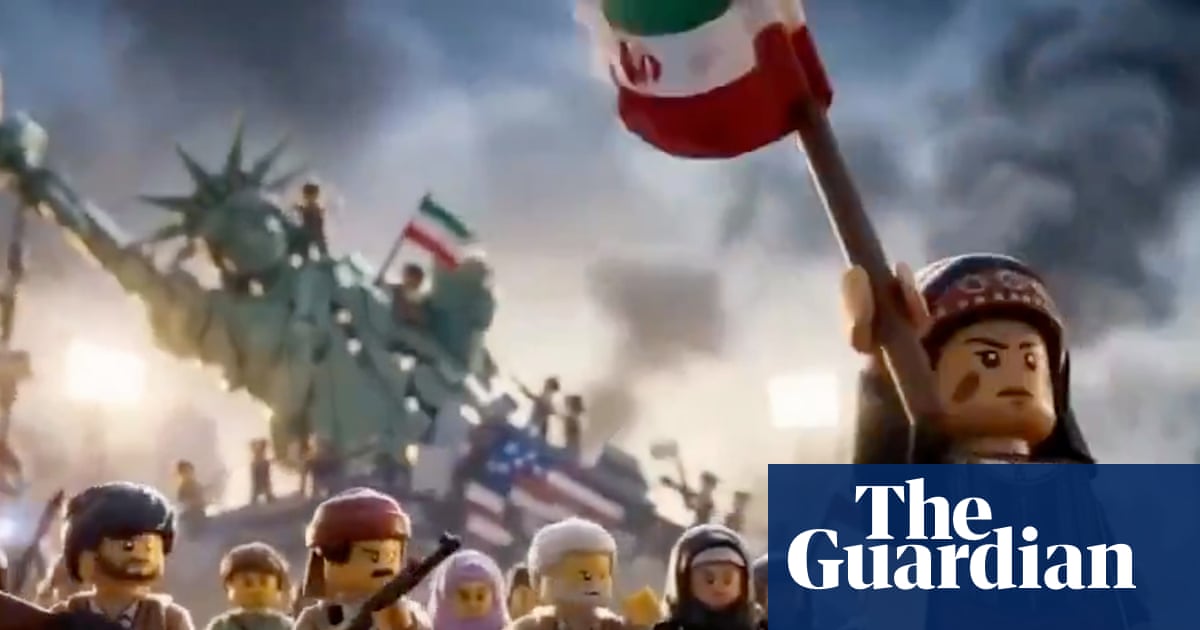

If Iran were able to produce destructive missiles at the same pace it creates popular internet memes, the US Central Command would likely find itself in a compromising position by now.
One of the more unusual elements of the ongoing Iran-U.S. conflict is that Iran, a nation often associated with conservative clerics anxious about Western culture and media influence, is excelling in the realm of social media. The country has mobilized its tech-savvy Generation Z individuals to engage Western audiences through sharp wit and mockery directed at the Trump administration.
In stark contrast, former President Donald Trump, whose approval ratings have fallen to levels reminiscent of Richard Nixon during his impeachment, continues to make blunders. Recently, he was forced to remove a controversial post from Truth Social in which he compared himself to the Messiah, while also being cornered into taking blame for disruptions in global trade.
Iran’s prowess on social media is particularly striking given that many citizens are currently enduring an extensive internet blackout—the longest imposed by any government globally—lasting over four weeks. The country’s once dynamic press has been diminished to echoing military spokespersons or rehashing Western articles claiming Trump is facing a strategic setback. Several prominent Iranian newspapers have been shut down, and citizens frequently lament the poor quality of state-run television news channels.
Despite this oppressive environment, creativity aimed at the West has emerged. Pro-government social media accounts are producing AI-generated Lego animations linking the Jeffrey Epstein case to Trump, using humor and assuredness to highlight perceived Western shortcomings.
A recent post from Iran’s South African embassy, recognized for its effective social media engagement, featured Trump dressed as an 1980s rock star with voluminous hair, performing a parody of Desireless’s “Voyage Voyage,” which was retitled “Blockade,” while playing the keyboard. Within a day, the post garnered over 45,000 likes. On the evening Trump declared his intention to end Persian civilization, the same embassy shared a video of a dog looking curiously at the camera as nothing occurred. The intrigue surrounding these posts prompted IranWire to investigate the minds behind the Qalibaf feed, reportedly tracing it back to an old political ally in the U.S. Notably, much of this content does not explicitly reference religion.
Narges Bajoghli, an assistant professor specializing in Middle East studies at the Johns Hopkins School of Advanced International Studies and a cultural anthropologist, has closely examined Iran’s communication strategies. During a briefing at the Quincy Institute, she remarked that Iran’s media efforts have swiftly outpaced those of U.S. tech companies in disseminating content and messaging. “Wars are fought on two fronts,” she noted. “The battlefield, and just as crucially, the battlefield of communication. Iran has effectively seized control of the communications battle, particularly on social media platforms worldwide.”
Bajoghli explained that Iran recognized it would be challenging to influence U.S. mainstream media, which has long portrayed the nation as a terrorist state led by extremists. “Where they have excelled is in hijacking the conversation and narrative within the social media sphere,” she asserted.
“A new generation of millennial and Gen Z content creators in Iran has been empowered to communicate about this war to the global audience, particularly to those online who are beginning to grasp the complexities of the situation following Gaza. This represents a fundamental shift,” she added.
Bajoghli noted she has monitored social media across various political viewpoints for over a decade and has never seen such a convergence of interest in any other issue as with this conflict. “Across the political spectrum—whether right-wing, moderate Republican, or leftist—all groups in the United States are consistently sharing viral content from Iran,” she pointed out, highlighting that this phenomenon is unprecedented in her professional experience spanning 15 years.
One of the obstacles the U.S. faces in promoting its narrative may stem from budget cuts enacted by Elon Musk at the U.S. State Department. Meanwhile, the Pentagon continues to project a warrior ethos aimed at its traditional base, while Trump often communicates in hyperbolic, attention-grabbing text.
Bajoghli also noted that Iran is significantly influencing Arab discourse by initiating discussions about sovereignty—an issue with profound implications. She argued that Iran aims to convince the Arab world that Israel has been asserting to Gulf nations that it alone is entitled to sovereignty. Consequently, this raises the critical question: “What does sovereignty mean in the region if Israel operates as a military hegemon, fully supported by the United States?”
She emphasized that the existing political establishments in these countries may struggle to maintain their sovereignty if it is continually challenged by powers that appear indifferent to the sovereignty of all nations in the region, except Israel’s. “This is the fault line that Iran is currently exploiting,” she concluded.