
Amid increasing fuel prices and concerns regarding their availability, employment opportunities for backpackers in the Australian outback are dwindling. A local roadhouse has reported a staggering 76% decline in revenue, resulting in the termination of seven out of nine seasonal jobs.
Experts warn that the reduction in backpacker numbers will have a profound effect on the economies of remote regions in Australia.
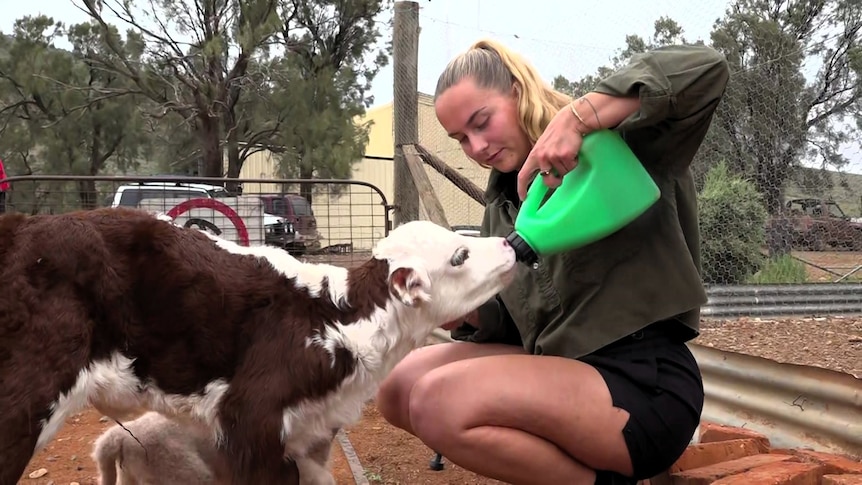
Every morning, Jule Hofele, a 24-year-old backpacker from Germany, awakens to the sounds of roosters and views of rugged mountains against expansive green fields at Mount Little Station in the Flinders Ranges. For her, this experience starkly contrasts with life back home.
“It’s stunning here; it’s peaceful, and every day brings something new,” she remarked.
Ms. Hofele began her role at the station in March, tasked with cleaning accommodations. However, her experience hasn’t aligned with her initial expectations. “My job depends on tourist numbers, which are currently lacking,” she explained. “I was told that things would pick up around Easter or during school holidays, but we’re essentially just waiting.” The station typically accommodates 400 guests this time of year, but is currently only half full.
“People are finding it hard to afford the trip, and there’s also anxiety about running out of fuel,” noted Kellie Zadow, the station’s owner. She had recently employed another backpacker under a Working Holiday Maker (WHM) visa, but unfortunately had to let them go after just one week.
Backpackers can fulfill the required 88 days of specified work through various eligible employers. As per the latest government statistics, there are 235,600 WHMs in Australia.
“It’s tough to generate enough work for even one backpacker, let alone two,” Ms. Zadow added.
Ms. Hofele expressed her apprehension about being the sole backpacker at the station. “I’ve seen posts from past years where other girls formed great friendships,” she said. “It would be nice to have someone my age to explore with.”
The situation is even more critical deeper into the outback. Located 700 kilometers northwest of Mount Little Station, Oodnadatta is on the fringe of the Simpson Desert in South Australia’s Far North. Joe Calvert, the owner of the Pink Roadhouse, reported a 76% drop in revenue compared to last year, leading him to reduce his workforce from nine seasonal employees to just two.
“After the onset of the war and the spike in fuel prices, we had to cancel incoming staff,” Mr. Calvert stated. “As time passed, it became clear that we couldn’t sustain the workers we had.” One of those affected was Irish backpacker Mark Wickham, who had been working at the Pink Roadhouse since March and had anticipated a three-month stay. “It’s disappointing to leave early. I would prefer to remain in South Australia, especially in rural areas, but employment is the key factor,” he said.
Since his dismissal, Mr. Wickham has been seeking new job opportunities in the outback but has faced challenges. “I’m sensing that other backpackers are opting to stay in cities due to the long distances and the expense of traveling here,” he shared.
To qualify for the 88 days of regional work under the WHM visa, hospitality workers can be employed anywhere in South Australia, excluding metropolitan Adelaide. Mr. Wickham plans to head south in hopes of receiving responses from hospitality establishments in more populated areas.
Tourism expert Donna James emphasized the vital role backpackers play in remote Australian economies. She described WHMs as “high-return tourists” who tend to spend differently compared to short-term visitors. “While other tourists may visit for just a few days, backpackers often stay for weeks or months, relying on long-term accommodations and purchasing groceries from local shops, thus contributing significantly to the local economy,” Dr. James explained.
In addition to economic contributions, Dr. James noted the social benefits of backpackers in small communities. “They infuse these areas with a lively, youthful energy,” she stated. “Remote towns that struggle to fill sports teams often rely on backpackers to participate and compete.”
For Jule Hofele, the hope remains that tourism will rebound, allowing her to continue her work at Mount Little Station. “The previous backpackers ended up staying longer than they intended, and I can see that happening to me because I truly enjoy it here,” she reflected.