
The phenomenon dubbed “Insectageddon” has not materialized, yet a significant reduction in butterfly diversity has been observed over the last fifty years, as revealed by the largest insect monitoring initiative globally.
Since 1976, the collection of over 44 million butterfly sightings in Britain indicates that out of 58 recorded native species, 33 have experienced declines while 25 have seen population increases.
Climate change is favoring some butterfly varieties, with species such as the purple emperor (up 136%), red admiral (up 330%), and comma (up 178%) migrating north in response to warmer temperatures.
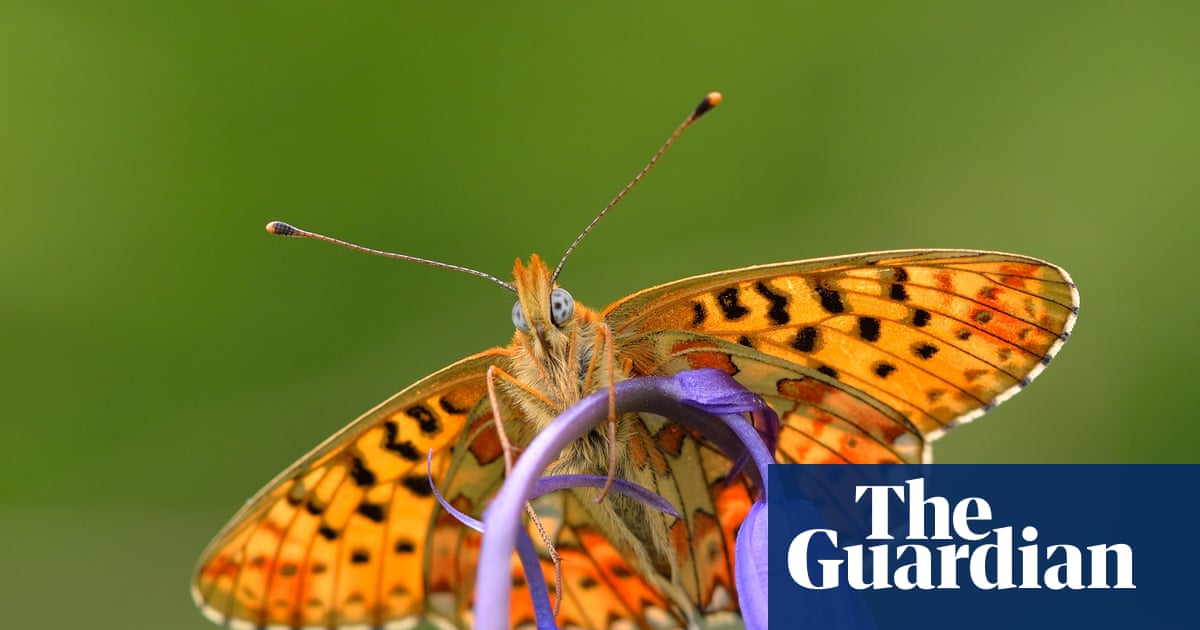
Conversely, several rare “habitat specialist” butterflies—those dependent on specific plants or environments like wetlands, woodlands, or flower-rich grasslands—are facing severe population drops. Species such as the high brown fritillary (down 66%), pearl-bordered fritillary (down 70%), and white-letter hairstreak (down 80%) are among those most affected.
Richard Fox, the science director at Butterfly Conservation, commented, “While we are not witnessing the catastrophic decline once feared, the evidence clearly indicates that butterfly populations in the UK have diminished over the past half-century, particularly among habitat specialists.”
Many species, including the pearl-bordered, small pearl-bordered, and high brown fritillaries, have become rare due to the decline of traditional woodland management practices, such as coppicing, which have diminished the floral diversity and sunny conditions in many forests.
Habitat destruction and pollution are major factors in these declines, with climate change contributing indirectly. Fox noted that species like the grassland-dwelling wall brown and grayling are likely declining due to a combination of rising temperatures and nitrogen pollution from vehicles, which encourages taller grass growth that can inhibit caterpillar development.
Fox further explained, “Rain is becoming a diluted fertilizer that is falling on our plant communities, leading to changes. Alterations in the composition, structure, and even the chemical properties of plants will inevitably affect specialist herbivores like butterfly caterpillars.”
Conservationists have extensively researched rare and declining habitat specialist butterflies and generally understand what management practices can enhance their populations. “We simply need to implement these strategies more widely,” Fox emphasized.
The UK Butterfly Monitoring Scheme (UKBMS), a collaborative effort involving Butterfly Conservation, the UK Centre for Ecology & Hydrology, the British Trust for Ornithology, and the Joint Nature Conservation Committee, has documented successes in butterfly conservation over the past 50 years.
One notable success story is the large blue butterfly, which was declared extinct in Britain in 1979 but has rebounded dramatically since its reintroduction to specially managed grasslands in Somerset, experiencing a population increase of 1,866% since 1983. Other conservation efforts have also benefited rare species like the silver-spotted skipper (up 300%) and the black hairstreak (up 844%).
Since 1976, volunteer citizen scientists have collectively covered over 1.5 million kilometers (900,000 miles) across more than 7,600 sites in Britain each summer to gather this data.
Professor Chris Thomas, director of the Leverhulme Centre for Anthropocene Biodiversity at the University of York, who is not affiliated with the UKBMS, remarked on the significance of the scheme: “The UKBMS is outstanding and should be recognized for its contributions. It is evident that considerable changes have taken place, and thanks to this scheme, we have the data to understand them. The fact that 43% of species with available data have increased over the last 50 years is remarkable, considering the pace of environmental change.”
The UKBMS data for 2025 indicated that despite Britain having its sunniest year on record, it ranked only as the 20th best year for butterfly populations since 1976, with no species achieving a record high.
Fox concluded, “The issue is not merely a decline in the overall number of butterflies, but also a loss of diversity. Just like the disappearance of family-run shops and traditional crafts from our high streets, we are losing the variety and diversity of butterfly communities in our altered and simplified landscapes.”
“We possess remarkable butterfly species in the UK, and we are aware of the necessary steps to support them: create more habitats. Butterfly Conservation has been committed to this mission for over 50 years, yet the urgency of our efforts is increasing, and we require additional support.”