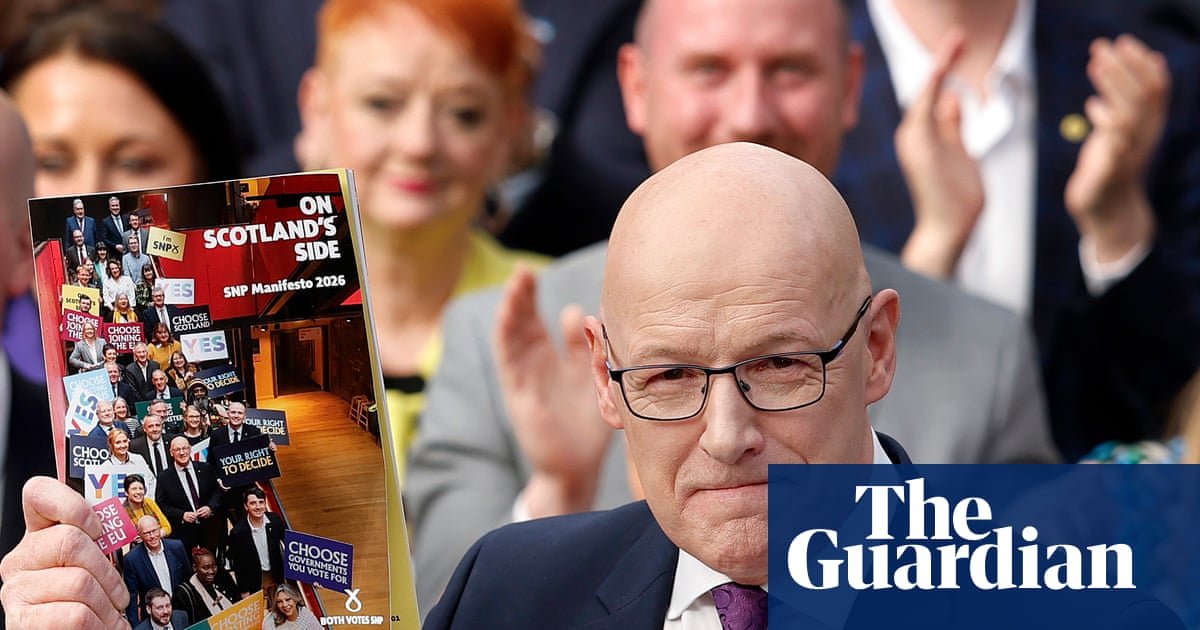

John Swinney, the leader of the Scottish National Party (SNP), has promised to impose price caps on essential supermarket items such as bread and milk if the party retains its position in the upcoming elections. He emphasized that the escalating cost of living is “the defining issue of this election.”
With forecasts suggesting that the SNP is on track for a fifth consecutive term in the Scottish Parliament, Swinney announced his intention to utilize devolved public health powers to regulate the prices of 20 to 50 staple products, including milk, bread, cheese, eggs, rice, and chicken. He expressed concern that the rising costs are adversely affecting the nutritional well-being of the population.
This bold commitment was unveiled during the SNP manifesto launch for the Scottish parliamentary elections, but it was quickly dismissed by retailers as a “potty gimmick.” The proposal could also lead to tensions with the UK government, as it may contravene the Scotland Act of 1998, which established the devolved parliament.
Ewan MacDonald-Russell, the deputy head of the Scottish Retail Consortium, pointed out that supermarkets in Scotland already face significantly higher operational costs, amounting to an additional £162 million over the next three years compared to their counterparts in England. He argued that instead of reverting to outdated price controls, policies should aim at reducing costs for retailers to enable them to maintain lower prices for consumers.
The Scottish Grocers’ Federation expressed concerns that smaller shops might suffer from an unfair competitive edge, while there were also apprehensions about how discounting could affect the prices supermarkets offer to farmers.
During the manifesto launch in Glasgow, Swinney outlined additional measures to alleviate the cost of living, including a £2 cap on bus fares for any journey across Scotland on a single service, anticipated to cost £210 million by 2032.
The Scottish Greens, advocating for universal free bus travel in their own manifesto, noted that the SNP had previously rejected a similar proposal during last year’s budget discussions.
Swinney suggested that an independent Scotland would have the ability to regulate energy prices, asserting that adjustments to these costs would “be on the ballot” in this election. However, he could not specify any concrete policies aimed at reducing energy bills, though he mentioned that domestic electricity prices could be lowered by dissociating them from the fluctuating costs of gas used in backup power generation.
Energy experts have indicated that accomplishing this dissociation would be challenging, especially as gas remains a crucial component of the energy market. Labour has proposed that the best approach to reducing domestic energy expenses is to transition more rapidly to renewable and nuclear energy sources.
Addressing supporters and party candidates at a cultural venue in Glasgow, Swinney stated, “A vote for the SNP on May 7 is a vote to place Scotland’s future in Scotland’s hands.” He later remarked on the feasibility of a second independence referendum by 2028, although he did not provide a clear strategy for achieving this, particularly in light of Westminster’s ongoing resistance.
Swinney positioned himself as a serious candidate during a week that saw heated disputes between Scottish Labour and Reform regarding potential collaborations to prevent the SNP from maintaining power post-election. He asserted, “Scotland currently requires experienced, principled, and reliable leadership in its highest office, and that is what I offer.” He also committed to not increasing the number of income tax bands or rates in the next parliamentary term, countering criticism from the Tories and Reform about the existing system being overly punitive.
The SNP’s manifesto, projected to incur an additional cost of £1.4 billion by 2032, includes a commitment to establish a minimum income for artists, mirroring a proposal put forth by Scottish Labour a week prior, which is expected to cost around £30 million over two years.
Additional initiatives in the manifesto include the construction of 110,000 affordable homes by 2032, with 10% allocated for rural areas and islands, facilitated by unlocking approximately £20 billion in investable pension fund assets in Scotland.
Plans also encompass a nationwide ban on mobile phones in classrooms and the distribution of “welcome to school” bags containing essential items such as water bottles, books, and stationery for all Year 1 students.
The 72-page manifesto reiterated previous commitments, including a £100 million first homes fund designed to offer up to £10,000 in deposit assistance for first-time buyers. It also proposed expanding subsidized childcare for children from nine months to the end of primary school, available year-round based on family income.
The Institute for Fiscal Studies (IFS), an economic think tank, remarked that the SNP’s proposals lack a credible financial plan to support them, especially considering the significant public sector efficiencies previously planned to fund existing initiatives. David Phillips, an IFS expert on devolved government spending, noted that this absence of clarity is a “familiar pattern” in Scottish elections, suggesting that the funding of these plans would likely necessitate either further tax increases or deeper cuts to less critical spending.