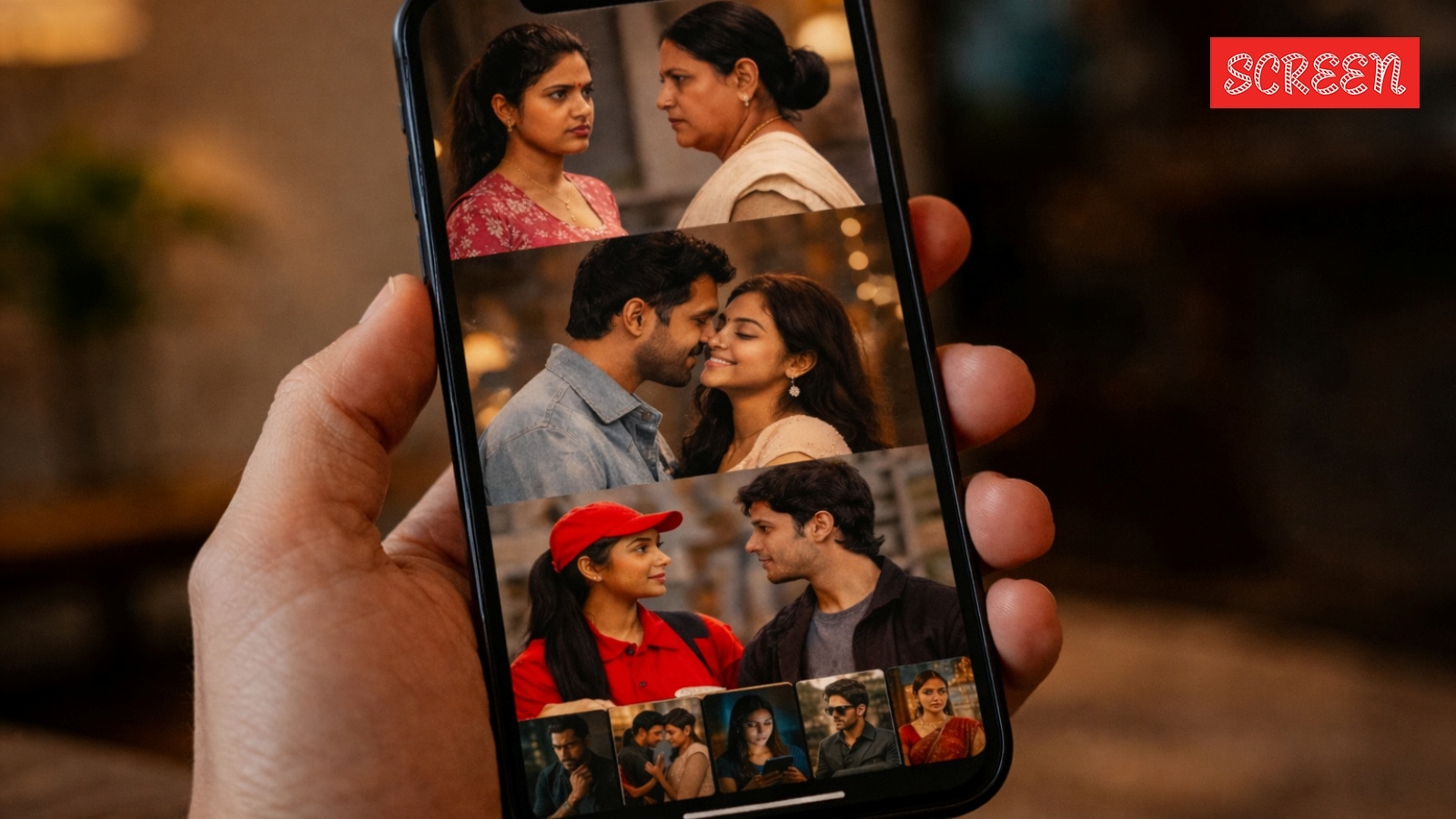

As you browse through social media platforms like Instagram or Facebook, it’s quite likely that you’ll come across a scene featuring an average man facing public humiliation at the hands of a security guard, a cunning family member, or an authority figure. The audience often reacts with laughter. However, in just a few short episodes—and with your subscription fees—the protagonist will regain his composure, make a pivotal phone call that alters the course of events, and the very individuals who once mocked him will find themselves humbled.
This narrative has likely appeared multiple times in your feed this month alone, and you may have even opted to subscribe for more. While the specific scenarios may vary, the underlying theme remains consistent: the concept of the hidden billionaire is omnipresent in these microdrama stories.
Microdramas, which usually run for 60 to 90 seconds each, have become a popular choice for viewers who primarily engage with content on their smartphones. Tailored for brief interludes—whether during commutes, coffee breaks, or quick scrolls through social media—they demand little time investment while delivering a significant emotional impact.
According to the Lumikai’s State of India Interactive Media Report 2025, the microdrama sector in India surpassed $300 million in its inaugural year. The FICCI-EY Media & Entertainment Report 2026 estimates the market will be valued at Rs 6.5 billion in 2025, with projections reaching Rs 23.2 billion by 2028.
However, why do many of these series seem to recycle the same narratives?
Rahul Ranjan Rai, Script Supervisor at DashvershAi’s Dashreels, suggests that the roots of these plots extend beyond the realm of vertical video. Having contributed to various platforms, Rai asserts that microdramas did not originate these tales; rather, they have digitized an existing literary phenomenon. He points out that these narratives of public disgrace and unexpected social redemption, often labeled as “Face-Slapping” in online literature, provide a unique form of psychological satisfaction.
The ‘hidden billionaire’ trope, according to Rai, embodies a revenge fantasy against societal gatekeepers. For individuals who have experienced condescension from figures like security guards or managers, witnessing these so-called superiors compelled to apologize to someone perceived as lower in status delivers a specific thrill that more elaborate Bollywood films often fail to capture.
This insight sheds light on the rapid growth of this format. In India, various platforms such as Kuku TV, Flick TV, Zee, and MX Player are rapidly entering the microdrama landscape.
Screenwriter Miheel Parmar describes the format as catering to a “highly individualistic viewing experience, serving as a substitute for traditional reels.” To accommodate this, Rai outlines a “high-frequency” narrative style where writers are expected to present a “micro-climax” every 15 seconds, eliminating any elements that could be considered filler, such as travel scenes or extended pauses.
This demand for constant engagement can lead to a “copycat” trend. One anonymous writer shared that many platforms opt for a “licensing shortcut,” purchasing successful scripts from China and adapting them for local audiences instead of fostering original content.
Another writer, wishing to remain anonymous, mentioned that platforms often request foreign shows to be remade “exactly as they are, without any thoughtful adaptation.”
Tanmay Gemini, who has also penned microdramas, observes that even innovative concepts frequently lose their essence due to requests for more cliffhangers: “Even if you have a unique idea, that conflict can’t fulfill its potential.”
Nevertheless, the format provides an accessible entry point for aspiring writers. Shreemi Verma, currently involved in three different microdramas, describes it as a valuable exercise: “Crafting a story within two minutes is an art.”
Actor Lokesh acknowledges that while these projects may lack depth, they offer consistent employment and networking opportunities in a notoriously unpredictable industry.
However, this rapid production cycle comes with its drawbacks. The industry is increasingly driven by data analytics, with producers examining audience engagement metrics and pressuring writers to replicate successful formulas. “This transforms creativity into a production line, where we merely ‘fill in the blanks’ of a proven template,” noted another writer. This can lead to creative exhaustion, as writers are often tasked with producing extensive content for minimal financial reward, becoming “content assemblers” rather than true storytellers.
If template-driven storytelling is the current landscape, automation may be the next logical progression. As platforms strive for larger audiences, the potential for AI to take over the writing process looms, threatening to reduce storytelling to mere pattern recognition. Insiders predict a future where AI-generated content allows viewers to pay for the ability to “choose their own ending” or tailor the protagonist’s journey, possibly eliminating human writers altogether.
Furthermore, the issue of crediting remains a significant concern, as most apps fail to acknowledge the contributions of writers or crew members, creating an environment devoid of support. “The concept of a union for writers is still relatively new in our field,” states Anjum Rajabali of the Screen Writer Association. While efforts are underway to extend film-style contract reforms to the microdrama sector, he encourages writers to utilize the SWA’s legal resources to protect their autonomy: “It may seem harsh for struggling writers, but they should not hesitate to decline projects that exploit their vulnerability.”
The financial landscape remains uncertain as well. Miheel Parmar points out that platforms are still “figuring it out,” with some focusing on building libraries solely to sell content to larger companies. “Nobody is truly engaged for the sake of the art,” remarks Gemini.
Microdramas are undeniably flourishing—quick, inexpensive, and addictive. However, as the narrative of the hidden billionaire prevails, a critical question arises: will the writers behind these stories ever be granted the time, resources, and artistic freedom to explore different narratives? If the only motivation is commercial gain, the tale of the hidden billionaire may dominate the storytelling landscape indefinitely.
Anas Arif is a seasoned entertainment journalist and cinematic analyst at The Indian Express, specializing in the intersection of Indian pop culture, auteur-driven cinema, and industry ethics.