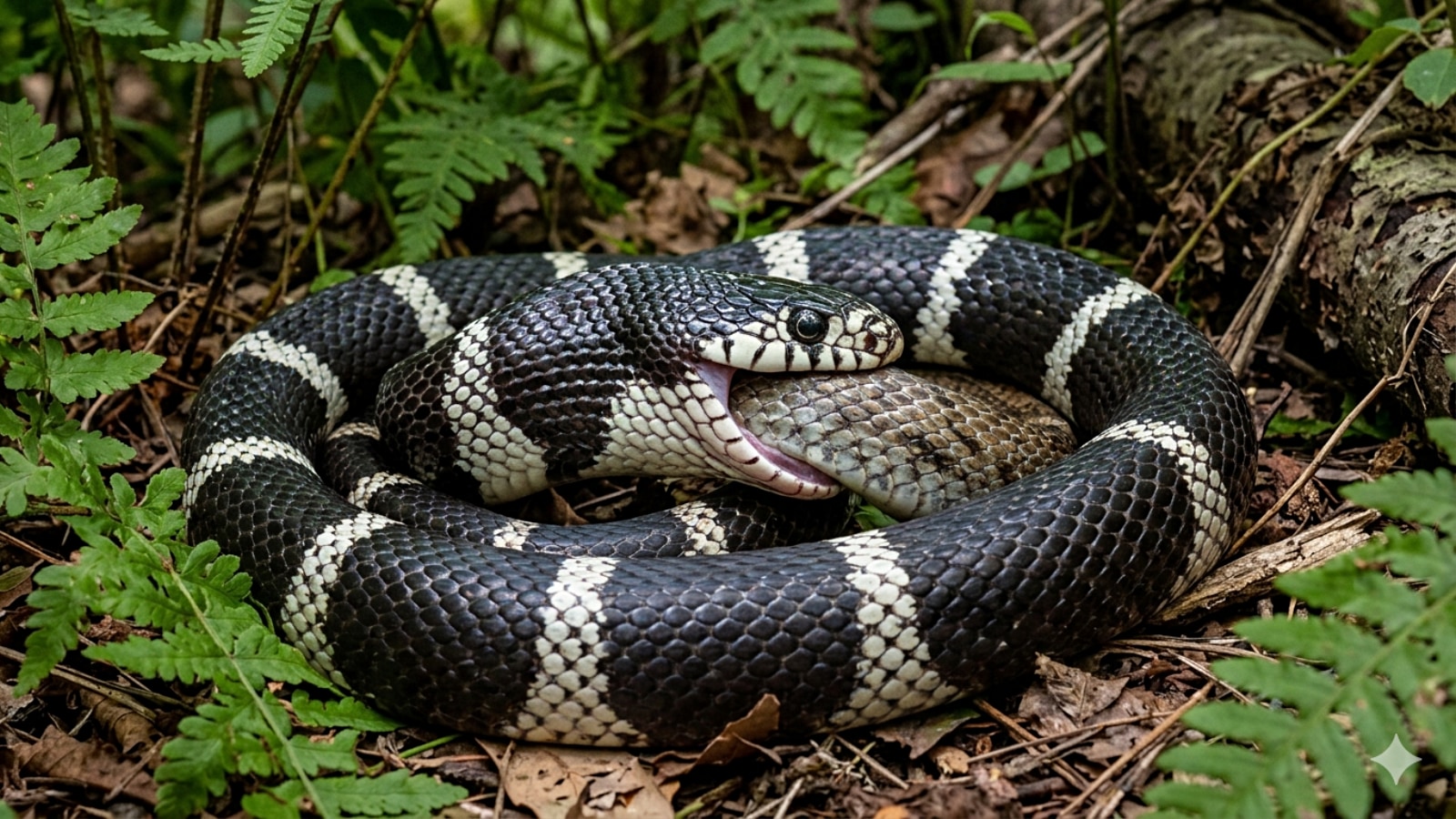

Cannibalism may evoke unsettling images reminiscent of horror fiction, yet it is a phenomenon that occurs more frequently in the snake world than one might expect. Recent research indicates that snakes have independently developed the behavior of consuming their own species numerous times throughout their evolutionary history.
A study released on November 2, 2025, in the journal Biological Reviews analyzed approximately 500 documented instances of snake cannibalism across over 200 species. The findings suggest that this behavior has evolved at least 11 times independently, revealing a significant pattern rooted in survival strategies.
Snakes are known to be opportunistic feeders, often not limiting themselves to a single type of prey. When food is limited and another snake is within reach, they may seize the opportunity. In challenging environments, this behavior allows them to obtain a high-energy meal while simultaneously decreasing competition for resources.
Researchers have identified several triggers for this behavior, including food scarcity, environmental stresses, and resource competition. In these scenarios, consuming another snake becomes a practical dietary choice rather than an unusual act.
Bruna Falcão, the lead author of the study and a biology graduate student at the University of São Paulo, explained to Live Science, “For humans, cannibalism is typically viewed as strange and repulsive. However, for snakes, it is beneficial to their ecological fitness. It is a strategic choice.”
Cannibalism has been documented among various snake families, such as Colubridae, Viperidae, and Elapidae. This behavior can occur both in natural habitats and in captivity, where factors like stress, limited space, or food shortages can heighten the likelihood of such actions.
Interestingly, there have been rare occurrences of male snakes consuming females outside the mating season, a behavior that may seem odd but can be attributed to survival instincts.
Nonetheless, not all snakes are capable of cannibalism. A crucial factor is their ability to open their jaws wide enough to ingest larger prey. Many species that exhibit cannibalistic tendencies are generalist feeders, allowing them to adjust their diets based on availability, thereby facilitating the shift to cannibalism when necessary.
It is indeed intriguing how the instinct for survival can drive even some of the most formidable creatures on Earth to engage in extreme behaviors to stay alive.