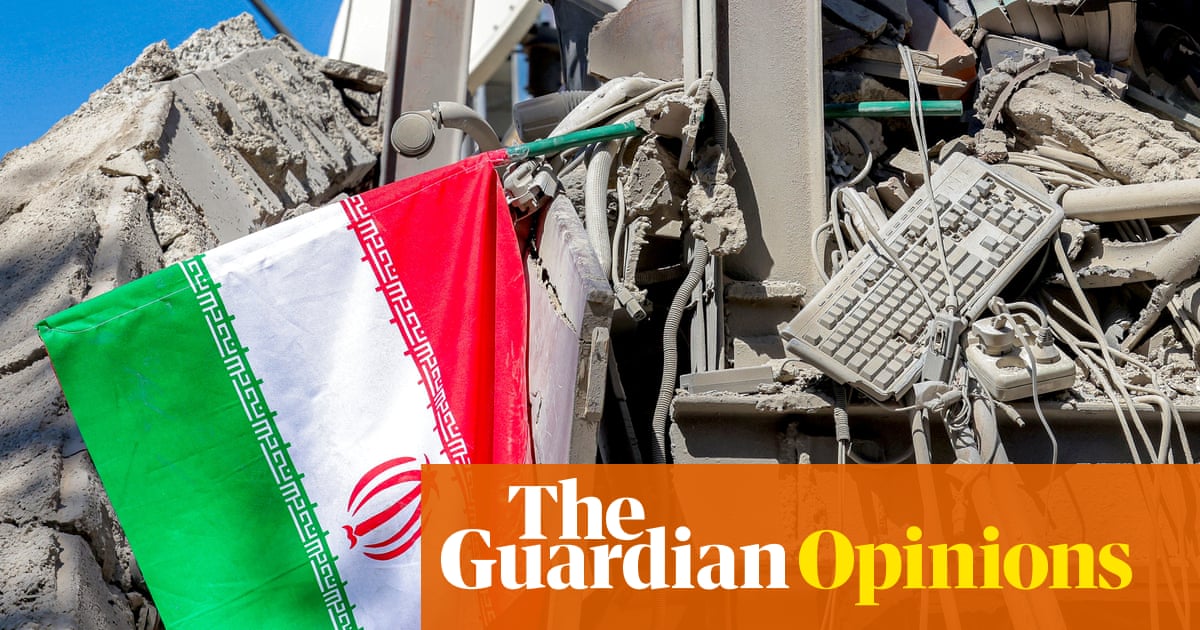

The Chancellor of the Exchequer and the International Monetary Fund (IMF) have reached a consensus: the British economy is on the brink of experiencing its most significant downturn in decades. This impending crisis is largely attributed to the repercussions of the United States’ conflict with Iran and the subsequent closure of the Strait of Hormuz, further exacerbated by the imposition of sanctions on oil exports from Gulf nations. The UK has already suffered from four years of sanctions against Russia in response to the Ukraine conflict, leading to a forecasted decline in economic growth, a drop in government approval ratings, and the potential for the Prime Minister’s ousting.
Sanctions were originally intended to weaken adversaries, not to inflict damage on the UK. Their extraordinary intensity was designed to make Vladimir Putin reconsider his actions, with hopes that his associates would urge him to relent. However, since the sanctions were enacted, Russia’s economic growth has outpaced that of the UK. Furthermore, sanctions targeting Iran during the 2010s aimed to curb its nuclear ambitions but seemingly had the opposite effect. Presently, these sanctions are intended to destabilize the Iranian regime and bring about the fall of its leadership, yet prospects for this outcome appear bleak.
The United States currently enforces economic sanctions on approximately 30 nations globally, often in collaboration with other Western countries. These include Iran, North Korea, Myanmar, Belarus, and Afghanistan. A common trait among these nations is that they remain governed by the same regimes that were in place when sanctions were imposed, indicating a lack of success in destabilizing these governments.
Moreover, sanctions have inadvertently fortified the anti-Western alliance between China and Russia. They have prompted various countries to align with the BRICS group (Brazil, Russia, India, China, and South Africa) as a counter to the G7 nations, demonstrating the counterproductive nature of these policies.
The book “The Economic Weapon” by Nicholas Mulder explores the historical ineffectiveness of using trade as a coercive tool against adversaries. It asserts that trade tends to adapt and find alternatives, particularly in nations resistant to internal democratic reforms. Historical examples, such as the fascist regimes prior to World War II, reveal that sanctions often pushed them toward self-sufficiency rather than promoting change. Mulder notes, “The history of sanctions is a history of disappointments,” while advocates maintain that “this time it will be different,” a belief that has consistently proven unfounded.
Defense think tanks generally avoid addressing this issue, as sanctions are perceived as a form of aggression that seems assertive without necessitating military action. Liberals favor them as a seemingly strong alternative to pacifism, while conservatives appreciate the ability to discuss sanctions in terms of “crippling” measures without resorting to overt violence.
Strategists often view sanctions as a preferable alternative to military strikes for showcasing power. They convey an image of destruction and damage without providing tangible outcomes. For decades, sanctions have allowed affluent Western nations to maintain a semblance of global influence while avoiding deep engagement. Unfortunately, the silent suffering of the impoverished often becomes the collateral damage.
In reality, sanctions result in far-reaching consequences that counteract the intended goal of regime change. Restrictions on trade and severed ties with targeted nations lead to the departure of their entrepreneurial and professional classes, exacerbating the situation beyond what any regime might impose. The exodus of intellectuals, engineers, and business leaders from Iran has been particularly devastating.
Since the 1979 revolution, Iran has seen millions of its citizens emigrate, with over four million living abroad as of 2021, many of whom belong to the educated middle class. This brain drain has significantly undermined potential forces for change within the country. While it may have bolstered the economies of Europe and the United States and fostered a vibrant expatriate community, sanctions have eroded the educated class and diminished the financial support necessary for dissent and the development of a new democracy. This was a demographic that had engaged positively during the more liberal era of President Mohammad Khatami.
In Russia, similar intellectual groups emerged in the 1990s following the collapse of the Iron Curtain, welcoming foreign perspectives and fostering discussions about the nation’s future. These groups are essential for stimulating debate and challenging authority. Those who chose to stay under Putin’s regime endure both his oppression and the West’s exclusion, compounded by a rising atmosphere of Russophobia. It mirrors the McCarthy era, where individuals are pressured to denounce the regime before receiving any platform.
In both Russia and Iran, the conditions necessary for dissent have been severely compromised due to emigration and sanctions. If the West genuinely aims to instigate regime change in these nations without resorting to military intervention, it must adopt a more nuanced approach. Soft power is essential, with a focus on fostering political opposition through support and communication. Encouraging not just trade, but also academic and cultural exchanges, is vital for progress.
Sanctions are fundamentally illiberal, leading victimized nations to reinforce their borders and suppress dissent, which helps explain the resilience of many regimes. Typically, authoritarian governments only change when alternative elites perceive vulnerabilities in their power. Historically, Britain has had natural ties with both Russia and Iran, and restoring this affinity through friendship is paramount—something that sanctions cannot achieve.
Simon Jenkins is a columnist for The Guardian.