
By Faraz Shauketaly in Chennai
Nations do not become global powers in fragments.
They rise when purpose aligns across geography, language, and political preference. For India, that moment appears closer than at any time in its modern history. Economic scale, geopolitical positioning, and technological ambition are converging. The question now is not capability. It is cohesion.
At the centre of this trajectory stands Narendra Modi, a leader whose support is deep, if not universal. He is both a unifying figure for many and a contested one for others. But national direction, particularly at this scale, rarely waits for consensus. It demands alignment.
India is a union of 28 states and 8 union territories. Each carries its own identity, mandate, and political rhythm.
Yet when the national objective is elevation to global influence, the weight of collective alignment grows heavier.
This is where Tamil Nadu becomes pivotal. Tamil Nadu has historically asserted its distinct political voice. Its electorate has prioritised regional identity, social justice frameworks, and state-led narratives.
That independence has shaped its strength.
But at moments of national inflection, the argument emerges for a different posture. Not surrender of identity, but synchronisation of direction.
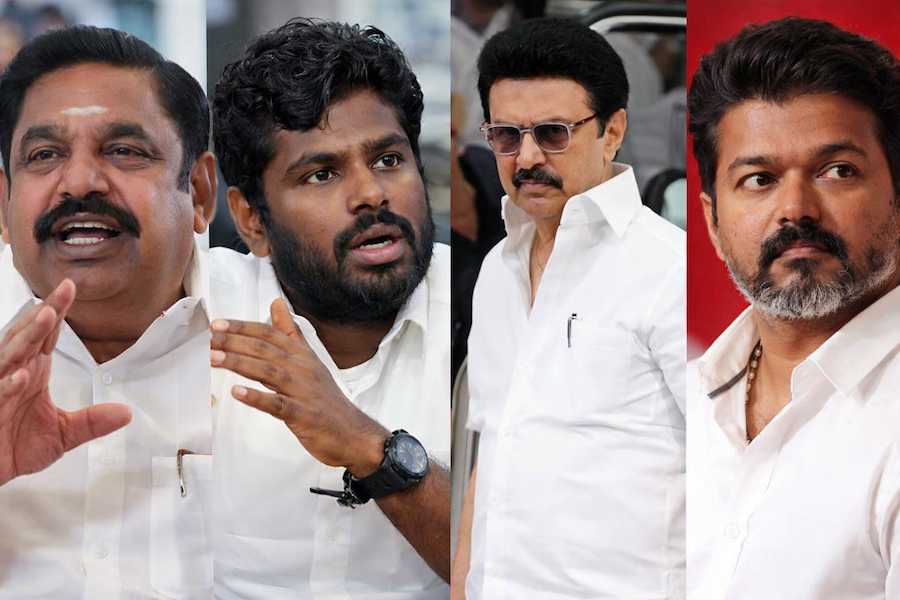
The proposed alignment between the Bharatiya Janata Party and the All India Anna Dravida Munnetra Kazhagam represents, for some, a bridge between national ambition and regional grounding.
The case being made is not ideological purity. It is strategic unity.
Supporters argue that a consolidated mandate across major states strengthens India’s negotiating power globally. Trade, security, technology, and diplomacy benefit from clarity of leadership. Fragmentation, by contrast, dilutes speed and coherence.
Critics, equally, raise valid concerns. They point to the importance of dissent, federal balance, and the risks of over-centralisation. These are not trivial arguments. They are foundational to India’s democratic structure.
Which brings us to the real articulation.
National unity is not uniformity. It is alignment around core objectives while preserving diversity of thought. The decision before Tamil Nadu’s electorate is not whether to abandon its political heritage. It is whether, at this moment in India’s trajectory, alignment with national leadership enhances or constrains its future.
There is no simplistic answer.
But there is a strategic consideration.
If India is indeed on the cusp of global redefinition, then the participation of all its states in that journey carries weight. Not as endorsement of a personality alone, but as an investment in a collective outcome.
THE VERDICT
India’s strength has always been its plurality. Its
challenge now is to convert that plurality into power.
Whether that requires alignment with the BJP- AIADMK axis is a decision for Tamil Nadu’s people. But the question itself reflects a larger truth.
A nation does not rise divided.
It rises when enough of its parts move in the same direction.