
Stretching along the western coastline of India, the Western Ghats represent one of the planet’s most significant biodiversity hotspots. These ancient forests, predating the Himalayas, are home to numerous species that exist nowhere else in the world. Within the lush canopies, mist-laden hills, and winding river valleys, one can find fauna as distinctive as the intricate landscapes they inhabit.
Lion-tailed macaque
This endangered primate, distinguished by its silver mane and tufted tail, serves as an emblem of the Western Ghats. Typically found in small, isolated groups, it predominantly resides in the forest canopy, seldom descending to the ground.
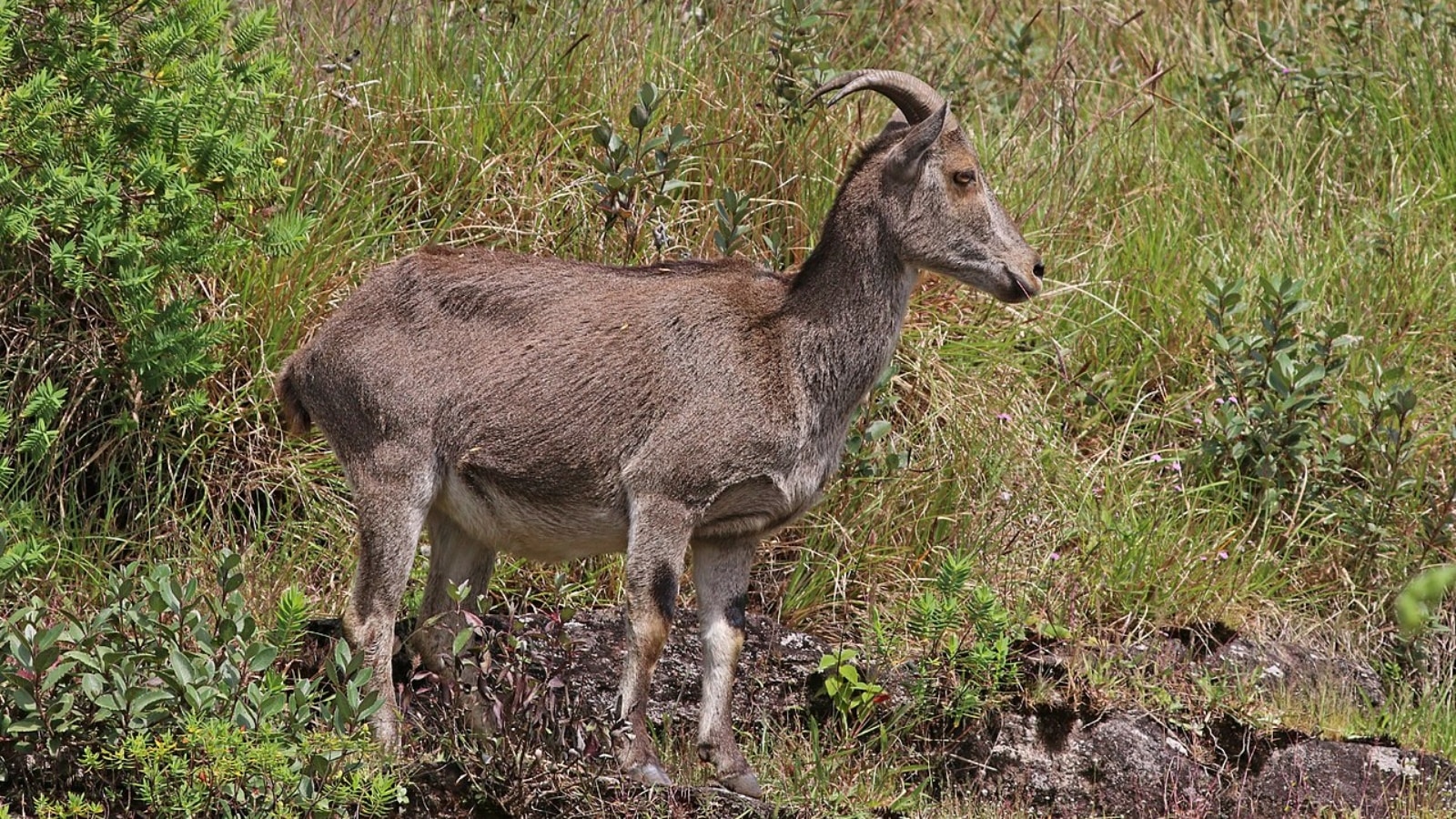
Nilgai
Commonly observed in the rocky cliffs of high-altitude grasslands, this agile ungulate has made a comeback from the brink of endangerment due to successful conservation initiatives that have stabilized its numbers.
Malabar giant squirrel
Known as the Indian giant squirrel, this vividly colored animal is renowned for its impressive leaping ability among trees. Its striking appearance makes it one of India’s most visually captivating mammals.
Purple frog
One of the most unusual amphibians on the planet, the purple frog spends the majority of its life underground, surfacing only during the monsoon season to reproduce. It is often referred to as a “living fossil.”
Bonnet macaque
This shy primate, identifiable by its shiny black fur and golden-brown head, thrives in dense forests and primarily consumes leaves, fruits, and flowers.
Malabar civet
Considered one of the rarest mammals globally, this nocturnal creature is seldom encountered in the wild. Its population has been drastically reduced due to habitat destruction, resulting in extremely infrequent sightings.
Indian flying lizard
This fascinating reptile doesn’t technically fly but glides between trees using its wing-like membranes. It possesses exceptional camouflage skills, allowing it to blend perfectly with tree bark.
Malabar grey hornbill
This bird, native to the Western Ghats, is vital for seed dispersal and is easily recognized by its large, curved beak and distinctive calls.
Travancore tortoise
This rare tortoise species resides in forest environments, thriving in leaf litter and dense undergrowth, which makes it challenging to spot despite its considerable size.
Indian marten
The only species of marten in India, this elusive carnivore is rarely observed and is regarded as one of the country’s least-researched mammals.