
Last week, Union Home Minister Amit Shah announced that the Bharatiya Janata Party (BJP) plans to introduce a Uniform Civil Code (UCC) in West Bengal within six months, contingent upon the party’s success in the forthcoming Assembly elections. This statement was made during the launch of the BJP’s manifesto titled “Bhoroshar Shopoth” (Pledge of Trust) in Kolkata, where Shah highlighted the UCC as one of the party’s 15 critical promises should they attain power.
The UCC aims to establish a standardized set of laws governing personal matters such as marriage and inheritance, replacing the current system that allows various religious communities in India to follow their own personal laws. This issue has been a point of contention since the debates of the Constituent Assembly from 1946 to 1950.
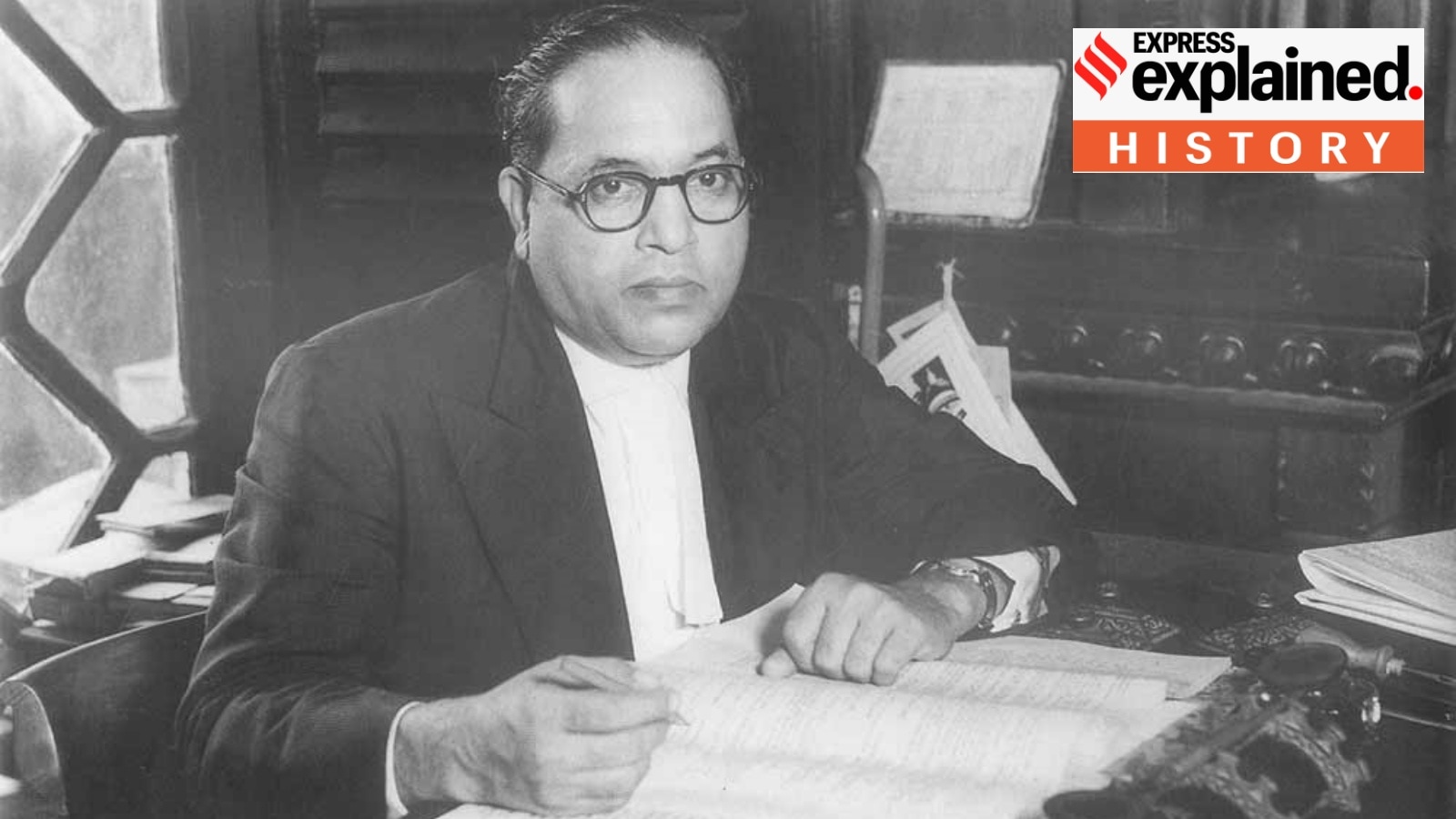
Shah’s comments have reignited discussions surrounding the UCC ahead of a significant Assembly election. On the occasion of B R Ambedkar’s 135th birth anniversary, a reminder of his views on the UCC is pertinent.
Political Dynamics: BJP vs. Opposition
Shah’s announcement came shortly after Prime Minister Narendra Modi addressed party members on April 6 during the BJP’s foundation day celebrations in New Delhi, where he emphasized the party’s commitment to the UCC and noted that “serious discussions” on the topic were occurring nationwide, with “constructive progress” being made.
In response to Shah’s statements, West Bengal Chief Minister Mamata Banerjee articulated her concerns, accusing the BJP of attempting to impose its directives on the populace through the UCC and infringing on their religious practices. During a rally in Paschim Medinipur, Banerjee labeled the BJP’s manifesto as “filled with lies,” warning that the implementation of the UCC would undermine individuals’ rights to practice their faith, erode cultural traditions, and threaten diversity. She asserted that her party would actively oppose the UCC, deeming it “dangerous.”
West Bengal is not the only state where the BJP has vowed to enact a UCC. In Assam, where Assembly elections occurred on April 9, Shah stated that if the BJP secures power again, it would swiftly implement the UCC as part of its pledge to ban polygamy.
The Congress Party has also criticized the BJP for leveraging the UCC as a “political tool for ongoing polarization.” Senior Congress leader Salman Khurshid questioned the necessity of discussing the UCC, considering there is no existing prohibition, and expressed concern over the political implications surrounding the issue.
Recently, the Supreme Court commented on the topic of inheritance laws, suggesting that a UCC could be the “most effective answer” to promote equality, rather than having the court intervene to dismantle potentially discriminatory personal law provisions, which might lead to confusion.
Since its formation in 1980, the BJP has consistently championed the UCC as a priority. It represents one of the party’s three ideological cornerstones, alongside the construction of the Ram Temple in Ayodhya and the abrogation of Article 370. Among these, only the UCC remains unfulfilled.
Thus far, the BJP has opted for a state-level approach to the UCC, having successfully implemented it in Uttarakhand—the first state to do so post-Independence—in January 2025, and recently passing a UCC Bill in the Gujarat Assembly. The party has also indicated intentions to pursue similar legislation in Madhya Pradesh and Uttar Pradesh.
On November 23, 1948, the Constituent Assembly engaged in a debate regarding draft Article 35, which proposed that “The State shall endeavor to secure for the citizens a uniform civil code throughout the territory of India.” This Article was intended to be part of the “Directive Principles of State Policy,” outlining fundamental principles for state governance without binding legal obligations.
During the voting process, several members raised amendments and voiced concerns regarding its acceptance among religious communities, particularly regarding societal harmony.
Ambedkar, however, defended the concept, expressing surprise at the query of whether a uniform code of laws could be viable and desirable for a country as diverse as India. He noted that India already has a uniform criminal code, suggesting that marriage and succession are the only areas where civil law has yet to make significant inroads. He argued that those advocating for Article 35 aimed to effect change in these areas.
Ambedkar advocated for a conciliatory approach, emphasizing that the UCC would not be enforced uniformly upon the Constitution’s inception. He clarified that it was a Directive Principle rather than statutory law and proposed that it might be initially adopted on a voluntary basis before being formalized into law.
He suggested that future parliaments could introduce provisions allowing the Code to apply exclusively to those who voluntarily agree to abide by it, thereby facilitating a gradual implementation process.