
A senior official from the government and rail industry has raised concerns that proposed modifications to the size of HS2 trains may lead to increased expenses, reduced seating availability, and slower services in the regions north of Birmingham.
The £2 billion contract for 54 high-speed trains, which are set to be manufactured in the UK through a collaboration between Alstom and Hitachi, is currently undergoing evaluation as HS2 Ltd aims to streamline costs and renegotiate existing agreements.
This order was originally placed by the government in 2021, prior to the announcement in 2023 by Prime Minister Rishi Sunak regarding the discontinuation of HS2’s northern extension. The trains were designed to be 200 meters long with eight carriages, with plans to expand them into 16-carriage units similar to Eurostar trains. However, this expansion will now only be feasible on the route connecting London and Birmingham, as existing stations like Manchester Piccadilly cannot accommodate trains measuring 400 meters in length.
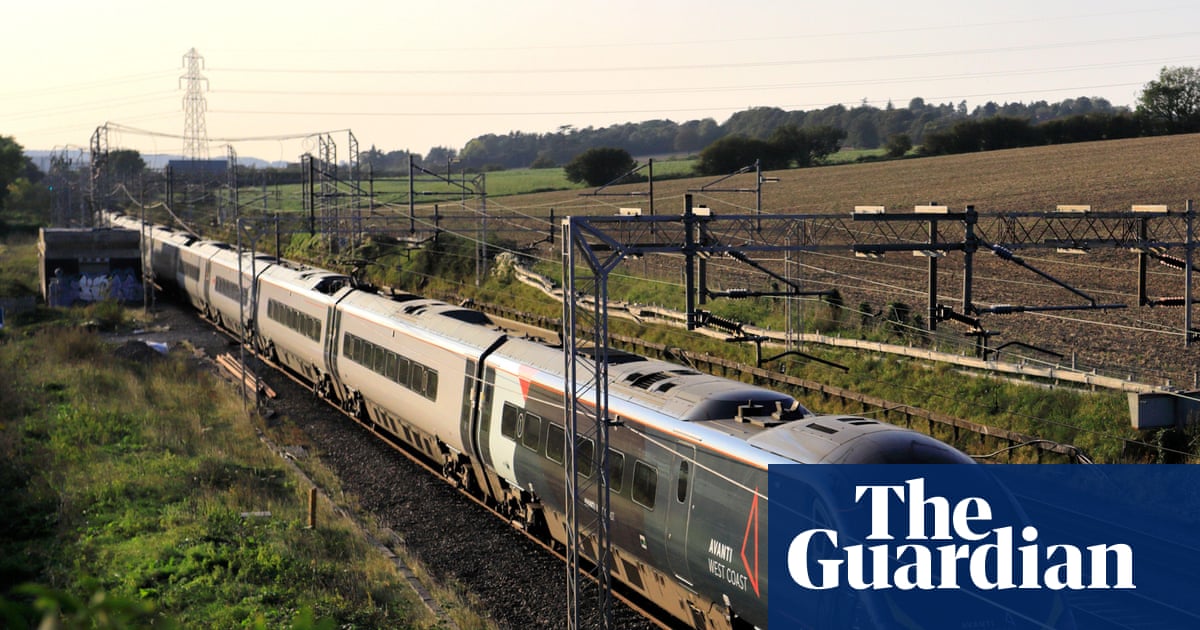
Due to the limitation of eight carriages, HS2 services will likely offer less capacity than the existing Pendolino trains operating on traditional railway lines north of Birmingham, which are both faster and longer. Officials from the Department for Transport (DfT) and HS2 Ltd are exploring options to address this situation, potentially by acquiring longer trains.
One possibility being evaluated involves placing an order for approximately 43 trains that would measure 250 meters in length, allowing them to service most stations effectively.
Chris Gibb, a non-executive director of DfT Operator (DFTO), has publicly expressed his reservations about altering the train order, arguing that such changes could lead to increased costs without enabling HS2 to compete with the west coast main line fleets. He noted that the proposed Hitachi-Alstom trains would lack the tilting capability of the Pendolinos operated by Avanti West Coast, which would limit their speed on curved conventional tracks.
During a meeting of the all-party parliamentary rail group in Westminster, Gibb, despite having been a strong supporter of HS2 for 18 years, emphasized that he felt compelled to share his insights for the public’s benefit. He stated that replacing the existing 11-coach Pendolinos with the proposed eight-coach trains would result in overcrowding from the very first day of operation.
Gibb cautioned that modifying the contract would consume valuable time and resources, and that any changes would lead to setbacks, including the potential loss of progress made on HS2 stations and depots. He suggested that the government should maintain the original order with Alstom and Hitachi to avoid incurring penalties and delays, while also planning to upgrade the current Pendolino fleet to longer and faster models in anticipation of HS2 services launching around 2040.
This strategy, he argued, would significantly enhance capacity and revenue while reducing travel times across all routes without necessitating additional railway construction at this stage.
Lord McLoughlin, who held the position of transport secretary when HS2 was authorized, lamented the current state of the project but questioned whether Gibb’s proposal would incur substantial costs. In response, Gibb expressed optimism that it would actually result in savings, as fewer Pendolinos would be needed overall.
Lord Berkeley, a longstanding critic of HS2, endorsed Gibb’s suggestion, advocating for a uniform type of rolling stock to ensure operational consistency regardless of circumstances, even if service initiation is delayed until 2040 or 2050.
Gibb indicated uncertainty regarding whether the train order would be adjusted. Nevertheless, there is considerable speculation that contract modifications could occur during the anticipated “reset” of HS2’s schedule and budget, which is currently under discussion with government ministers.
An HS2 Ltd spokesperson confirmed that the Hitachi-Alstom joint venture is still contracted to deliver the fleet of 54 new trains, noting that no changes to the original order have been made to date. They added that efforts are ongoing to collaborate closely with the manufacturer and the DfT to finalize the designs before production begins, with the trains scheduled to be constructed in Derby and Newton Aycliffe.
The DfT has been contacted for further comments.