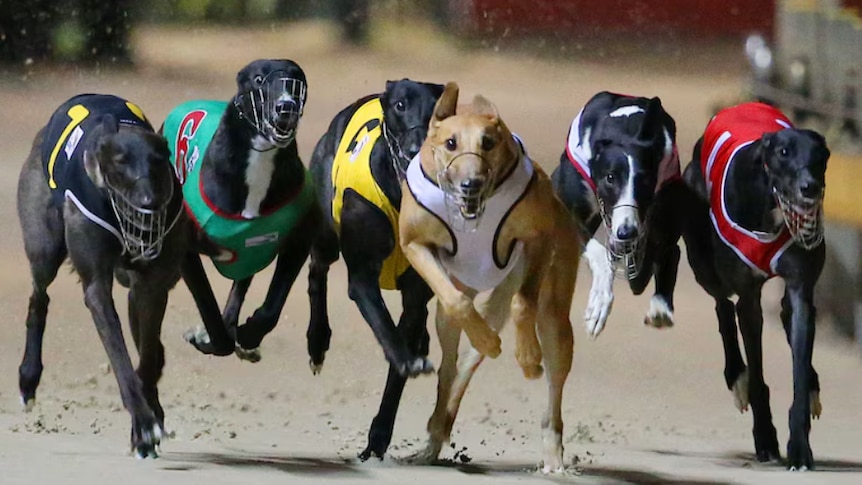

This week, Tasmania’s upper house is set to vote on a proposal to prohibit greyhound racing by June 2029. In anticipation of this vote, the local greyhound industry has declined a proposed compensation package of $4.8 million, intended to assist participants in transitioning away from the sport.
The Commissioner for Racing Integrity in Tasmania has indicated that establishing the specifics of the compensation package will require time. The proposed financial support, which Premier Jeremy Rockliff announced on Sunday, is earmarked for the upcoming state budget and aims to ensure that industry participants can exit the sport “with dignity.”
Despite the announced figure, limited information has been shared publicly regarding the compensation details, which will be elaborated upon in amendments to the Greyhound Racing Legislation Amendments (Phasing Out Reform) Bill 2025, scheduled for discussion in the upper house later this week.
When questioned about the allocation of the $4.8 million, Mr. Rockliff stated that Racing Integrity Commissioner Sean Carroll would engage with industry stakeholders in a systematic manner, taking into account their individual circumstances and prior investments.
However, representatives from the greyhound sector contend that the government’s offer is insufficient. They argue that, drawing comparisons with New Zealand’s transitional arrangements following a similar ban, Tasmania’s greyhound industry warrants an annual compensation of $25 million over five years, totaling $125 million.
Claire Robins, the public officer for Greyhounds Tasmania, expressed her concerns, stating that the proposed amount is “nowhere near adequate” for approximately 1,000 industry participants. She emphasized the stark difference between Tasmania’s offer and the more than $100 million allocated under New Zealand’s model.
Mr. Rockliff has made it clear that increasing the compensation to $125 million is not an option, affirming that the budget will remain at $4.8 million, with plans to collaborate with the industry on its implementation.
Greens MP Cassy O’Connor highlighted that the compensation is only the initial step in a lengthy process that includes consultation with industry participants and the development of a closure plan by the racing integrity commissioner. She acknowledged the premier’s commitment to funding but noted that discussions on the compensation’s structure are still ongoing.
Commissioner Sean Carroll previously informed the Joint Standing Committee on Greyhound Racing Transition that determining the specifics of the compensation plan could take several years, as it requires thorough research and consideration of all affected parties.
Chair of the parliamentary inquiry, Independent MP Kristie Johnston, underscored the need for a fair and equitable compensation package as part of any transition plan, emphasizing that compensation may need to be allocated at various stages of the process.
Mr. Rockliff stated in March that the framework for compensation would be included in the legislation to be voted on this week, with a funding package outlined in this year’s budget to facilitate a thoughtful transition away from greyhound racing.
As the vote approaches, Ms. Robins conveyed that the industry is “nervous but remaining optimistic,” noting that the outcome in the upper house is uncertain. She expressed that if the ban were to pass, it would have devastating consequences for the industry.
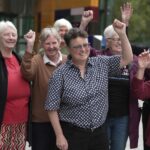
Greyhound trainer Katrina Gregory remarked during an industry press conference that financial compensation could never truly replace what participants have invested in their lives and properties, indicating that the emotional and personal losses cannot be quantified. She highlighted the diversity of roles within the industry, each contributing uniquely to the sport.
A statement from representatives of the three racing codes — thoroughbred, harness, and greyhound — warned that many proponents of the ban view it as a precursor to eliminating all forms of racing. They pointed out that the only political party advocating for the ban on greyhound racing prior to the last election was the Greens, who have now indicated intentions to pursue similar measures against other racing codes.