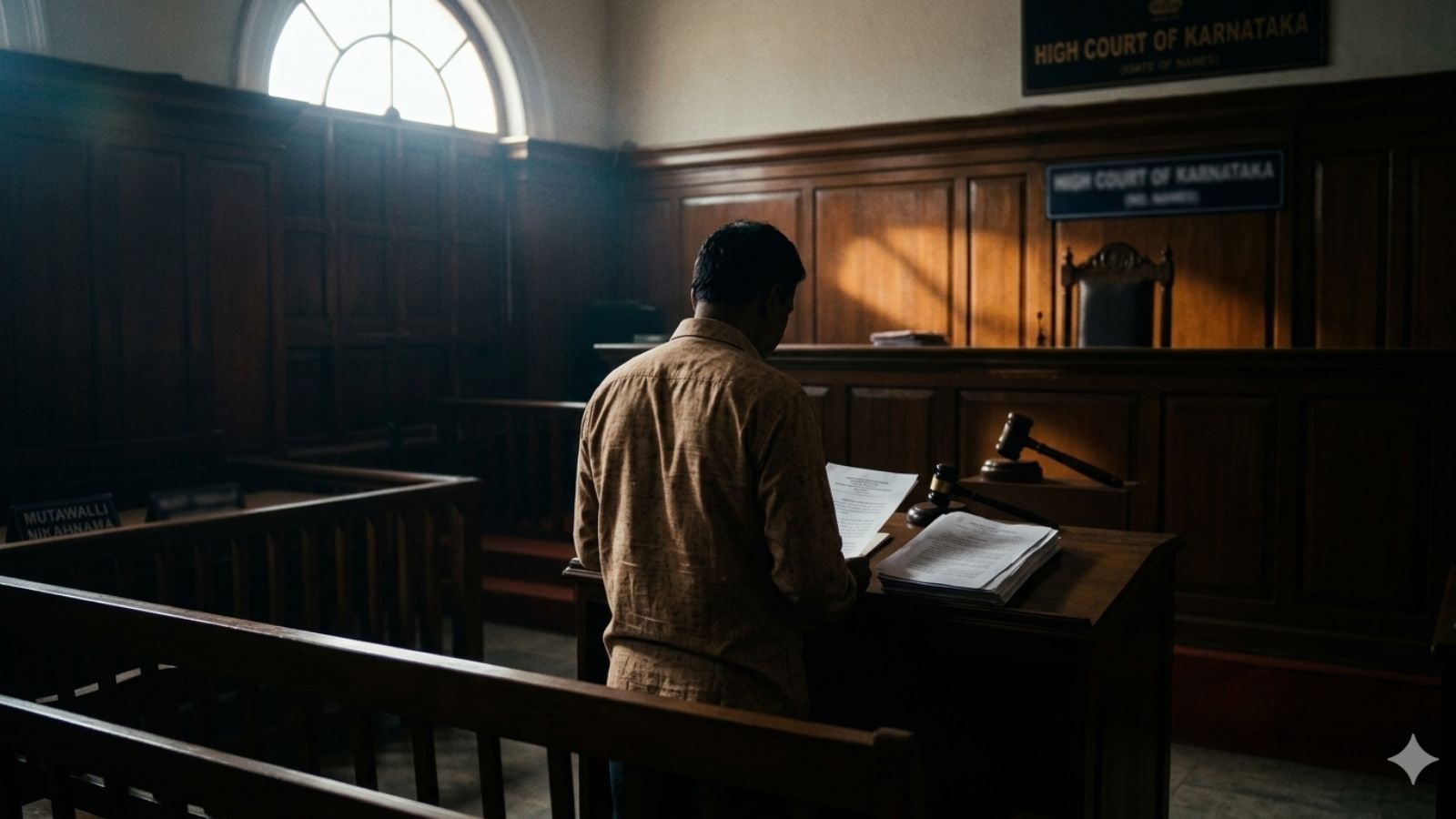

The Karnataka High Court has determined that there is no need to summon a mutawalli, who is the manager of a Waqf property, to testify in a cruelty case initiated by a woman against her estranged husband. The court clarified that a mutawalli would not be able to provide any pertinent evidence concerning claims of domestic cruelty as outlined in Section 498A of the Indian Penal Code (IPC).
The case revolves around an interfaith marriage where the complainant is a Muslim woman and her husband is Hindu. They had conducted a nikah, which was recorded at a mosque, and subsequently received a formal marriage certificate in accordance with Islamic traditions.
In 2021, the woman lodged a criminal complaint against her husband and his family, citing multiple offenses under various sections of the IPC including 498A (cruelty), 494 (bigamy), 420 (cheating), 504 (intentional insult), and 506 (criminal intimidation). After the trial concluded, the husband submitted a request under Section 91 of the Code of Criminal Procedure (CrPC) to summon the mutawalli to present documents and provide testimony.
During the hearings, Advocate K V Narasimhan, representing the husband, contended that the mutawalli’s testimony was crucial for validating the Nikahnama (marriage contract), as he was present during the marriage ceremony.
In contrast, Advocate B V Mohan Adekar, who represented the complainant, argued that the nikah documentation already sufficiently confirmed the marriage. He maintained that the presence of the mutawalli as a witness was not essential for a trial centered on allegations of cruelty, particularly since the marriage involved an interfaith couple at a mosque.
Justice M Nagaprasanna, in an order dated March 23, supported the trial court’s choice to deny the husband’s request. The bench pointed out that the application was submitted during the defense evidence stage, after the trial had already been completed.
Justice Nagaprasanna remarked, “The issue in the dispute pertains to the alleged cruelty inflicted by the husband on the wife. It is unclear what testimony a mutawalli could provide regarding this cruelty.”
In dismissing the petition, the court concluded that the existing Nikahnama on record sufficiently validated the marriage, negating any legal basis for altering the trial court’s ruling.