
On Tuesday, the government unveiled the texts of three proposed Bills intended for presentation in Parliament during the extended Budget Session, which is set to commence on Thursday. These Bills focus on the delimitation of parliamentary constituencies to facilitate the early implementation of women’s reservation in both Parliament and state Assemblies. This announcement has highlighted significant differences in opinion among southern states.
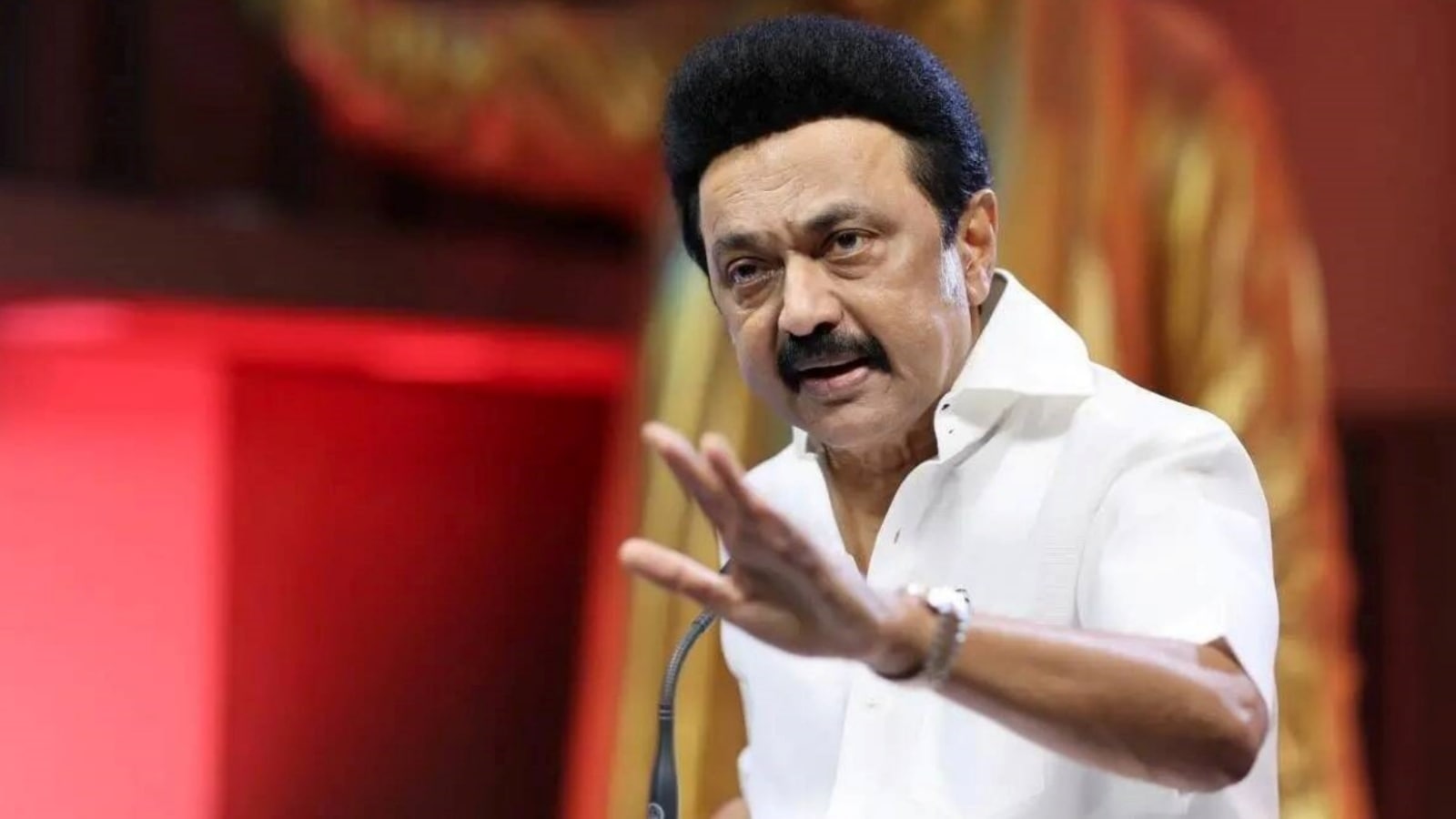
Tamil Nadu Chief Minister M K Stalin expressed strong opposition to what he perceives as the BJP-led government’s attempt to push through a Constitutional amendment during an election period. He indicated that his state would protest if this amendment resulted in an disproportionate increase in political power for northern states. Meanwhile, Telangana Chief Minister Revanth Reddy called for broader consultations and a consensus among political factions. In contrast, the Telugu Desam Party (TDP), a BJP ally that governs Andhra Pradesh, stated that the current proposals were consistent with discussions held with opposition leaders, affirming that seats in various states would be increased by 50% on a pro-rata basis.
TDP MP Lavu Krishna Devarayalu assured The Indian Express that the government intends to implement the women’s reservation law and complete the delimitation process by 2029. He mentioned that the seat increase would be proportionate across states. Sources within the National Democratic Alliance (NDA) indicated that the Lok Sabha is expected to fast-track the Constitution (One Hundred and Thirty-First Amendment) Bill, 2026, aimed at accelerating the women’s reservation implementation by April 17. A senior BJP official noted that the government is considering referring the Delimitation Bill, 2026, to a Joint Committee of Parliament for a timely report.
According to sources, senior government leaders have engaged in multiple discussions with Andhra Pradesh Chief Minister and TDP president N Chandrababu Naidu regarding the modifications to the Nari Shakti Vandan Adhiniyam, which pertains to the women’s reservation law, as well as the Delimitation Bill. However, some TDP leaders have voiced concerns about the preparation of the Delimitation Bill, suggesting that excessive decision-making power has been allocated to the executive. They argued that assurances regarding the impact of delimitation on southern states should have been incorporated into the Bill itself, rather than being addressed in subsequent rule-making.
Earlier, in a video message with English subtitles shared on X, Stalin stated, “In this session, the Union government aims to force through a Constitutional amendment on delimitation. We have consistently warned against such actions. When the Union government asked us to control population growth and practice family planning, we complied. Is this now our punishment for adhering to those guidelines? We have requested a clear assurance from the Prime Minister in Parliament that southern states will not be adversely affected, but there has been no response.”
Stalin criticized the NDA for advancing this initiative “unilaterally,” describing the expedited legislative process concerning delimitation as a “blatant assault on democracy” by the BJP government and a direct threat to state interests. He warned that while Tamil Nadu’s Members of Parliament would participate, any actions that harm the state or disproportionately elevate the political influence of northern states would not go unchallenged. “Every family will take to the streets… this is a warning,” he asserted.
Revanth Reddy has called for a national consensus on increasing Lok Sabha seats and for the immediate implementation of women’s reservation, independent of any seat increase. In an open letter to Prime Minister Narendra Modi, he stated, “The Congress fully supports the Women’s Reservation Bill. Please implement it for the Lok Sabha with the current 543 seats and for all Assemblies. Women’s political empowerment is not just a legislative necessity; it is a moral obligation for our political system.”
Discussing the delimitation process, Reddy pointed out that previous delimitations have occurred without altering the number of seats. He emphasized that the contentious issue lies in the proposal to increase Lok Sabha seats to 850 on a pro-rata basis. He cautioned that such an increase, without taking into account economic contributions and social development outcomes, would disrupt the federal balance in India. “Fair regional representation and participation in national matters is vital for fostering a robust Viksit Bharat,” he stated.
Reddy criticized the Centre for inadequately analyzing the implications of its proposals, particularly for southern states, noting that these regions have made concerted efforts towards population stabilization and public health improvements over the years. He remarked, “The Bills received on April 14 are riddled with contradictions and errors. The omission of states’ respective proportions is just one of many glaring issues. All discrepancies will be highlighted while we continue to advocate for women’s reservation based on the 2010 and 2023 initiatives and Bills,” commented senior Congress MP Abhishek Manu Singhvi.
RJD MP Manoj Jha remarked that the documents presented to MPs lack clarity, stating, “Even widely discussed points within and around Parliament are not reflected in the text. This lack of transparency raises reasonable concerns that the government is concealing its true intentions, making the urgency surrounding the amendment appear more like a façade than a genuine reform. Essentially, the proposal paves the way for early delimitation and a substantial expansion of the Lok Sabha.”
Sagarika Ghose, Deputy Leader of the Trinamool Congress in the Rajya Sabha, also linked the movement’s intentions to broader political strategies.