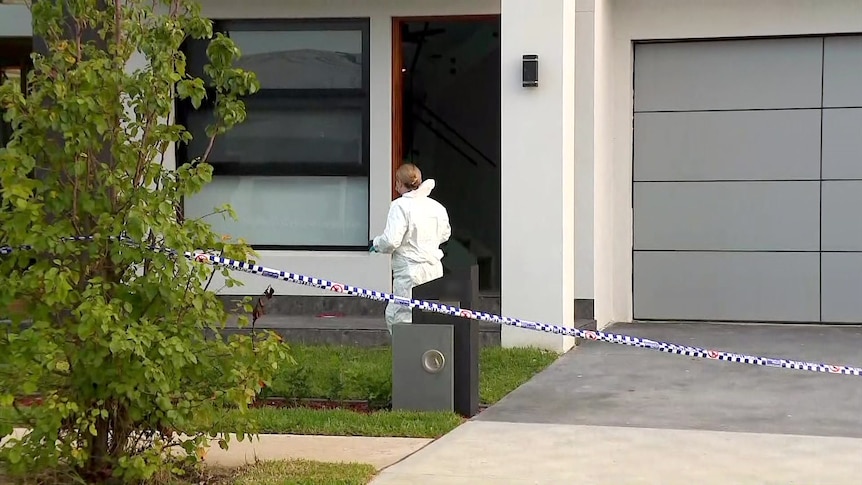

Bradley Evennett tragically passed away in March 2024 following a sparring session in the backyard of his friend Bradley Dusan Fletcher’s residence in Melonba, near Mount Druitt.
During the proceedings, a jury learned that Mr. Fletcher, a mixed martial arts (MMA) fighter, claimed to police that he inadvertently kicked Mr. Evennett in the head while they were “mucking around.”
The ongoing murder trial is anticipated to last for approximately four weeks.
In court, it was revealed that Mr. Fletcher had been celebrating his recent move into a rental home with Mr. Evennett on a particular afternoon in March 2024. The 37-year-old fighter, described by the prosecution as someone who “trained rigorously to perfect his skills,” was engaged in light sparring with Mr. Evennett while under the influence of alcohol and cocaine.
Crown Prosecutor Kate Ratcliffe informed the jury that Mr. Fletcher’s girlfriend noted the two men were intoxicated but in a cheerful state when she departed the home. “The two friends were enjoying themselves, but the atmosphere shifted,” she remarked during her opening statement.
Ms. Ratcliffe recounted how Mr. Fletcher allegedly became enraged and resorted to using his martial arts techniques. “The accused repeatedly struck the victim on the head and torso, resulting in his death,” she stated.
Mr. Evennett, who was 32, had been diagnosed with a genetic disorder known as brittle bone disease at the age of 12. Ms. Ratcliffe emphasized that Mr. Fletcher was aware of this condition and that there had been no prior altercations between the two friends.
Later that evening, Mr. Fletcher contacted his girlfriend, informing her that Mr. Evennett had fallen and was unresponsive. When she suggested he call for an ambulance, he urged her to “hurry and come over.”
The jury was told that upon her arrival, she witnessed blood on the floor, found Mr. Evennett face down in the backyard, and observed Mr. Fletcher pacing anxiously. Following her departure, Mr. Fletcher reportedly used Mr. Evennett’s vehicle to transport his friend’s body and left it beside a footpath in a nearby street.
After his apprehension, Mr. Fletcher told investigators that the two were merely “sparring.” “I assure you, it was an accident,” he said, expressing remorse. “He’s my best friend… I accidentally killed my best friend. I kicked him in the head.” He also admitted to being “coked up” and panicked after noticing Mr. Evennett had stopped breathing.
Mr. Fletcher recounted that Mr. Evennett had reacted with hostility following a blow to the ribs. “I’m a professional cage fighter; I shouldn’t have done that. I should have called the police. I panicked,” he told authorities.
The jury is expected to hear from a forensic pathologist who will state that the cause of death was due to multiple blunt force injuries. The expert’s assessment indicated that Mr. Evennett’s condition, Osteogenesis Imperfecta Type 1, did not significantly contribute to his death.
While Mr. Fletcher entered a plea of not guilty to murder, he did plead guilty to manslaughter, a plea the Crown has not accepted.
Defense attorney James Trevallion SC suggested that Mr. Evennett had taken offense at being struck in the ribs during the sparring session, leading to a temporary cessation where they removed their gloves and moved indoors. However, tensions escalated, prompting them to return outside to continue sparring.
“The hits intensified, and the tensions grew for both of them,” he stated in his opening remarks, asserting that the sparring occurred within the context of their friendship and that Mr. Fletcher did not intend to cause serious harm.
The central question for the trial will revolve around whether Mr. Fletcher had the intent to inflict serious injury, a point the Crown must establish beyond a reasonable doubt. Mr. Trevallion urged the jury to consider the influence of alcohol and cocaine on both men, asking them not to pass moral judgment on their substance use.
The Crown will argue that the extensive physical assaults would naturally lead the jury to conclude there was intent to cause significant harm. “It does not matter if he regretted it afterward,” Ms. Ratcliffe asserted. “The pertinent time to assess his intent is at the moment the assaults took place.”
Justice Richard Weinstein encouraged jurors to attentively consider all evidence presented, along with the closing arguments and his final instructions, before reaching a verdict at the conclusion of the trial, which is projected to last up to four weeks.