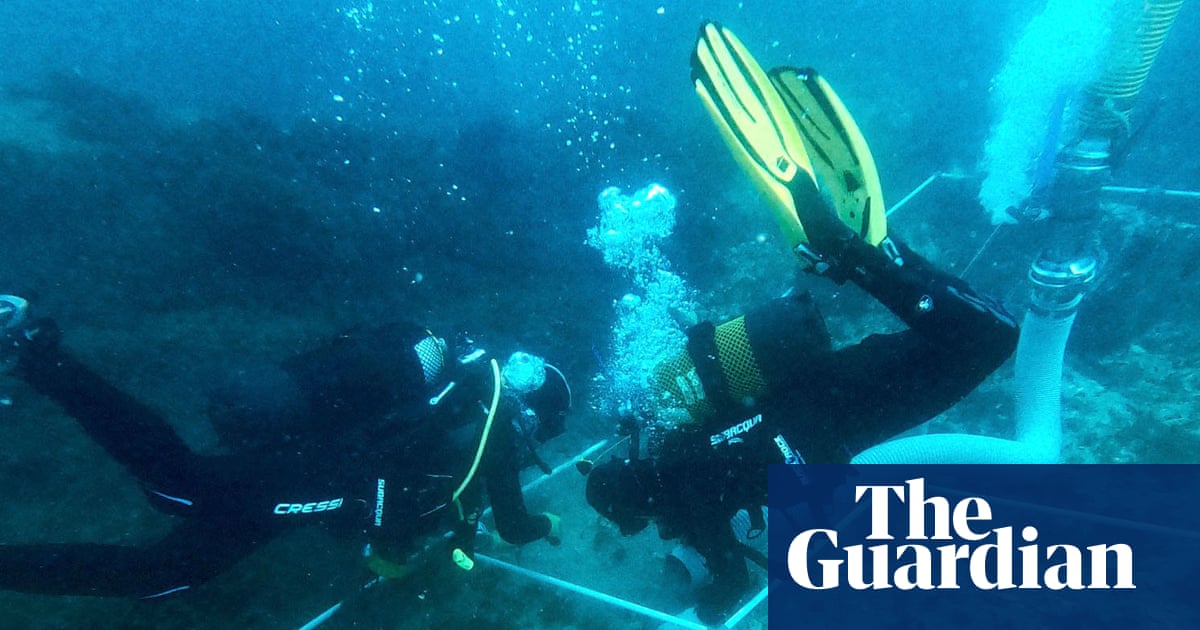

Spanish archaeologists investigating the bay situated between the southern port of Algeciras and the Rock of Gibraltar have uncovered the remains of over 30 shipwrecks that have occurred near the fabled Pillars of Hercules, spanning from the fifth century BC to the Second World War.
This historic bay, positioned at the northern end of the Strait of Gibraltar which separates Europe from Africa, has claimed a wide range of vessels throughout the ages, from Phoenician and Roman ships to those from Britain, Spain, Venice, and the Netherlands, as well as the occasional aircraft.
A comprehensive three-year initiative spearheaded by the University of Cádiz has successfully identified 151 archaeological sites within this bay, including 134 shipwrecks. Thus far, the research team, in collaboration with the University of Granada, has documented 34 of these wrecks.
The oldest wreck discovered belongs to a ship from the Punic era, dating back to the fifth century BC. Other significant findings include 23 Roman ships, two from the late Roman period, four medieval vessels, and 24 ships from the early modern era.
These submerged artifacts, which range from an agile 18th-century Spanish gunboat to the engine and propeller of a 1930s aircraft, narrate a rich history of warfare, trade, exploration, and settlement in this strategically vital waterway.
Felipe Cerezo Andreo, an archaeology professor at the University of Cádiz and the leader of the project, named Project Herakles, emphasized the significance of this area as a vital maritime junction. “It has always served as a bottleneck for ships, whether for commercial trade, exploratory missions, or military conflicts,” he remarked.
He further noted the exceptional concentration and diversity of archaeological remains from various cultures and nations found in the Mediterranean. “We have vessels from Dutch, Venetian, Spanish, and English origins, representing nearly every nationality due to the strategic importance of the strait for trade routes to the Atlantic or for those entering the Mediterranean from northern Europe and other regions,” Cerezo explained.
The research team expressed particular enthusiasm over the discovery of three medieval ships that could enhance understanding of maritime activities during the late Islamic period in southern Spain.
Among the notable finds is the wreck of the Puente Mayorga IV, a small, late 18th-century gunboat designed for quick, covert strikes against British naval vessels near Gibraltar. These attack boats often masqueraded as fishing vessels before revealing their true purpose and firing their cannons at enemy ships.
Despite frequent mentions in historical accounts, such boats have received limited archaeological attention until now. Cerezo shared his excitement at discovering one of Puente Mayorga IV’s unexpected treasures during an excavation. Initially thought to be a well-preserved book, it turned out to be a wooden box shaped like a book, containing a hollow compartment.
“At first, we speculated it could have been used for hiding documents, possibly related to espionage,” he remarked. “Was the officer who owned it mapping enemy positions?” However, upon further investigation, it was revealed that the box contained two wooden combs, suggesting the officer may have been more focused on personal grooming than espionage.
Cerezo and his team are hopeful that the Andalusian regional government and Spain’s Ministry of Culture will take measures to safeguard these archaeological sites in the Bay of Algeciras, also known as the Bay of Gibraltar, which face threats from port expansion, dredging, and dock construction. The climate crisis poses an additional risk, with rising sea levels altering sediment layers and revealing archaeological sites, coupled with invasive algae affecting both rocks and wrecks.
To promote awareness and appreciation of their findings, the researchers have created virtual models and 360-degree videos of the sites, sharing them with the public through online platforms and local museums and town halls.
“We provide goggles for those who can’t dive, allowing them to experience a dryland version of diving,” Cerezo stated. “While some may envision a treasure-laden ship like the Unicorn from Tintin, the reality is that the sites may not be as well-preserved as expected. It’s essential for people to understand what is happening, and showcasing these sites helps cultivate a demand for their protection.”
Cerezo emphasized that the bay’s waters offer a unique snapshot of thousands of years of maritime and cultural evolution. “This small area provides an opportunity to analyze the progression of maritime history throughout much of the Iberian Peninsula and North Africa,” he explained.
He concluded by highlighting an often-overlooked narrative: that coastal communities have maintained a profound relationship with the sea. Studying these archaeological remains—documenting them in situ rather than merely through museum exhibits—enables a deeper understanding of their historical context and the stories of the people who lived there.