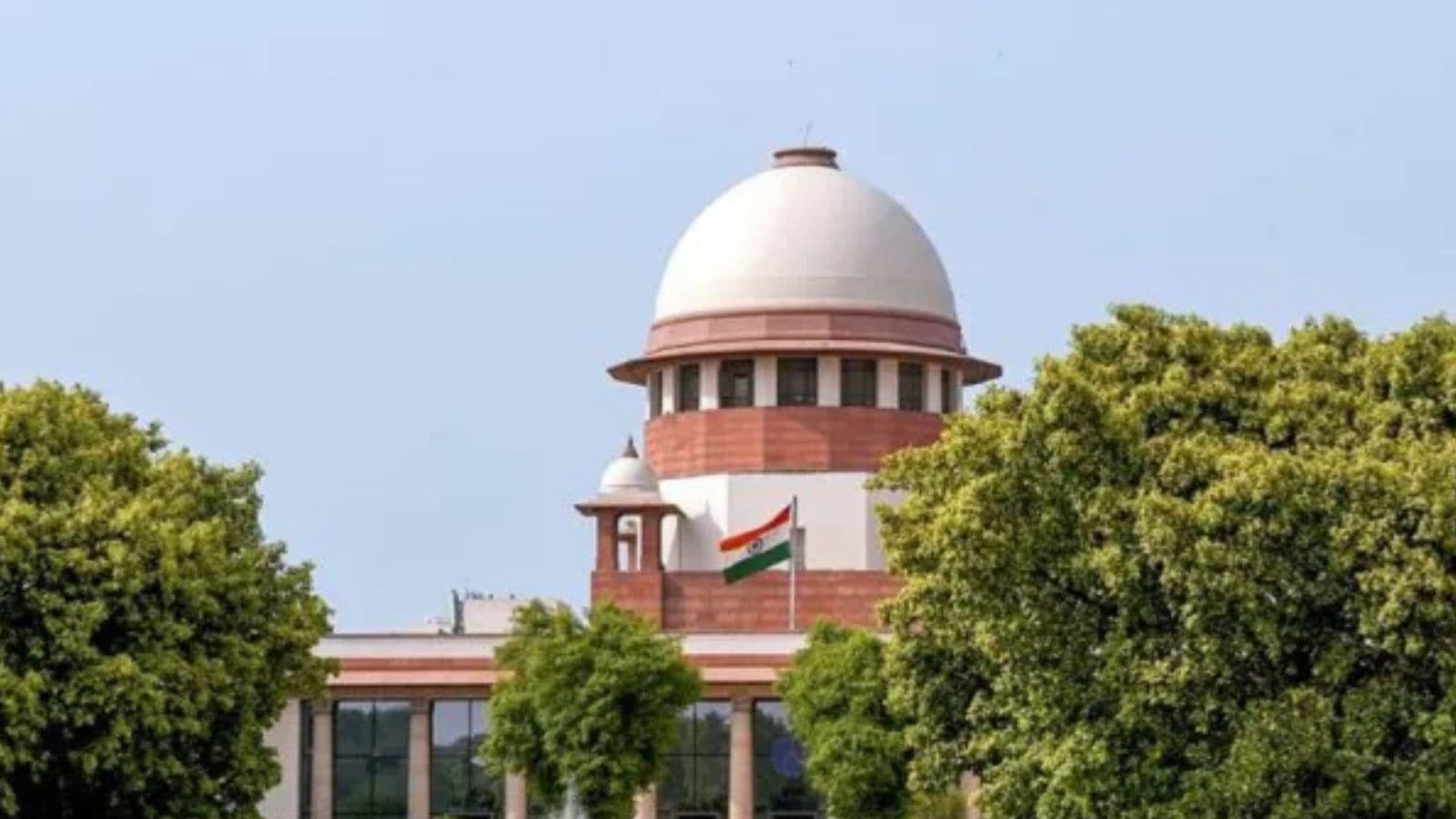

On Thursday, the Supreme Court dismissed a challenge against a Calcutta High Court ruling that supported the Election Commission of India (ECI)’s decision to relocate bureaucrats and police personnel in West Bengal ahead of the Assembly elections. The court stated that it was “compelled” to assign judicial officers for the Special Intensive Revision (SIR) process due to a lack of trust between the Election Commission and the state government.
Chief Justice of India Surya Kant, leading a three-judge panel, highlighted issues of bureaucratic independence, noting that officials often prioritize personal advancement over their duties, undermining the purpose of the All India Services. He expressed concern that this behavior fosters public skepticism about receiving equitable treatment from the government. “The unfortunate reality is that the original intent behind the establishment of All India Services is being compromised. Officers often seek favorable postings for personal gain, leading to a public perception that fair opportunities are unattainable. This perception must be rectified,” the Chief Justice remarked.
Regarding the decision to deploy judicial officers for the SIR exercise, Justice Kant explained, “The necessity arose from mutual distrust. There is a lack of confidence in the state government’s officers, while the state is wary of those brought in from other regions. Hence, we had no alternative.”
Senior Advocate Kalyan Bandopadhyay, representing the appellant Advocate Arka Kumar Nag, argued that the ECI’s actions in West Bengal were unprecedented. He pointed out that over a thousand officers were transferred in a single night without clear justification, emphasizing that the transfer of a chief secretary on the same day she appeared in court was remarkable. He questioned whether opposing suggestions should warrant such a transfer.
Justice Kant responded to the transfer of officials by stating that such actions are not unique to this situation or confined to one state. Bandopadhyay contended that the ECI must adhere to legal requirements mandating consultation with the state government, which had previously been the practice even during bye-elections until 2025. He noted that no such consultation occurred in this instance.
Justice Kant remarked that the Calcutta High Court had thoroughly examined the issue. However, Bandopadhyay contended that the High Court failed to adequately address the legal questions raised, despite extensive arguments being presented.
The Chief Justice emphasized that the officials involved in the transfers were from the West Bengal cadre, questioning what harm could arise from their reassignment. Bandopadhyay countered that the issue at hand was not about potential harm but about violating mandatory statutory provisions. CJI Kant clarified that “consultation does not equate to concurrence.”
Bandopadhyay further argued that the lack of consultation was significant, citing incidents like the Kaliachak event that occurred post-transfer as evidence of the need for competent officials. CJI Kant responded by stating that one can only ascertain an individual’s competency when given the chance to perform, suggesting that the matter could be resolved in a suitable future case. “Rather than making an academic determination, we will keep the legal question open, recognizing that such situations may arise. However, the current point remains that consultation is not the same as concurrence,” he said.
When Bandopadhyay noted that bringing in observers from outside the state was a newer practice, CJI Kant pointed out that it had been occurring for at least two decades. Bandopadhyay acknowledged the merits of such a practice but insisted that legislative changes were needed to support it.
CJI Kant highlighted the implications of Bandopadhyay’s argument, cautioning against undermining the ECI’s authority as a constitutional body. He pointed out that if the ECI needed to take decisive actions to ensure a fair election, questioning their authority due to a lack of parliamentary legislation could have serious consequences.
The Supreme Court concluded that the appellant had raised significant legal questions worthy of consideration. Nonetheless, given the timing and the upcoming polling schedule in the state, the court opted not to entertain the Special Leave Petition at this juncture, keeping the legal question open for future consideration. The High Court had previously dismissed the petition on March 31, 2026, stating that it found no evidence of bias in the ECI’s actions regarding the transfer of state officials.