
WASHINGTON — As the United States organized a high-stakes operation to save an airman whose jet was downed by Iran, a unique form of betting activity emerged. Participants on Polymarket, a leading prediction market platform, began wagering on the date of the airman’s rescue. A screenshot shared by Representative Seth Moulton, a Democrat from Massachusetts, revealed that bets were predominantly favoring April 4 for the rescue, with only 15% of users anticipating it would occur on April 3.
Following Moulton’s public condemnation of what he termed a “dystopian death market,” Polymarket suspended the betting activity, citing that it did not align with their integrity standards. Moulton, a former Marine who completed four tours in Iraq, expressed his dissatisfaction with the platform’s response, accusing it of failing to regulate itself in matters regarding the lives of military personnel. He characterized the situation as war profiteering and called for Congress to intervene.
A growing debate is taking shape in Washington concerning prediction markets, which allow users to bet on outcomes ranging from sports events to significant global occurrences. Despite the political polarization in Congress, there is a shared concern across party lines regarding the potential for these markets to facilitate insider trading. During a recent congressional hearing, members from both parties questioned the head of a regulatory agency typically less in the spotlight about these issues. The discussion has also caught the attention of the White House, prospective presidential candidates, and state officials.
Former Commodity Futures Trading Commission commissioner Kristin Johnson noted the importance of maintaining market integrity in this national dialogue. Unlike past responses to public health crises or technology-related challenges, the push for regulation of prediction markets has emerged with notable urgency.
Critics have raised alarms about the impact of markets like Polymarket and its competitor Kalshi, arguing that they can undermine sports integrity and contribute to gambling addiction among young men. Polymarket has faced particular scrutiny for facilitating offshore trades that evade U.S. regulatory oversight.
Donald Trump Jr., who serves on Polymarket’s advisory board and is a paid consultant for Kalshi, has connections to the investment firm 1789 Capital, which has backed Polymarket. Recently, reports surfaced that newly created accounts on Polymarket made timely and specific bets regarding a potential ceasefire between the U.S. and Iran, resulting in substantial profits for those involved.
In response to these developments, the White House cautioned its staff against utilizing private information for trading on prediction markets. Earlier this year, an anonymous user on Polymarket profited over $400,000 from a bet predicting the removal of Venezuelan President Nicolás Maduro, raising further concerns about insider trading involving government information.
Senator Todd Young, a Republican from Indiana and former Marine, expressed his worries about the potential for market manipulation and erosion of public trust following the news related to Venezuela. He and Senator Elissa Slotkin, a Democrat from Michigan, have introduced a bill aimed at prohibiting federal employees from leveraging nonpublic information for bets on prediction markets. This initiative is part of a broader bipartisan effort in Congress to impose regulations on these platforms.
As he considers a potential presidential run, Democrat Rahm Emanuel has advocated for a complete prohibition on prediction market betting by federal employees and their families, as well as a proposed 10% tax on these markets to support scientific and health research. California Governor Gavin Newsom, also eyeing a presidential bid, has issued an executive order preventing his appointees from trading on prediction markets using nonpublic information.
At present, there is no clear legislative pathway for these proposed bills. However, the increasing scrutiny highlights the contrasting approaches of major prediction market platforms. Polymarket has remained largely silent publicly and did not provide comments for this article. Established in 2020, it operates primarily offshore, with limited U.S. functions that were reinstated after Donald Trump took office.
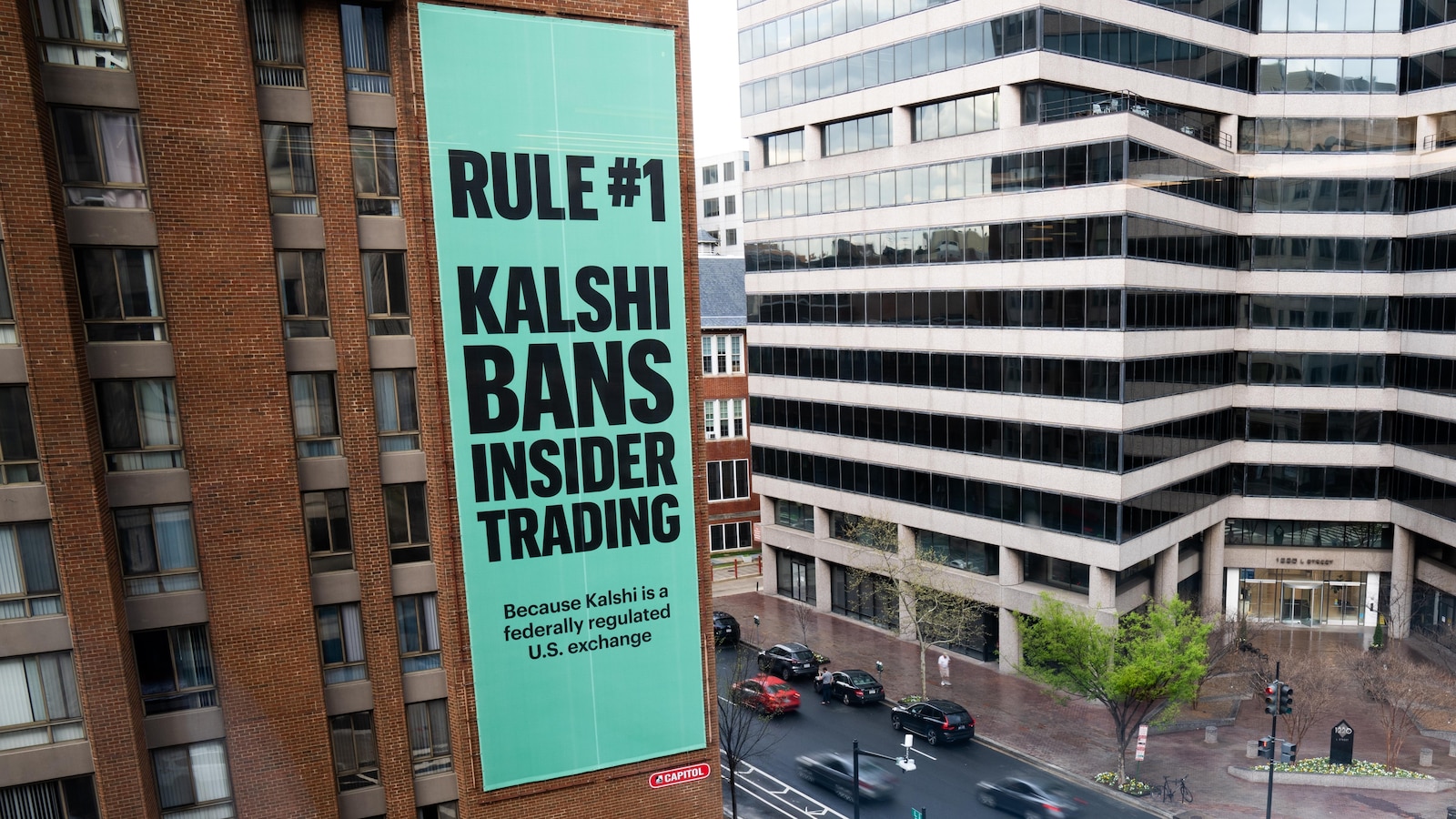
Conversely, Kalshi asserts that it already prohibits many extreme betting scenarios and is open to regulatory oversight. “We support Congress and regulators taking action to prevent insider trading and ensure prediction markets are regulated domestically,” stated Kalshi spokesperson Elisabeth Diana. “Not all prediction markets operate in the same manner.”
A White House spokesperson emphasized President Trump’s stance that Congress members and government officials should be barred from utilizing nonpublic information for personal financial gain.
The rise in betting activity is drawing attention to the Commodity Futures Trading Commission, which oversees various trading contracts, including prediction markets. Dennis Kelleher, president and CEO of Better Markets, a nonprofit advocating for stronger regulation, expressed concerns about the agency’s capability to supervise such betting activities. He noted that the agency lacks the necessary resources, expertise, and technology to effectively monitor a wide range of prediction markets.
Currently, the agency is operating with only one member, Michael Selig, a former CFTC law clerk who transitioned to represent cryptocurrency clients before being appointed to lead the agency by Trump. This situation has heightened concerns about the agency’s functioning and regulatory efficacy.