
A ruling is anticipated on Wednesday in the ongoing legal dispute involving Gina Rinehart and the family of her late father’s business associate.
Bianca Rinehart and John Hancock, Mrs. Rinehart’s children, are also participants in the litigation against their mother.
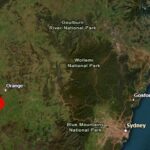
The case centers around significant financial interests, potentially amounting to billions in royalties and shares related to the highly profitable Hope Downs iron ore mine, as well as mineral deposits located in the remote Hamersley Range.
As Australia’s wealthiest individual, Gina Rinehart faces the possibility of a decision regarding her ability to retain claims to her valuable Pilbara mining operations, which are contested by the family of her father’s former partner, Peter Wright.
The Supreme Court’s Justice Jennifer Smith is expected to announce her much-anticipated verdict in this prominent civil case involving the heirs of Western Australia’s iron ore pioneers.
The trial has unfolded over several months, featuring debates led by some of the nation’s top legal minds, and has included an extensive documentation process comprising 15,000 pages of legal submissions, shedding light on the dynamics of Australia’s iron ore industry.
The Wright family contends that they are entitled to certain royalties based on agreements established between Peter Wright and Lang Hancock, Mrs. Rinehart’s father, over four decades ago.
However, the litigation extends beyond just a confrontation between Gina Rinehart and the Wright family. DFD Rhodes, a company founded by another businessman from the 1960s, Don Rhodes, also seeks a share of royalties from Hope Downs, citing a 1969 agreement.
This extensive legal confrontation has also implicated Mrs. Rinehart’s children, John Hancock and Bianca Rinehart, who have accused their mother of attempting to exclude them from a share of the Hope Downs assets that they claim were bequeathed to them in a trust established by their grandfather, Lang Hancock.
This situation has led to revelations in court regarding longstanding family rifts, not just between Mrs. Rinehart and her children, but also among the siblings and even involving Mrs. Rinehart and her late father.
The legal proceedings commenced in July 2023, when John Rowland KC, representing the Wright family, initiated his opening remarks by asserting that Lang Hancock’s companies had violated their obligations under an age-old agreement concerning their iron ore assets in the Pilbara region of Western Australia.
In 1978, Mr. Hancock and Mr. Wright reached an agreement on how to manage their mining interests, which underwent several amendments throughout the 1980s.
The Wright family claims they were unfairly denied interests in three of the Hope Downs tenements and equity in three additional tenements previously referred to as East Angelas.
They argue that Hancock Prospecting should have been compensating them with half of a 2.5 percent royalty agreement with Rio Tinto, a claim that could represent hundreds of millions, if not billions, of dollars.
The Wrights believe they possess “substantial evidence” to support their position, including a letter from 1986 in which Mrs. Rinehart’s father allegedly referred to the East Angelas tenements of Hope Downs as being jointly owned by both Wright Prospecting and Hancock Prospecting.
Additionally, the court heard about a meeting held shortly after Mr. Wright’s passing, during which Mr. Hancock referred to the Hope Downs tenements as “these areas that belong to us both.”
However, attorneys for Hancock Prospecting contended that no royalties from Hope Downs have ever been distributed in accordance with a partnership with Wright Prospecting. Leading barrister Noel Hutley SC argued that Hancock Prospecting capitalized on Hope Downs after Wright Prospecting “relinquished any right it had to those areas” as per a 1987 agreement.
Mr. Hutley dismissed the relevance of the 1986 correspondence, stating it had minimal significance because the 1987 agreement allowed Hancock Prospecting to operate the East Angelas areas for its own benefit.
He also presented documents indicating that the heirs of Peter Wright were aware since 1987 that they had no claims over the iron ore tenements.
Beyond the financial stakes surrounding the mines and royalties, the case has revealed sensational details about the inner workings of one of Australia’s wealthiest families.
Evidence presented in court indicated that Mrs. Rinehart attempted to have her stepmother, Rose Porteous, deported and referred to her in derogatory terms, including as an “oriental concubine.” Ms. Porteous, originally from the Philippines, was hired by Mrs. Rinehart as a housekeeper for her father following her mother’s death.
These actions incited anger from Lang Hancock, who accused his daughter of being “disloyal” to the family and unfit for leadership roles within Hancock Prospecting.
In response, Mrs. Rinehart alleged that her father violated fiduciary responsibilities by diverting funds to himself under the influence of Ms. Porteous, who sought to support her “lavish lifestyle.”
The familial conflicts became even more pronounced as John Hancock and Bianca Rinehart engaged in legal disputes with their mother regarding the ownership of Hancock Prospecting and claims to Hope Downs tenements.
Subsequently, they were included in the case by Wright Prospecting, aiming to ensure they were bound by any court decision.
Bianca and John’s attorney, Christopher Withers, stated that Mrs. Rinehart’s treatment of Ms. Porteous was a catalyst for Mr. Hancock’s decision to remove her from her position as a director of Hancock Prospecting. He contended that the removal was not an effort to manipulate financial assets without her oversight, as claimed by her legal team, but rather a necessary measure.
Mr. Withers refuted Mrs. Rinehart’s assertion that Mr. Hancock had shifted funds into the family trust solely for his own and Ms. Porteous’s benefit, emphasizing that the funds were also intended for Mrs. Rinehart’s child.