
A prominent museum in the United Kingdom has complied with a Chinese publishing firm’s requests to eliminate certain images from its exhibition catalogues due to censorship regulations imposed by the Chinese government. The Victoria and Albert Museum (V&A) has agreed to remove specific maps and illustrations from at least two of its recent catalogues, as revealed by documents obtained through freedom of information inquiries by the Guardian.
Similar to other major institutions like the British Museum, Tate, and the British Library, the V&A frequently relies on Chinese printing companies, which offer significantly lower production costs compared to their British and European counterparts. However, this reliance comes with the caveat of adhering to censorship mandates that target any content deemed sensitive by the Chinese authorities, including topics related to Buddhism, Taiwan, Tibet, Tiananmen Square, and pro-democracy movements.
The information disclosed regarding the V&A highlights the extensive reach of China’s censorship over museum publications. It illustrates that such restrictions can even apply to historical maps and images that seem unrelated to controversial subjects, such as Fabergé eggs and British Black music.
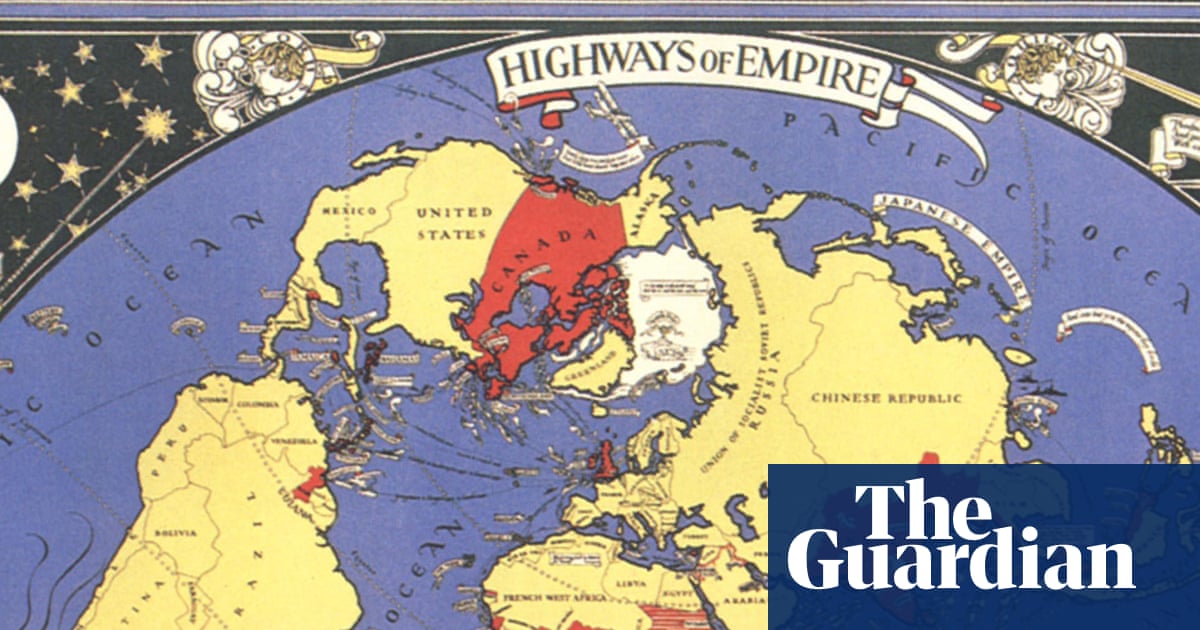
The V&A’s decisions reflect a willingness to comply with Chinese censorship, potentially complicating the production process. For instance, in the catalogue for the upcoming exhibition “Music is Black,” set to debut this Friday, the museum intended to feature a 1930s illustration of trade routes associated with the British Empire. However, an email from C&C Offset Printing, the Chinese firm, indicated that this map had been rejected by the General Administration of Press and Publication (GAPP) in China due to its content. The email suggested either removing the map or selecting a different image.
Despite internal confusion regarding the decision, the V&A proceeded with the removal. Internal communications indicated that the censorship had delayed the catalogue’s printing, noting: “It’s a historic map showing British colonial rule so it has nothing to do with China – it simply shows China on the map, and that seems to be enough to warrant rejection! Printing paused while we amend files … SORRY.”
This map was intended to accompany an introduction by Gus Casely-Hayford, the director of V&A East. An email to him explained that it was too late to engage alternative printing services. It stated: “We were aware of sensitivity around contemporary maps, but it now clearly applies to historic maps too. As we have ordered the paper for printing, it is unfortunately too late to shift production to Europe, necessitating a one-week delay to find a substitute illustration.” Casely-Hayford expressed sympathy for the stressful situation and proposed using an image of musician Dennis Morris instead. Ultimately, the V&A selected a photo of individuals arriving in Southampton on the liner Begoña after a journey from the West Indies.
The museum also chose to omit another map intended for a 2021 exhibition titled “Fabergé: Romance to Revolution,” as well as a photograph of Lenin, which was deemed potentially sensitive by the Chinese printers.
A message from the V&A production team to one of its curators conveyed frustration regarding the censorship, stating: “The Chinese printer is unable to print the book with the revolution/Lenin image at the beginning of your essay. I should have anticipated this, but the list of restrictions is constantly changing.”
In response to inquiries, the V&A characterized the modifications mandated by China as “minor,” asserting that it evaluates each printing decision individually. The museum emphasized its commitment to maintaining editorial control, stating, “We were comfortable making minor edits, as they did not affect the narrative, and we would obviously halt production if we felt any requested change was problematic.”
Other institutions, including the Tate, British Museum, and British Library, have also utilized Chinese printers for recent catalogues and publications available for purchase. The British Museum declined to address questions regarding its handling of censorship requests related to at least eight recent publications printed in China, with a spokesperson stating, “We work with a range of printers across Europe and Asia,” while refusing to provide further details.
George Osborne, who chairs the British Museum, previously advocated for strengthening economic ties with Beijing during his tenure as chancellor, promoting a “golden decade” in UK-China relations. The British Library claimed it has never encountered censorship issues with its publications printed in China. A spokesperson for Tate confirmed that while several children’s books and catalogues were printed by Chinese companies, the content of any works had never been altered at the request of a printer.
A UK publisher, who wished to remain anonymous, remarked on the cost disparity, noting, “We have tried to print in this country, but it is just very expensive. We recently received a quote from a Welsh printer that was double what we’re paying in China. There are always delays in the printing process while it goes through a Chinese body that reviews content. There are sensitivities regarding maps and anything mentioning Tibet, for example.”
A former employee of C&C Offset Printing remarked, “Of course, printing content disapproved by the Chinese government is forbidden. It shouldn’t be surprising; it’s a Chinese company.”