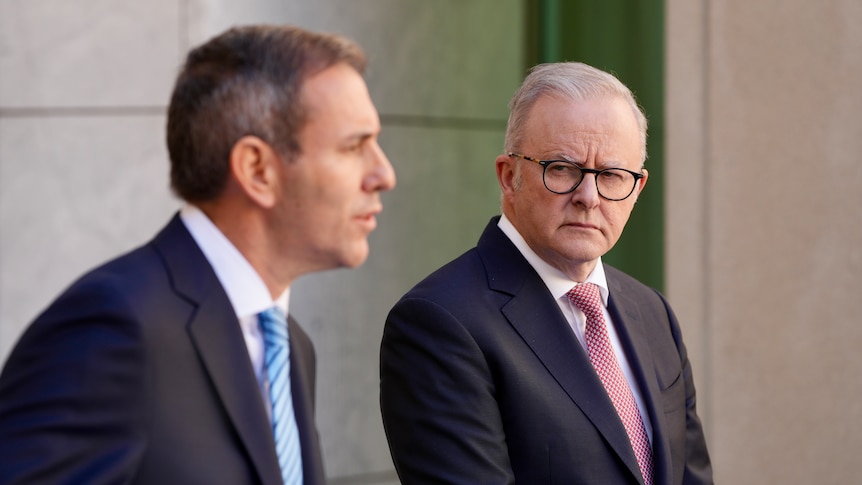

In advance of his trip to Washington, the treasurer engaged in discussions with the governor of the Reserve Bank. He is set to embark on a brief 24-hour journey to the United States to participate in the G20 Finance Ministers and Central Bank Governors Meeting, as well as the IMF-World Bank gatherings.
During their meeting, the treasurer and the governor exchanged insights regarding their respective economic forecasts. Speaking on ABC’s Radio National Breakfast, he stated, “I took the opportunity to share the government’s perspectives, preparations, and various scenarios for the upcoming budget.” He emphasized that while he has communicated with the governor regarding each budget, the current global economic climate necessitates a more urgent dialogue given the prevailing uncertainty and volatility affecting local communities.
With the budget due in approximately four weeks, the treasurer indicated that the upcoming budget will differ from the original plans. Previously, the government had acknowledged that this year’s budget would be finalized later than usual, a situation attributed to the ongoing conflict in Iran. When asked whether the war influenced the government’s decisions regarding spending cuts, Chalmers reiterated his recognition of the need to alleviate budgetary pressures. “The budget will be responsible, incorporating savings to improve our fiscal position, allowing us to react should more severe scenarios materialize,” he explained.
Chalmers noted that while the budget anticipated in February would not match the one he presents on May 12, it would remain ambitious and responsible, focusing on enhancing economic resilience and reform.
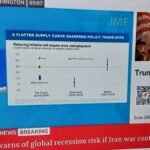
He refrained from commenting on the possibility of extending the halving of the fuel excise beyond June 30 if fuel prices continue to rise. The International Monetary Fund has issued stark warnings regarding potential pressures on the global economy and inflation rates if the conflict between the US and Iran does not resolve soon. The IMF’s bleak scenario includes the prospect of a global recession, inflation rates reaching 6 percent, and sustained high fuel prices into the following year.
Chalmers described the current economic climate as “extremely perilous,” stating that global developments would be reflected in the budget forecasts for May. He reiterated the IMF’s concerns about severe scenarios, emphasizing the urgent need for the conflict to conclude to stabilize economic conditions.
Additionally, the treasurer is laying the groundwork for the imminent release of the National Defence Strategy, acknowledging that difficult decisions surrounding funding are necessary. This strategy, which the government pledges to update biennially, will outline the strategic landscape and corresponding investment decisions.
The government has indicated that while new funding will be allocated to defense initiatives over the next decade—such as enhancing drone capabilities—some projects will need to be “reprioritized” to reallocate funds. This reprioritization may involve canceling, resizing, or delaying certain initiatives. Marles acknowledged that these choices are challenging but crucial to ensuring the Australian Defence Force (ADF) is equipped to meet current strategic demands and safeguard the nation.
Decisions to cut or postpone significant defense projects are often contentious. The Coalition has criticized the government for reducing investments in projects like new infantry fighting vehicles and self-propelled howitzers, arguing that funding for AUKUS is detracting from essential defense spending.
Defense remains a critical area in the budget where the government faces mounting political pressure to increase allocations, particularly as it seeks to identify savings in other sectors. The IMF’s latest World Economic Outlook report, released recently, forecasts a worsening economic outlook should the Iran conflict persist.
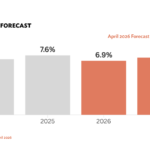
In its most pessimistic scenario, the IMF warns that continued hostilities into the next year, coupled with oil prices stabilizing around $110 per barrel, could lead to inflation exceeding 6 percent, with economic growth slowing to 2 percent. Pierre-Olivier Gourinchas, in an IMF blog associated with the report, urged central banks to prioritize raising interest rates to control inflation over short-term economic growth.
As he prepares for his trip to the United States, the treasurer aims to strengthen Australia’s fuel supply during discussions with international counterparts. His schedule includes meeting with G20 finance ministers and central bank governors, as well as engaging with representatives from fuel-supplying nations such as Japan, China, and Singapore. Chalmers intends to reiterate the government’s advocacy for a permanent ceasefire in the Middle East and the reopening of the Strait of Hormuz.
Furthermore, the prime minister plans to bolster Australia’s food exports to enhance fuel supply security during talks in Brunei, where he will meet with Sultan Haji Hassanal Bolkiah, the world’s longest-serving head of state.