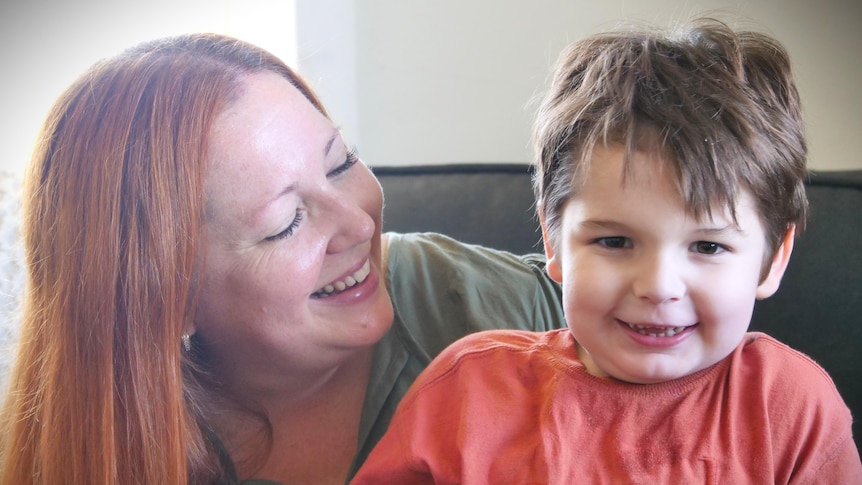

A four-year-old boy named Leo, who suffers from a rare type of epilepsy, is the focus of a fundraising effort by his family to acquire a specialized seizure alert dog. This initiative comes as they seek to cover the substantial costs associated with such a service animal.
Currently, epilepsy is categorized under the National Disability Insurance Scheme (NDIS) as a medical condition, a classification that advocacy organizations argue leaves many families without sufficient support. Epilepsy Australia is optimistic that an upcoming Senate inquiry will highlight the existing funding deficiencies for this condition.
Every night, Kat Robinson faces the anxiety of putting her son Leo to sleep, fearing he may experience a seizure and not wake up. “It’s a constant source of dread… knowing that if I close my eyes, I can’t watch over Leo,” Ms. Robinson expressed. Despite using anti-suffocation pillows and a video monitor, she recognizes these measures do not alert her to potential seizures.
Leo was diagnosed with Dravet syndrome, a challenging, medication-resistant form of epilepsy, at the age of one. “It’s akin to living with a ticking time bomb, but without any visible countdown,” she described.
Ms. Robinson hopes that a seizure alert dog will make a significant difference in Leo’s life, but the estimated cost exceeds $40,000, with additional expenses anticipated for ongoing care. “As a parent of a child with complex medical needs, if there’s even a slight chance that something can help your child live a more typical life, you will pursue it,” she stated.
The financial burden is considerable for Ms. Robinson, a mother of two living in Rockhampton, especially given the already high expenses for medications and medical appointments. While she receives some assistance from the NDIS for Leo’s biweekly speech and occupational therapy, her request for a support worker was denied.
Sandi Rodiger, the chief executive of Epilepsy Queensland, noted that many families face similar funding challenges. “Most of our inquiries revolve around how to access the NDIS because people are struggling to find the support they need,” she mentioned. “The current health system does not provide adequate assistance for those facing severe safety concerns or impacts on their employment and independence.”
Earlier this year, after numerous discussions and applications, Leo was paired with a dog-in-training named Annie through the organization Helpful Hounds. “Their connection was immediate… it was as though Annie instinctively knew that ‘this little person is my person,’” Ms. Robinson recalled.
Due to the lengthy training period required for specialized seizure alert dogs, which can take up to two years, Ms. Robinson has resorted to online fundraising and even participating in game shows to help generate the necessary funds. “If we don’t act now, we might miss our opportunity, and he could be waiting for years for this chance again,” she cautioned.
It’s noteworthy that the NDIS does not cover the costs of seizure alert dogs, although assistance animals can be funded under specific circumstances. According to a spokesperson for the National Disability Insurance Agency, eligibility for the scheme requires a person to have a significant disability affecting their functional capacity, and all decisions are made according to the NDIS Act.
While the federal government is working to reform the NDIS, Epilepsy Australia remains hopeful that meaningful changes are on the horizon. The recent announcement of an inquiry into epilepsy in Australia might bring attention to funding gaps and enhance the daily lives of those affected by the condition, which can vary greatly among individuals.
“It’s crucial to recognize that more needs to be done,” Ms. Rodiger emphasized. “We need to shift our perspective on epilepsy in Australia to ensure adequate support is available for everyone affected.”
The inquiry is currently accepting submissions until mid-May and is expected to deliver its findings in September. For families like the Robinsons, assistance cannot arrive soon enough. “This situation isn’t going to resolve itself; a cure is a long way off… and many families like ours are feeling overwhelmed,” Ms. Robinson concluded.