
Israel and Lebanon have reached an agreement to initiate direct negotiations following discussions in Washington, D.C., facilitated by U.S. Secretary of State Marco Rubio.
The meeting, which took place on Tuesday, represented the first significant face-to-face dialogue between the two nations in nearly thirty years.
Lebanon’s President Joseph Aoun expressed optimism that these discussions could signify “the beginning of the end” of the hardships faced by the Lebanese people. Meanwhile, Israel’s ambassador emphasized a shared goal of “liberating Lebanon” from Hezbollah’s influence.
This diplomatic endeavor is being viewed as a “historic opportunity” for peace, as both countries have been in a state of conflict for an extended period.
During the talks, which commenced amidst strong opposition from Hezbollah, the militant group launched rockets targeting multiple towns in northern Israel.
The United States is advocating for a cessation of hostilities between Israel and Hezbollah, concerned that escalating tensions could jeopardize a two-week ceasefire related to the ongoing conflict involving Iran. Recent negotiations with Tehran in Pakistan did not yield a positive outcome.
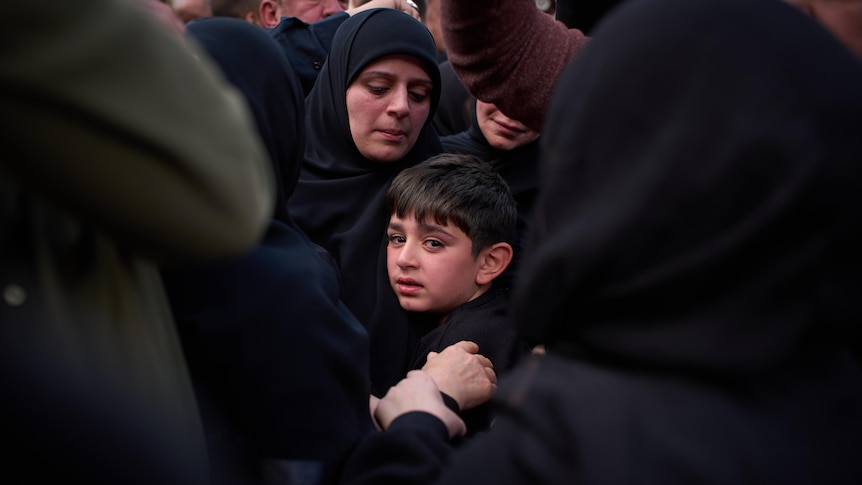
Lebanon became embroiled in the wider conflict when Hezbollah launched an attack on Israel, acting in support of Iran, which provoked an Israeli ground invasion and airstrikes that have resulted in over 2,000 fatalities and left more than a million people displaced.
During the Washington meeting, the first such high-level engagement since 1993, Rubio highlighted the complexity of the situation given the lengthy history between the two nations. He expressed hope that a framework for establishing enduring peace could be developed.
Following the discussions, a spokesperson from the U.S. State Department described the session as “productive,” noting that both sides agreed to commence direct negotiations at a mutually acceptable time and location.
Israeli ambassador Yechiel Leiter characterized the exchanges as positive, affirming that both parties recognized their common interests.
In her remarks, Lebanese ambassador Nada Hamadeh Moawad termed the meeting “constructive,” while also advocating for a ceasefire and emphasizing the importance of Lebanese sovereignty over its territory.
Israeli forces currently occupy parts of southern Lebanon, and the Israeli government has been reluctant to consider a ceasefire until Hezbollah is dismantled.
Israeli Foreign Minister Gideon Saar reiterated the country’s interest in pursuing “peace and normalization” with Lebanon, but underscored that addressing Hezbollah remains essential.
Prior to the meeting, Hezbollah leader Naim Qassem publicly opposed the negotiations and pledged to continue the fight.
Foreign ministers from 17 nations, including representatives from Britain and France, have called on both Israel and Lebanon to take advantage of this moment to secure lasting stability in the region.
In related developments, U.S. President Donald Trump indicated that peace talks with Iran might resume in Pakistan within the next few days, following the breakdown of discussions over the weekend that led to a blockade of Iranian ports by Washington.
Officials from Gulf states, Pakistan, and Iran suggested that U.S. and Iranian negotiating teams could reconvene in Pakistan later this week, although a specific date has not been established.
The stalled negotiations were complicated by disagreements over Iran’s nuclear ambitions, with the U.S. proposing a 20-year suspension of all nuclear activities, while Iran suggested a temporary halt of three to five years, according to sources familiar with the discussions.
Additionally, the U.S. has called for the removal of any enriched nuclear materials from Iran.
The U.S. blockade prompted strong reactions from Tehran; however, indications of potential diplomatic engagement led to a calming effect on oil markets, with benchmark prices dipping below $100 on Tuesday.
According to U.S. Central Command, no vessels successfully passed through the blockade within the first 24 hours, with six merchant ships turning away. Over a dozen U.S. warships are involved in enforcing the blockade, which applies to ships entering or exiting Iran.
Despite the blockade, shipping data revealed minimal impact on traffic through the Strait of Hormuz, with at least eight vessels navigating the waterway on Tuesday.