
A parliamentary committee established to evaluate the Tasmanian government’s actions following a commission of inquiry into child sexual abuse has raised concerns regarding a state-funded initiative aimed at supporting at-risk youth.
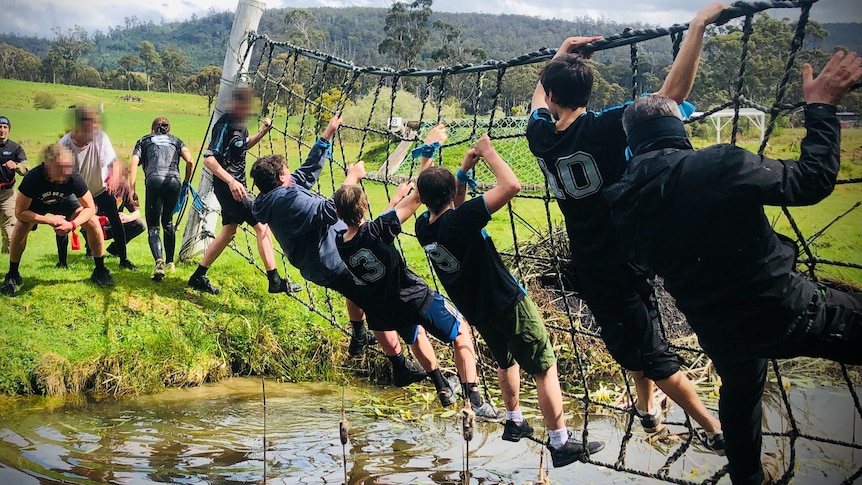
The BEAST outreach program, operated by JCP Youth, received $3.7 million from the state government as part of an election pledge. The committee has labeled this funding as “highly inappropriate.”
In response, JCP Youth asserts that it has achieved significant success and is accountable for its funding through various reporting mechanisms.
The program in question, which focuses on vulnerable youth, has faced scrutiny over issues related to its care model, staff qualifications, and the rationale behind the government’s substantial financial commitment. JCP Youth describes the BEAST program as its primary mentoring and outreach effort, specifically designed for boys aged 11 to 17 who may face complex challenges within the community.
The organization claims the program aims to assist young individuals who are at risk of entering or worsening their situations within child safety or youth justice systems and who are motivated to improve their lives.
Alongside JCP Youth, various sexual assault support services are available to those in need, including the Sexual Assault Support Service (Tasmania), the national helpline 1800 Respect, and Lifeline, which offers a 24-hour crisis line.
A joint parliamentary committee was tasked with reviewing the Tasmanian government’s progress in implementing the 191 recommendations from the Commission of Inquiry into Government Responses to Child Sexual Abuse in Institutional Settings. Among these recommendations was a call for the government to create new programs aimed at diverting children from the youth justice system by 2025.
The Tasmanian government cited its funding for the BEAST program as evidence of its compliance with the recommendations during its testimony before the committee. Both the state government and the Labor opposition pledged to support JCP Youth in the upcoming 2024 election, a commitment that the committee criticized in a recent interim report.
The report stated, “The committee finds it highly inappropriate that public funds would be allocated to essential services for vulnerable children and young people through an election promise by a political entity, rather than through a transparent, competitive tender process conducted by the relevant department.”
Additionally, the committee expressed concerns regarding the “apparent lack of clarity” surrounding key aspects of JCP Youth’s BEAST program, including its evidence base, care model, staff qualifications, and absence of independent evaluation.
Will Smith, the CEO of JCP Youth, defended the qualifications of his team, highlighting that the staff is “deliberately multidisciplinary.” He noted that while some team members hold formal qualifications in fields such as social work and education, the organization also values practical experience and the capacity to connect with young people who may be resistant to conventional methods.
Smith emphasized that all staff operate within defined frameworks, supervision systems, and stringent child-safe protocols, asserting that JCP Youth has effectively maintained the safety of young individuals and is accountable for its funding through established reporting measures.
The funding for the BEAST program was part of election promises made in the lead-up to the 2024 state election, initially proposed by the Labor opposition, then under Rebecca White’s leadership. In contrast, the Tasmanian Liberal Party had introduced a “strong plan to combat crime,” which faced backlash from child safety advocates. Subsequently, the Liberals matched the funding commitment, and after winning the election, they reviewed the initiative internally instead of through an external evaluation process.
Concerns over the lack of external assessment were repeatedly flagged during the parliamentary committee discussions, alongside the absence of a competitive tender process. The government justified this approach by stating that the BEAST program directly aligns with the strategic goals of the Department of Education, Children and Young People. A departmental report explained that conducting an open tender would entail excessive administrative costs and time that are not proportionate to the potential value obtained.
Greens spokesperson for Children and Youth, Cecily Rosol, criticized the situation, stating that numerous organizations seeking funding were overlooked. She remarked, “Alarmingly, this commitment was made without a solid evidence base or input from the Department of Children and Young People, even though JCP Youth had previously been denied government funding.” Rosol highlighted that since the announcement of the funding, there have been ongoing concerns from staff and independent experts regarding JCP Youth’s methodologies.
These concerns include inquiries into whether JCP Youth’s practices are trauma-informed, how they function within the community, the interactions between staff and youth, the qualifications and training of personnel, and the measures in place to ensure the safety of children.
JCP Youth faced further scrutiny last year when social media posts emerged showing camp workers wearing balaclavas, raising additional questions about their operations.
In response to inquiries about the evidence supporting JCP Youth’s practices, former Minister for Children and Youth, Roger Jaensch, indicated to the committee that a diverse range of tools is essential for effectively engaging certain children.