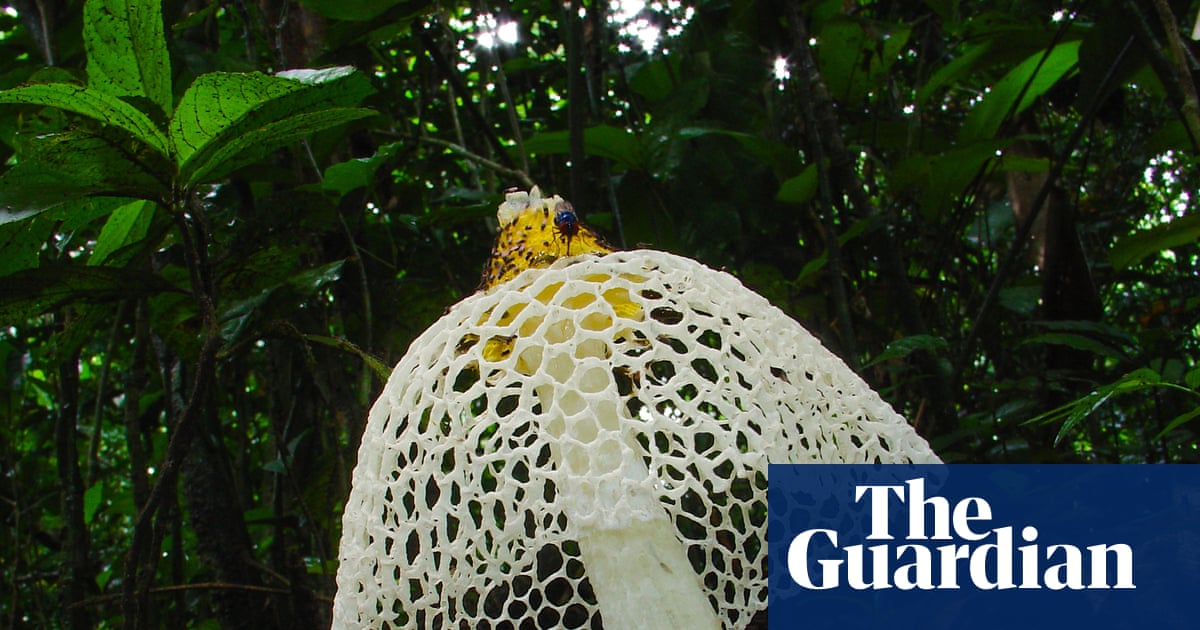

Madagascar is renowned for its unique wildlife, featuring a diverse array of species, including ring-tailed lemurs and various baobab trees, that are exclusive to the island. However, the discussion often omits fungi, which play a crucial role in the ecosystem.
According to Anna Ralaiveloarisoa, Madagascar’s first native mycologist, fungi are essential to life on Earth. “They are responsible for nourishing 90% of terrestrial plants,” she asserts, emphasizing their significance in sustaining life.
Ralaiveloarisoa aims to enhance the understanding of fungi, a largely overlooked segment of biodiversity. She points out that only a small fraction—less than 1%—of the estimated 100,000 fungal species in Madagascar have been formally identified and documented.
Currently, she is focused on classifying 200 new species she has discovered, although she encounters numerous challenges, such as inadequate facilities for preserving specimens, navigating remote jungle areas lacking reliable infrastructure, and the absence of fellow experts in the country.
Despite these hurdles, Ralaiveloarisoa is part of a growing network of mycologists across Africa who are advancing the study and conservation of fungi. In November, many of these scientists convened for the inaugural International Congress on Fungal Conservation in Cotonou, Benin. The event attracted mycologists from 27 nations, including those from countries where they are often the sole representatives of their field.
This congress highlighted the increasing global attention towards fungal conservation and the pivotal role African scientists are beginning to play in this movement.
During the opening ceremony, Nourou Yorou, a mycologist and newly appointed director of the Benin Agency for Science and Innovation, expressed enthusiasm for the burgeoning field: “In just two decades, fungal conservation has transformed from an obscure area of study into a vibrant global initiative.” He underscored the need for a future where fungi are integrated into mainstream conservation efforts.
Globally, the conservation of fungi has historically lagged behind that of plants and animals. While organizations focused on avian protection were established in the 19th century, dedicated fungal conservation efforts only began to emerge in the 21st century. The International Society for Fungal Conservation (ISFC) was founded in 2010, followed by the establishment of the Fungi Foundation in 2012.
David Minter, president of the ISFC, noted that prior to the 2000s, concerns regarding fungal conservation were largely fragmented among a few scientists. However, since the formation of recent organizations, there has been a notable shift in momentum. For instance, Chile passed its first conservation legislation inclusive of fungi in 2013, and the Fungi Foundation has advocated for the phrase “fauna, flora, funga” to promote the recognition of fungi in conservation policies.
New organizations have been established, such as Fundis, North America’s first fungal conservation nonprofit founded in 2017, and SPUN, a research organization launched in 2021 by evolutionary biologist Toby Kiers, who has received accolades for her contributions to fungal research and conservation.
Later this year, the “fungal conservation pledge,” initially introduced at the UN biodiversity conference Cop16 in Colombia, will be revisited at the upcoming biodiversity conference in Armenia.
The growing interest in fungal conservation is partly fueled by new findings regarding their vital roles in ecosystem functionality. It is now understood that fungi are integral to 90% of the planet’s plants, supplying essential nutrients and contributing to climate stability. Recent research indicates that mycorrhizal fungi can store up to 36% of annual CO2 emissions from fossil fuels in their underground structures.
Minter likens fungi to waste collectors, performing essential services that are often taken for granted until they are no longer present. “When waste collectors strike, their importance becomes clear. The same principle applies to fungi,” he explains.
Fungi require protection due to their critical roles in ecosystems, and they are as vulnerable to threats like climate change, habitat loss, and pollution as other life forms. It is a misconception to assume that conservation initiatives aimed at animals and plants will automatically benefit fungi. A 2025 study in Nature revealed that less than 10% of identified hotspots for mycorrhizal fungal diversity are currently protected.
Minter remarked that in 2010, fungi were rarely mentioned in conservation discussions, but he believes that in the future, it will be unusual for them to be overlooked. “We are at a pivotal moment,” he stated.
During the Benin congress, African mycologists demonstrated their knowledge, dedication, and enthusiasm to support this movement both locally and globally. In a workshop aimed at assessing extinction risks, Sydney Ndolo Ebika, the Republic of the Congo’s first mycologist, shared valuable insights about Termitomyces, a genus of fungi cultivated by termites and highly valued as an edible resource across much of Africa, with some species growing to the size of an umbrella.