
Andrew Durbin, an author and the editor-in-chief of Frieze Magazine, dedicated nearly five years to crafting “The Wonderful World That Almost Was,” a dual biography that delves into the lives of photographer Peter Hujar and sculptor Paul Thek. Both prominent gay artists produced remarkable works during the pivotal years surrounding the onset of AIDS, and their narrative is anchored in a friendship and creative partnership that lasted over three decades. Hujar and Thek passed away within a year of each other, succumbing to complications from AIDS in 1987 and 1988.
In recent years, the artistic contributions of Hujar and Thek have regained significant attention in cultural discussions. Hujar’s life was portrayed by Ben Whishaw in Ira Sachs’ poetic 2025 film titled “Peter Hujar’s Day,” and his photographs have adorned the covers of Anohni and the Johnsons’ albums as well as Hanya Yanagihara’s bestselling novel “A Little Life.” In contrast, Thek’s resurgence has been more gradual; his most significant works, expansive installations in Europe, have been lost to time. As Durbin notes, “Everyone loved his work, but few had the chance to experience it. However, I believe his moment is on the horizon.”
When I met Durbin in Berlin in late March, he expressed his lack of sleep leading up to his book’s release. Following our conversation, he was set to speak at the Gropius Bau gallery, where an exhibition of Hujar’s photography is being showcased until June 28. This event marks the beginning of his book tour, and he appeared eager to share his insights. “I aimed to convey that they truly lived,” he remarked about Hujar and Thek. “They achieved so much even while facing their mortality.”
“The Wonderful World That Almost Was” represents a crucial effort in the literary recovery of queer art history. Durbin faced a race against time to complete the work, as several key sources passed away during its development, including the executors of Thek’s and Hujar’s estates.
One of the profound tragedies of AIDS was the second erasure of queer identities; families often claimed their loved ones died of unrelated illnesses, effectively obscuring their sexual identities from history. Many artists’ collections, even those well-regarded in their lifetimes, have been lost or scattered. Hujar and Thek could have faced a similar fate if not for the interviews Durbin conducted. His book builds upon those conversations, encapsulating the intimate bond shared by these groundbreaking figures in 20th-century art.
In the introduction of the book, Durbin reflects, “The lives of artists who succumbed to AIDS have frequently been interpreted through the lens of the disease, casting them as tragic, fading figures.” In response, the narrative is framed around their lives from 1954 to 1975, with their deaths only addressed in the epilogue, crafting a love story that feels authentic and complex.
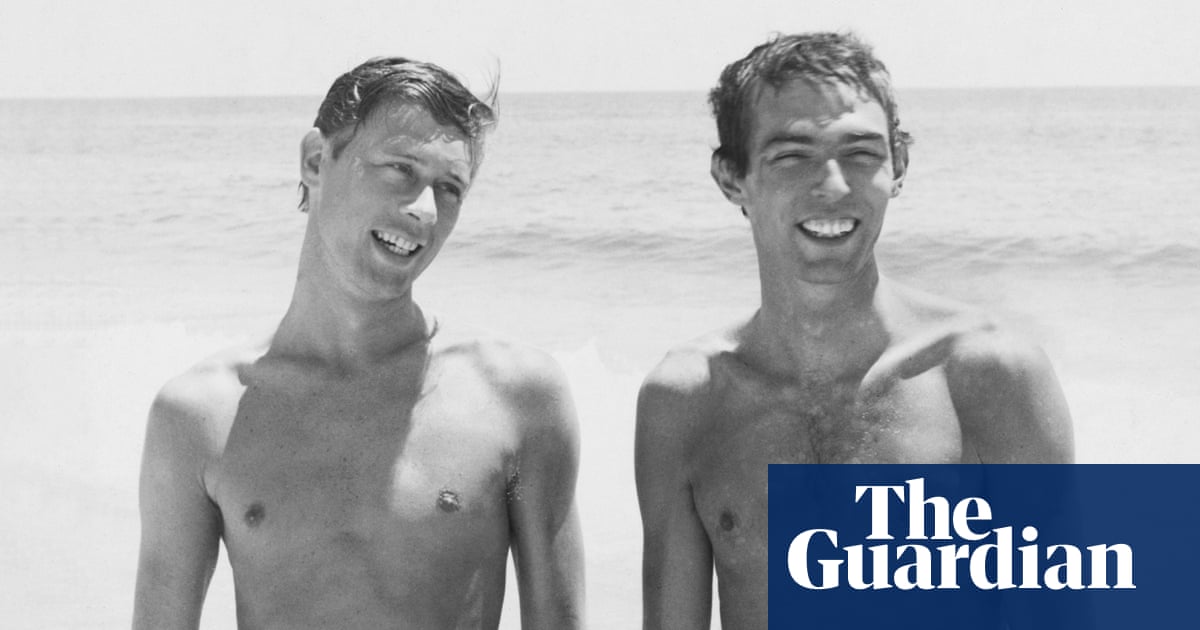
Hujar first captured Thek’s image in Coral Gables, Florida, around 1956 or 1957, when they were both in their early twenties. By 1960, they were living as neighbors on Manhattan’s Lower East Side and were romantically involved. When I inquired about Thek’s renowned charisma, which captivated figures like Tennessee Williams and Gore Vidal, Durbin described him as “childlike,” filled with wonder about the world, humor, and an infectious playfulness that drew others to him.
A postcard from Hujar, sent from Fire Island, depicts a busy beach with a single figure marked by Thek’s handwriting. On the reverse, it reads: “A photograph of happy persons, except me; I am seen looking everywhere for you.”
During a 1963 trip to Sicily, they ventured into Palermo’s Capuchin Catacombs, where photography was prohibited. Hujar, undeterred, captured images while Thek reached into one glass coffin, mistakenly believing he was picking up a piece of paper, only to discover it was a dried fragment of human thigh. “I felt strangely relieved and free,” Thek later shared in a 1966 Artnews interview. “It delighted me that bodies could be used to decorate a room, like flowers.” Hujar’s catacomb photographs eventually culminated in “Portraits in Life and Death” (1976), his only published book during his lifetime.
For Thek, that afternoon inspired his series of “meat pieces,” unsettling sculptures resembling fleshy forms encased in glass and metal, reminiscent of religious relics. This moment propelled him to sudden prominence in the art world.
Both artists resisted being pigeonholed. Thek frequently destroyed his creations, altered the dates on his paintings, and crafted fragile, ephemeral installations that left no tangible works for sale. Hujar, as Durbin notes, sought to transcend the label of “gay photographer.” Despite addressing gay themes, including nightlife, love, drag culture, and friendships with openly queer figures, Hujar felt that embracing his sexuality would confine his work to a niche that mainstream critics and museums often overlooked. He even released a series of erotic photographs, including those of David Wojnarowicz, under the pseudonym Jute Harper, reflecting his ongoing search for an alias. Nonetheless, his lens continually returned to iconic queer personalities such as Candy Darling, Susan Sontag, Fran Lebowitz, Wojnarowicz, Jackie Curtis, and John Waters.
In August 1975, Thek participated in what would become his final photo sessions with Hujar as their relationship was experiencing strains. “There wasn’t a specific moment when it began to unravel,” Durbin explained regarding their rift. “It’s a spectrum of experiences that a book can’t fully encapsulate.” These sessions produced some of Hujar’s most iconic portraits. “In the second session,” Durbin writes, “Paul’s face reveals all his feelings for Peter – love, envy, dismissal, misunderstandings, a desire to forget, and a wish to forgive.”
The last correspondence from Thek to Hujar is filled with ideas and suggestions for “Portraits in Life and Death,” then still in progress: “A bush, a door, a gate, a road, a tunnel, pearls.” He writes as if they are on the brink of a new beginning rather than an ending. His final line reads: “Any time you want to make love, just ask me.”