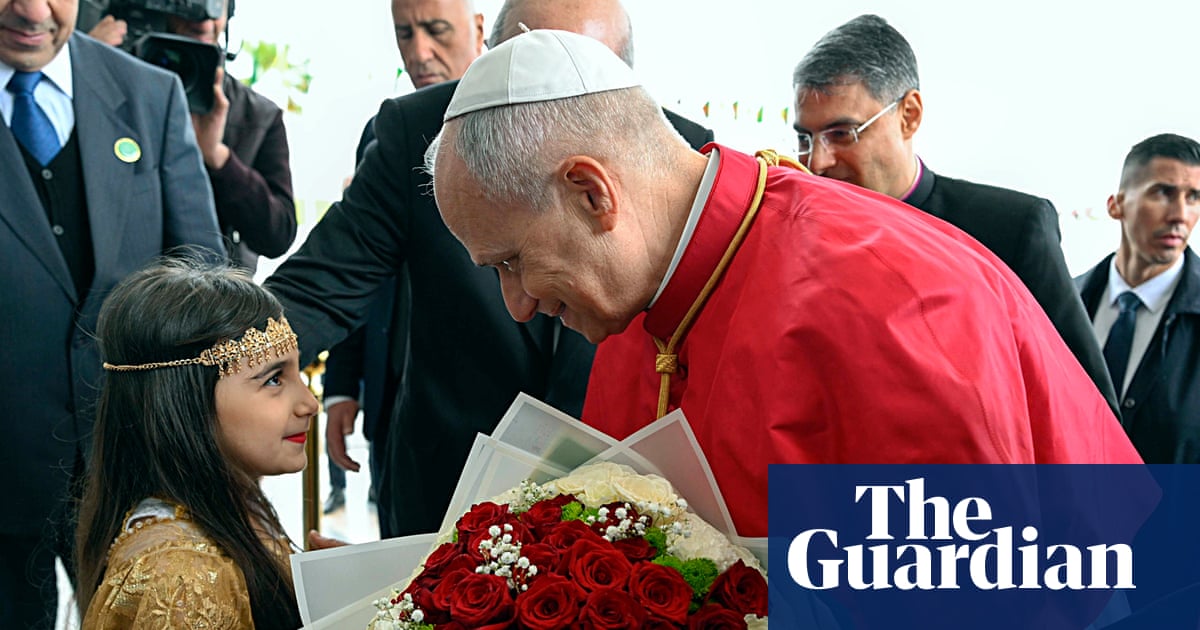

Pope Leo XIV has commenced his inaugural visit to Algeria, marking the first time a pope has traveled to this North African nation. During his arrival, he emphasized the importance of peace, setting the tone for an 11-day journey through Africa that underscores the continent’s increasing significance to the Catholic Church.
This extended trip, which includes visits to Cameroon, Angola, and Equatorial Guinea, represents the longest papal journey for Pope Leo since he assumed the papacy in May of the previous year.
Experts in theology and academia suggest that this visit to Africa conveys a strong message about the church’s priorities, highlighting the continent’s vital role. Adriaan van Klinken, a religion and African studies professor at the University of Leeds, noted that Africa is experiencing substantial growth in its Catholic population, which now constitutes approximately 20% of the global Catholic community. In contrast, the number of Catholics in Western Europe is on the decline.
“Africa embodies vitality, growth, and the future of the church,” stated Van Klinken.
According to John Pontifex from the charity Aid to the Church in Need UK, the establishment of 14 new dioceses in Africa over the past year, along with an increase of 7 million Catholics, reflects a pivotal moment for the continent in the realm of Catholicism. “Pope Leo’s early focus on Africa signifies that this is a continent coming into its own,” he remarked.
Upon his arrival at Algiers International Airport on Monday, Pope Leo was greeted by Algeria’s president, Abdelmadjid Tebboune. His itinerary included a visit to the Maqam Echahid, a monument honoring those who lost their lives during the Algerian War of Independence against French colonial rule from 1954 to 1962.
Father Peter Claver Kogh, rector of the Basilica of Our Lady of Africa in Algiers, described the visit as an opportunity to strengthen ties between Christian and Muslim communities, fostering a spirit of peace and tolerance between the two faiths.
“What the world needs now is a commitment to fraternal living and harmony,” Kogh added. “This visit is of utmost importance for Christians and Muslims alike, as well as for anyone who seeks to live peacefully.”
Austen Ivereigh, a biographer of Pope Francis, believes this trip continues the path set by the former pope. In 2019, Pope Francis made history by signing a “human fraternity” document with prominent Muslim leaders. “Pope Leo will aim to strengthen that critical partnership in establishing a new world order of peace,” Ivereigh explained.
Pontifex noted that the visit also underscores the pope’s commitment to religious freedom, particularly in Algeria, where the rights of Christians, Ahmadi Muslims, and more progressive Muslim groups have faced challenges in recent years.
This journey is also viewed as a chance to highlight communities historically marginalized and exploited, often overlooked by Western nations. Lucy Esipila, regional coordinator for Caritas Africa, expressed her belief that the pope’s presence would significantly impact local Catholic communities. “In a time when many African nations grapple with conflict, debt, and increasing inequalities, this apostolic journey represents a powerful expression of ‘walking together’ as a global church that listens to those on the periphery,” she stated.
Algeria stands out as the only Muslim-majority nation on Pope Leo’s itinerary. Though its Catholic population is small, the country is particularly meaningful to the pope as the birthplace of Saint Augustine. Leo is the first pope from the Augustinian order, which emphasizes a commitment to harmonious coexistence.
Professor Anna Rowlands, who holds the St Hilda chair in Catholic social thought and practice at Durham University, noted that beginning his visit in Algeria reflects Pope Leo’s deep awareness of the historical roots of Christianity in Africa.
North Africa was home to some of the earliest Christian communities before the advent of Islam and remains a critical part of the church’s intellectual and theological heritage.
Rowlands added that Pope Leo, formerly known as Friar Robert Prevost, has long been connected to African communities through his prior leadership in the Augustinian order. “The church in Africa is well known to him, likely more than to any modern pope,” she remarked.
The decision to focus on these African nations for his most extensive trip thus far as pope coincides with his choice to decline a visit to the United States. Dr. Miles Pattenden, a historian of the Catholic Church at the University of Oxford, commented on the implications of this choice.
Pope Leo not only passed on an invitation to the U.S., but he will also be visiting Lampedusa, an Italian island that serves as a landing point for many Africans making dangerous crossings of the Mediterranean, on July 4, American Independence Day. “This sends a powerful message that resonates with the communities he aims to connect with,” Pattenden noted.
Father Kogh expressed his joy at hearing Pope Leo’s message to the people of Algeria, stating, “It was precisely what I anticipated: a message of peace, coexistence, and fraternity. My joy is truly amplified.”