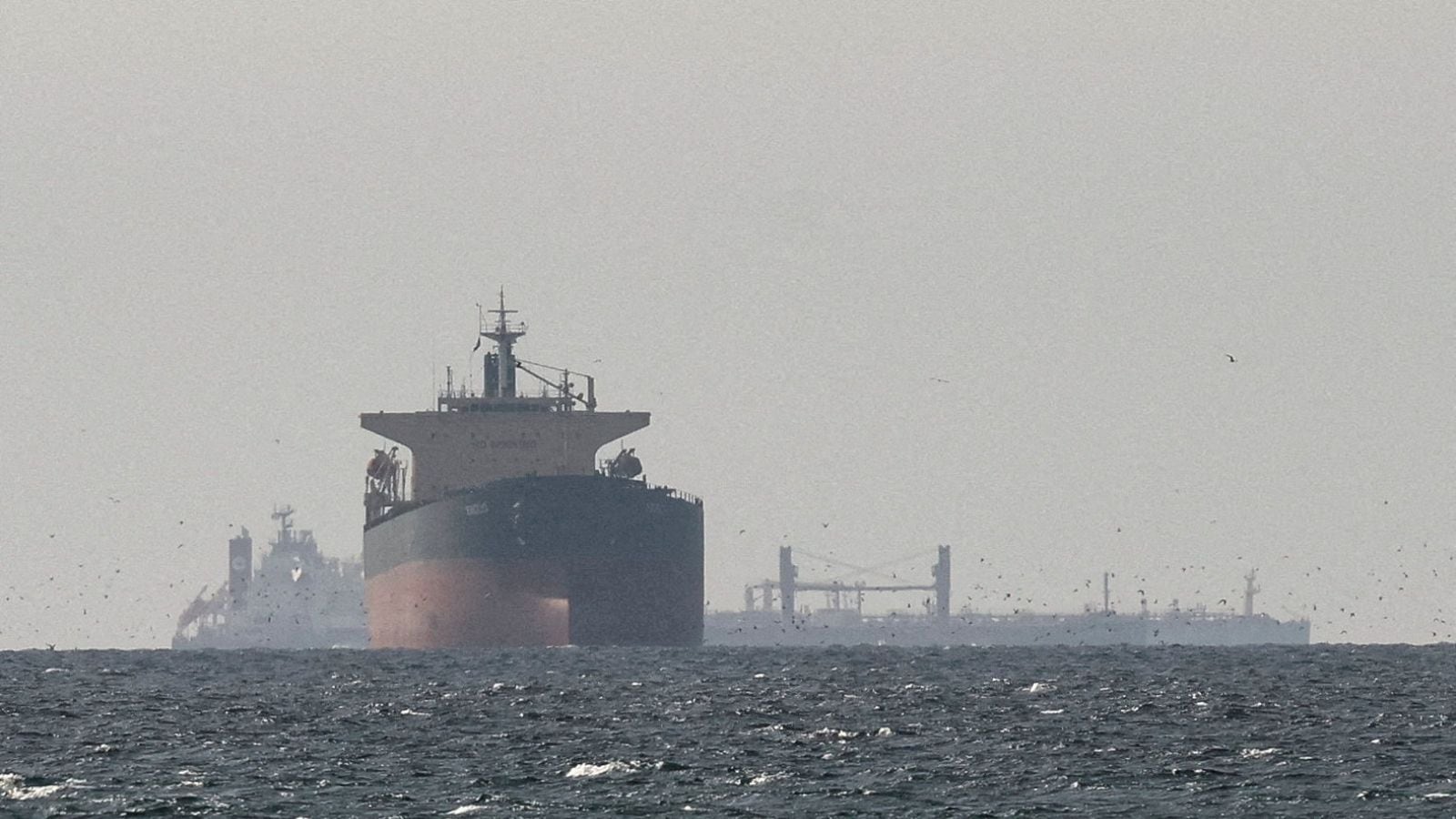

Saudi Arabia is reportedly pressing the United States to end its blockade of the Strait of Hormuz and engage in negotiations. Officials warn that President Donald Trump’s strategy to restrict Iranian oil exports might incite Tehran to disrupt other vital shipping routes.
The blockade, implemented after discussions over the weekend failed to ease Iran’s control over Hormuz, aims to further strain an Iranian economy already weakened by ongoing conflict. However, Saudi Arabia has alerted Washington that Iran could retaliate by closing the Bab al-Mandeb Strait, a crucial passage for the kingdom’s oil exports since Hormuz was effectively shut down, according to a report by The Wall Street Journal, citing Arab officials.
Iran initiated its closure of the Strait of Hormuz at the onset of the regional conflict by targeting vessels in the area, which resulted in a significant loss of approximately 13 million barrels per day in oil exports and drove crude prices above $100 per barrel. In response, Saudi Arabia has managed to maintain its oil exports at roughly seven million barrels per day by diverting crude through a desert route to its Red Sea terminal at Yanbu. This workaround could collapse if Bab al-Mandeb were to be closed, the report noted.
White House spokesperson Anna Kelly defended the blockade, asserting, “President Trump has made it clear that he wants the Strait of Hormuz to remain open for the free flow of energy.” She added that the administration is in regular communication with Gulf allies, emphasizing the President’s commitment to preventing Iran from coercing the U.S. or other nations.
Arab officials indicated that Iran is increasingly relying on its Houthi allies in Yemen, who hold significant control over the Bab al-Mandeb coastline, to replicate the disruption tactics they employed during much of the Gaza conflict. The semiofficial Iranian news agency Tasnim, linked to the Islamic Revolutionary Guard Corps, has suggested that closing the Red Sea might be a response to U.S. actions.
Adam Baron, a Yemen specialist at the New America Foundation, remarked, “If Iran intends to shut down Bab al-Mandeb, the Houthis are the logical partners for this task, and their recent actions during the Gaza conflict show they have the capability.”
Gulf states are apprehensive about the potential outcome of the conflict, with many, including Saudi Arabia, advocating for a diplomatic resolution to the tensions. Despite public statements, both sides are engaging with mediators and remain open to discussions, provided there is mutual flexibility.
Saudi energy officials informed The Wall Street Journal that Riyadh has received assurances from the Houthis not to attack the kingdom or its vessels passing through Bab al-Mandeb. However, they cautioned Washington that the situation is unpredictable and that the Houthis could escalate their actions or impose transit fees if Iran intensifies its pressure.
As Erik Meyersson, chief emerging markets strategist at Swedish bank SEB, noted, “This could provide Iran with a means to retaliate, suggesting that if you’re going to limit our oil exports, we will disrupt your Yanbu terminal exports.”
The Express Global Desk at The Indian Express is dedicated to delivering reliable, verified, and context-focused coverage of significant international events that influence global politics, policies, and migration patterns. The team emphasizes stories that are relevant to both Indian and international audiences, blending breaking news with thorough analysis and explanations.
A primary focus of the desk is U.S. immigration and visa policies, encompassing updates on student visas, work permits, pathways to permanent residency, executive actions, and judicial decisions. The Global Desk also monitors Canada’s immigration and visa policies closely, including changes to study permits, options for post-study work, permanent residency initiatives, and regulatory updates affecting migrants and international students.
All reporting from the Global Desk adheres to The Indian Express’ editorial standards, relying on official information, government announcements, court records, and verified sources. The desk prioritizes clarity, precision, and accountability, ensuring that readers can confidently navigate complex global systems.
The Express Global Desk is led by a team of seasoned journalists and editors with extensive expertise in international affairs and migration policy:
Aniruddha Dhar – Senior Assistant Editor with significant experience in global affairs, international politics, and editorial leadership.
Nischai Vats – Deputy Copy Editor specializing in U.S. politics, U.S. visa and immigration policy, and policy-driven international coverage.
Mashkoora Khan – Sub-editor focusing on global developments, with a strong emphasis on Canada visa, immigration, and study-related policy coverage.
Stay informed with the latest updates – Click here to follow us on Instagram.