
Since the call for intensified action against illegal tobacco in November, AUSTRAC has received over 300 reports of suspicious transactions linked to illicit tobacco from various banks and has referred more than 70 cases to law enforcement authorities.
Major banking institutions have been collaborating to enhance their ability to detect unlawful activities, leading to the expulsion or recommendation for departure of more than 1,000 customers in recent months.
The Chief Risk Officer of Commonwealth Bank stated that the banking sector must adopt a proactive approach to anticipate which sectors organized crime may target next.
Since late last year, Australia’s leading banks have filed numerous reports concerning suspicious activities related to illegal tobacco, following a directive from the anti-money laundering authority to intensify scrutiny in this area.
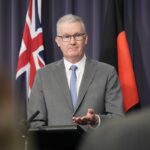
Brendan Thomas, the CEO of AUSTRAC, informed The Business that numerous “active leads” have been forwarded to law enforcement due to valuable intelligence gathered from banks.
In November, AUSTRAC alerted major banks to increase vigilance regarding tobacco retailers and convenience stores equipped with private ATMs and EFTPOS machines, expressing concerns that bank services were being misused to facilitate the purchase of illegal tobacco and to launder the proceeds.
As a result of this initiative, over 1,000 banking customers have faced account closures or recommendations for account termination following comprehensive reviews conducted by the banks.
Thomas emphasized the urgent focus AUSTRAC has placed on the illegal tobacco trade due to its significant profitability. He stated, “The illicit tobacco market generates substantial revenue within the Australian economy, making it an attractive target for organized crime.”
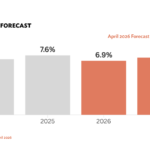
Estimates from the Illicit Tobacco and E-cigarette Commissioner (ITEC) suggest that illicit tobacco could represent 50 to 60 percent of the overall market, potentially reaching a value of $6.9 billion in the fiscal year 2024-2025.
“Our aim is to complicate the operations of criminals,” Thomas remarked. “We want to obstruct the flow of money from their illegal sales and make their activities more apparent to financial institutions. Enhanced visibility enables banks to relay critical intelligence to us, facilitating cooperation with law enforcement to dismantle these illegal operations.”
When AUSTRAC and ITEC contacted banks in November, they provided a specific reference code to be included in suspicious matter reports, aiding in the tracking of illicit tobacco transactions.
According to AUSTRAC, they have since collected 337 suspicious matter reports utilizing that reference code and have made 76 referrals to partnering agencies.
“Tracing financial flows is a potent method of disrupting organized crime, and banks play an essential role in safeguarding Australia’s financial system from exploitation,” Thomas added.
In an interview at AUSTRAC’s Sydney office, representatives from several major banks expressed a unified commitment to combatting illicit tobacco trade.
Bank executives reported significant advancements in their efforts to address illegal tobacco issues. AUSTRAC had requested banks to scrutinize tobacco retailers and convenience store operators more closely. The executives noted that legitimate and illegal sales often intertwine at these outlets, leading them to analyze transaction data for suspicious trends.
Milan Gigovic, ANZ’s head of financial crime, shared an example where a bank referral led to the seizure of 35 million illegal cigarettes and 14 tons of illicit tobacco. He also mentioned the identification of suspicious money transfers between banks linked to illegal vape sales, enabling the Australian Federal Police to restrict millions of dollars across various accounts.
“We are definitely at the forefront, collaborating with AUSTRAC and law enforcement. We possess a wealth of data and information that law enforcement may not access, which makes our assistance essential for their efforts to arrest, prosecute, and seize criminal earnings,” Gigovic stated.
Chris Sheehan, NAB’s executive of group investigations and a former AFP officer, highlighted the importance of cooperation not just among major banks but also with smaller lenders and international banks. “While we are business competitors, we unite in the fight against organized crime,” he said. “If one bank discovers an effective detection method or algorithm, we share that information to collectively create a more challenging environment for criminals.”
Legitimate operators of tobacconists and convenience stores have voiced concerns about the potential for being ensnared in the crackdown and subsequently losing access to banking services. Sheehan acknowledged that while debanking is a common practice, it is employed only as a last resort. “It’s not a blunt approach; it is a carefully considered process for each case,” he explained.
Commonwealth Bank’s Chief Risk Officer Andrew Hinchliff encouraged customers to report any coercion into selling illegal tobacco or to provide evidence of their legitimate operations, assuring them that the bank would assist in maintaining their safety.
Sheehan observed that legislative reforms are fostering improved “private-to-private intelligence sharing,” which he deemed vital. The bank executives concurred that they aim to prevent a situation where a customer involved in illegal tobacco trade is removed from one bank only to open an account with another, including smaller banks.