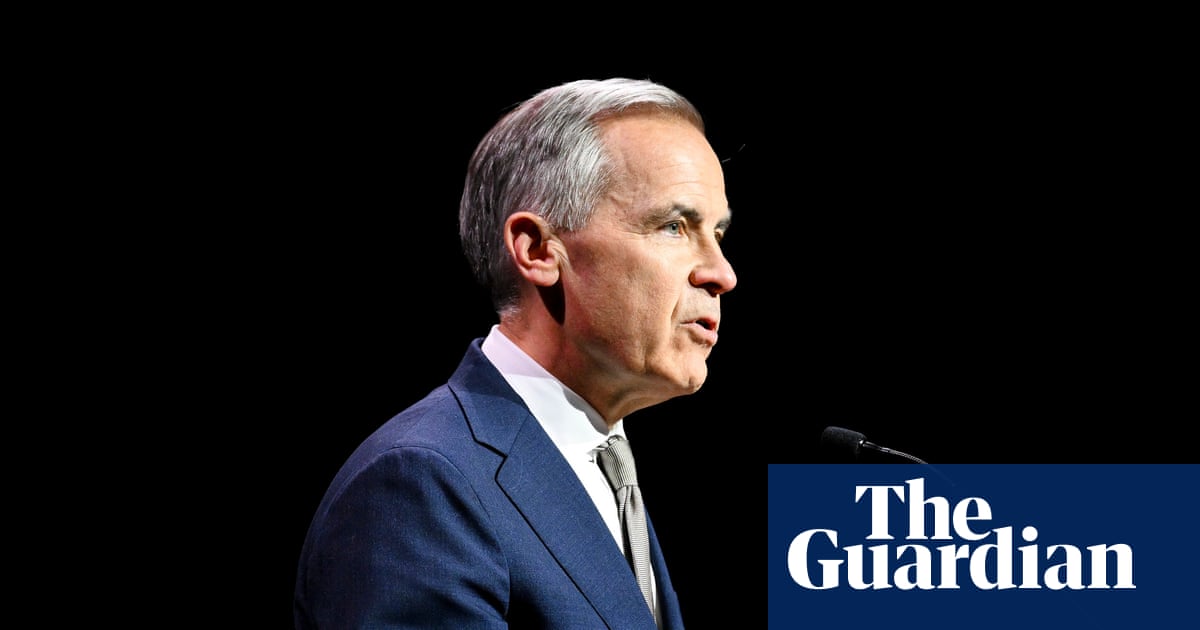

Mark Carney, the Prime Minister of Canada, has achieved a parliamentary majority for his Liberal government, as reported by CBC News. This success will enable him to advance a legislative agenda deemed essential for navigating an increasingly fragmented global landscape.
On Monday, three special elections took place in Ontario and Quebec, with two occurring in ridings that have traditionally leaned Liberal. The party successfully retained the University-Rosedale riding, according to CBC News, while the outcomes of the other two elections are still pending. With this victory, Carney’s Liberals now hold 172 seats in the 343-member House of Commons.
The University-Rosedale seat was previously occupied by former Deputy Prime Minister Chrystia Freeland, who stepped down following her appointment as an economic development adviser in Ukraine.
Carney has expressed that a majority government would enable him to more effectively navigate the ongoing trade conflict with the United States initiated by former President Donald Trump. Political analyst Andrew McDougall, an assistant professor at the University of Toronto, noted that this majority would allow Carney to implement legislation without needing to rely on opposition support for additional votes.
In the past year, the Liberals have depended on selective backing from the Conservatives to advance economic and trade legislation. A majority government also affords Carney control over the timing of the next election, in contrast to minority governments that risk facing snap elections following a lost confidence motion, typically lasting less than two years.
Carney has consolidated his leadership through 2029, when the next national elections are scheduled. The last time a federal government enjoyed a majority was during Justin Trudeau’s term from 2015 to 2019.
His position has been bolstered by the defection of five opposition members to the Liberal party over the past five months, a trend not seen since the tenures of John A. Macdonald, Canada’s first prime minister, and Jean Chretien. Recently, veteran Conservative politician Marilyn Gladu switched allegiance to join Carney’s administration, citing the need for a decisive leader to address the uncertainty caused by unwarranted American tariffs.
In the other two ridings, the Bloc Quebecois is engaged in a very close contest with the Liberals in Terrebonne, Quebec. The Liberals won this riding by a single vote in the last federal election, a result later overturned by Canada’s supreme court due to a voter envelope misprint.
The remaining special election in Ontario is to fill the vacancy left by former Liberal MP Bill Blair, who resigned following his appointment as ambassador to the United Kingdom. The Liberals are expected to retain his seat and were leading in initial counting.
Laura Stephenson, chair of the political science department at the University of Western Ontario, remarked that while Trudeau had steered the party leftward, emphasizing issues such as reconciliation with Indigenous peoples and minority rights, Carney’s centrist approach addresses immediate concerns. “He is focused on helping Canada navigate economic challenges rather than overhauling society,” she stated. “In difficult times like these, priorities shift.”
Recent polling by Nanos indicates that over half of Canadians prefer Carney as their Prime Minister, while only 23% support Conservative leader Pierre Poilievre. Before Carney assumed leadership of the Liberal Party last year, Poilievre was projected to win the upcoming election by a significant margin.
McDougall commented that Carney has effectively demonstrated his capability to manage relations with Trump, portraying himself as a competent steward of both the economy and the nation. “Thus far, Canadians have not been particularly impressed by the alternatives,” he noted.