
A coalition of Palestinian human rights organizations has initiated legal proceedings against the Australian Defence Department concerning the country’s arms exports to Israel. Their objective is to obtain documentation related to the transfer of weapons components and parts during the ongoing conflict in Gaza.
This action has garnered support from various civil society groups in Australia and the Greens, who have been advocating for increased transparency regarding arms exports.
Represented by the Australian Centre for International Justice (ACIJ), these organizations are seeking answers from the Federal Court about the arms exports to Israel. They are pressing for the release of records associated with numerous military export permits that were active throughout the Gaza conflict.
Last year, the Department of Defence confirmed that at least 30 permits for Australian companies to export items designated for military use to Israel were approved, while an additional 16 permits were still under review. Nevertheless, the department has consistently withheld detailed information about the specific nature of these exports.
According to the ACIJ, the organizations aim to ascertain whether Defence Minister Richard Marles adequately evaluated the potential risks that these military goods might contribute to serious human rights violations. They assert that if the documents reveal a failure in this assessment, it could lead to a legal argument that the Minister has made an error and that the arms exports should cease.
Since October 2023, groups including Al-Haq, the Palestinian Centre for Human Rights, and the Al Mezan Center for Human Rights have been pushing for enhanced transparency in Australia’s arms export practices. Rawan Arraf, principal lawyer at ACIJ, criticized the current export regime for its lack of public oversight and the absence of meaningful information regarding approved exports and the rationale behind them.
For any Australian entity to export arms or military-related goods, they must secure a permit from the Defence Department. The permits fall into two categories as defined in the Defence and Strategic Goods List: Part 1 pertains to items specifically designed for military use, while Part 2 includes dual-use items that can serve both commercial and military purposes. Unfortunately, the public remains largely uninformed about the specifics of these permits.
This lack of transparency has been condemned by international law experts, human rights advocates in Australia, and the Greens. There has been mounting pressure in recent years for the government to clarify the details of each permit and to ensure that the exported items do not violate international law in Gaza.
Senator David Shoebridge, the Greens’ spokesperson for defence and foreign affairs, has been utilizing Senate Estimates to question defence officials. He stated that “Australia has one of the least transparent weapons export regimes globally, with no public reporting on the nations receiving Australian weapons or the nature of those weapons,” contrasting it with the United States, which openly reports such sales to Congress.
Senator Shoebridge praised the Palestinian rights groups’ legal initiative as a significant step towards halting Australia’s arms exports to Israel, asserting, “This is how we uncover the truth, along with our continuous efforts in parliament.”
The Australian government has repeatedly denied that it supplies weapons to Israel, insisting that this has not occurred for “at least the past five years.” A Defence spokesperson reiterated this message in a recent statement, asserting that Australia does not manufacture weapons or ammunition for export to Israel and maintains a stringent export control regime that evaluates each application based on its merits according to Australian legislation.
The legal action filed in the Federal Court seeks to “compel” the Defence Department to disclose documents regarding permits issued before October 7, 2023, that are still active. The request also encompasses information on exports not directly supplied to Israel, as stated by the ACIJ.
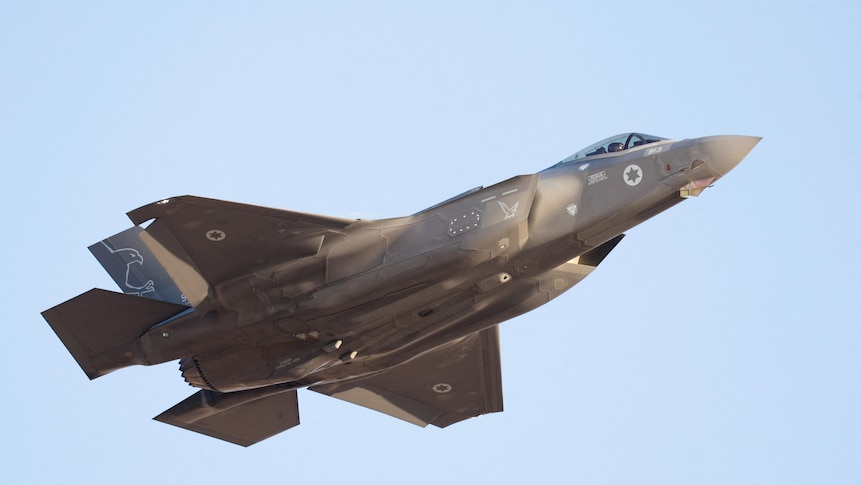
These arms exports could potentially include components and materials that contribute to global military supply chains. Australia is known to supply unique components, including parts for F-35 fighter jets and materials used in armored military vehicles.
As a partner in the US-led F-35 program, Australia contributes parts and components to a global supply chain utilized by Israel to maintain its fighter jets. More than 70 Australian companies are involved in the production and supply of spare parts for these jets, with some components being exclusively manufactured by Australian companies.
Evidence submitted in the ACIJ affidavit references a statement from the Israeli Air Force regarding the arrival of new F-35 jets, produced by Lockheed Martin, in Israel in January 2026. Foreign Minister Penny Wong has maintained that Australia only provides “non-lethal” components for the F-35s and attributes responsibility for any transfers to Israel to US arms manufacturers, stating that they are supplied to Lockheed Martin as part of the F-35 supply chain.
Senator Shoebridge has emphasized that international law obligates Australia to ensure compliance with its legal responsibilities regarding arms exports.